NSA accused of hacking former Mexican President’s emails
Citing data leaked by fugitive whistleblower Edward Snowden, German newspaper Der Spiegel reported on Sunday that the NSA had been hacking into Calderon’s emails in 2010.
Writing on Twitter on Monday, Calderon voiced his “strongest objections” at having been spied on, describing it as “an affront to the country’s institutions.” The former president, who now lives north of the border and teaches at the University of Harvard, said he had discussed the matter with Mexico’s Foreign Ministry and “demanded explanations from the United States.”
“In a relationship between neighbors and partners, there is no place for the alleged practices,” Mexico’s Foreign Ministry said in a separate statement, condemning the NSA’s actions as “unacceptable” and “illegal” and calling for a full investigation by the White House.
The latest allegations of the United States spying on its southern neighbor come just a month after Brazil’s O Globo newspaper reported that the NSA had spied on Mexico’s current President Enrique Peña Nieto when he was campaigning in 2010. The NSA intercepted Peña Nieto’s emails, texts and telephone calls, as well as those of Brazilian President Dilma Rousseff, O Globo reported, also citing documents leaked by Snowden, a former NSA analyst who has been granted temporary asylum in Russia.
Previously, O Globo revealed in July that the NSA had been secretly seizing web traffic and hacking into phone calls to gather information on Mexico’s war on drugs and its energy sector, while British daily The Guardian also reported that the Mexican embassy in Washington was one of 38 diplomatic missions under surveillance by U.S. intelligence agencies.
Peña Nieto slammed the news as “totally unacceptable” at the time and later said that President Barack Obama had vowed to investigate the allegations of espionage at last month’s G20 meeting in Russia.
More outrage erupted in Europe this week, as French newspaper Le Monde reported that the NSA had secretly recorded over 70 million phone calls and monitored millions more text messages in France from last December 10 to January 8, 2013.
Further data leaked by Snowden indicates that the United States has been running secret surveillance operations all over Latin America, not only targeting regional foes such as Ecuador and Venezuela, but also allies like Chile and Colombia.
Even U.S. citizens are not immune to their government’s “Big Brother” style surveillance. In August, the Washington Post published leaked files suggesting that the NSA breaks U.S. privacy laws hundreds of times every year and that U.S. intelligence agencies had a “black budget” of almost 53 million dollars for secret operations in 2013.
Former drug boss murdered by clowns in Los Cabos
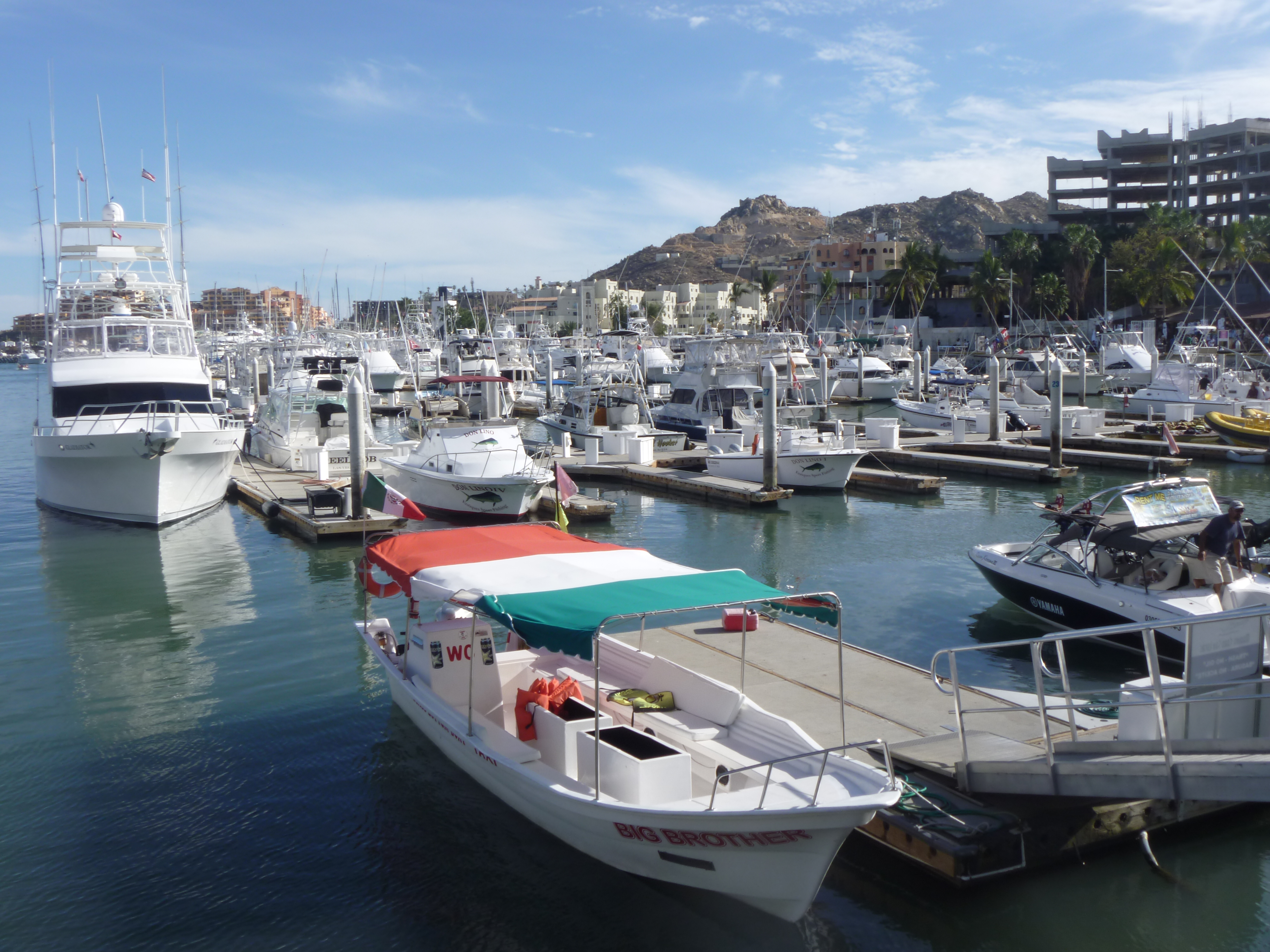
It sounds like a scene dreamed up by a Hollywood screenwriter and it will go down as one of the most surreal killings in Mexico’s bloody drug war: assassins dressed as clowns gunned down a former leader of the Tijuana Cartel at a children’s party in the popular tourist resort of Cabo San Lucas on Friday night.
Francisco Rafael Arellano Felix, 63, died after being shot from point-blank range in the head and the chest at around 8 p.m. The killers, at least one of whom was wearing a wig and a shiny red nose, fled from the luxury beach house where the party had been held and evaded a major police operation to find them. The Baja California Attorney General’s Office is investigating the case.
Francisco Arellano was the eldest of seven brothers who ran the Tijuana Cartel in the early 1990s when it was one of Mexico’s most powerful gangs. He was arrested in 1993 and spent 13 years in prison in Mexico before being extradited to the United States.
Arellano was then convicted of selling cocaine to an undercover DEA agent, but he was released in 2008 and deported back to Mexico, where there were no outstanding charges against him. The Tijuana Cartel has been weakened significantly in recent years as many prominent members have been killed or captured.
Peña Nieto’s reform agenda comes under fire
The centrist Institutional Revolutionary Party (PRI) announced on Wednesday that it was abandoning plans to impose value-added tax (IVA) on private education, as even prominent party members such as Jalisco Governor Aristoteles Sandoval had turned against it.
Earlier in the week, Sandoval had vowed to support the president with regard to “the grand reforms our country needs,” but he insisted that the PRI “must be sensitive to the reality of how people live,” and urged that plans to tax private tuition and property rentals should be rectified in order to protect Mexico’s middle class.
The tri-partisan Pact for Mexico signed after Peña Nieto’s inauguration last year has been stretched to breaking point by the PRI’s most recent proposals. Of all the president’s reform agenda, it appears that his plans for tax and energy reform will prove the most unpopular and difficult to pass.
On the right, the National Action Party (PAN) has vowed to oppose Peña Nieto’s fiscal reforms, which it says will hit the middle classes the hardest.
¨The PAN deputies will not approve anything against the assets of those who have struggled to carve out a life for themselves. What’s needed is a proposal in which the federal government guarantees transparency in the management of resources and reins in its superfluous spending,” Jose Gonzalez Morfin affirmed in Mexico’s lower house this week.
Meanwhile, on the left, the Party of the Democratic Revolution (PRD) announced this week that it will hold a Conference on the Defense of Energy Sovereignty from October 24 to 27. The PRD will disseminate information explaining its opposition to Peña Nieto’s plans for energy reform, which it believes will lead to the privatization of Mexico’s oil industry.
Addressing tens of thousands of supporters in Mexico City on Sunday, the PRD’s two-time presidential candidate Andres Manuel Lopez Obrador announced an unrelated campaign of non-violent civil disobedience after Peña Nieto ignored his calls for a national referendum on energy reform.
Lopez Obrador, who also voiced his opposition to the government’s proposals for educational reform, said the measures to be taken would be voted on by members of his National Regeneration Movement (MORENA) and could include demonstrations, a mass refusal to pay electricity bills and taxes, and the formation of peaceful ring of protesters around Mexico’s congressional buildings.
 The Tequila Files