‘Queen of the Pacific’ imprisoned upon return to Mexico
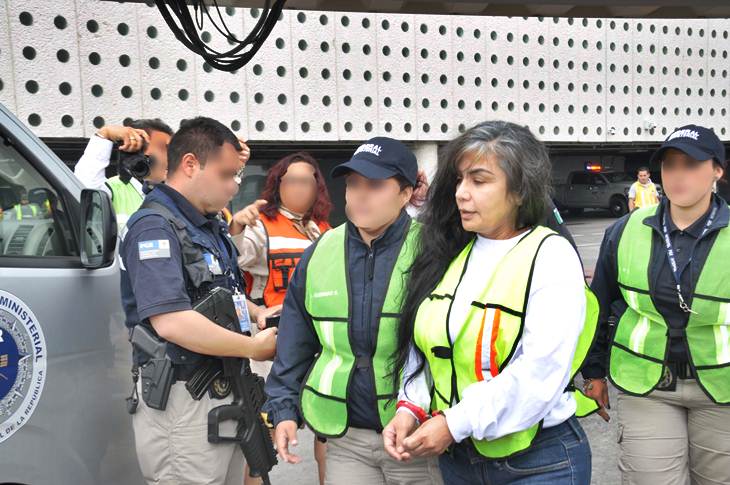
Deported from Texas on Tuesday, Avila, 52, landed first in Mexico City, where she was presented with an order of apprehension filed by a federal judge in Jalisco. She was then transferred to Guadalajara to face money laundering charges.
Avila stands accused of using illicit funds to pay for two life insurance policies, each worth around four million pesos, her lawyer Jorge Alfonso Espino Santillan revealed last month. After landing in Guadalajara, the federal Attorney General’s Office (PGR) ordered that she be transferred to El Rincon, a medium-security women’s prison in Nayarit.
An alleged drug kingpin with links to the Sinaloa Federation, Avila was sentenced to 70 months in prison in Miami last month. However, she was immediately eligible for release because she had already served more than five years in a Mexican prison prior to being extradited last year.
“She’s optimistic, positive and in a good mood,” another of her lawyers, Stephen Ralls, told the press as Avila was due to leave the United States on Tuesday.
Mexican government implicated in release of Guadalajara capo
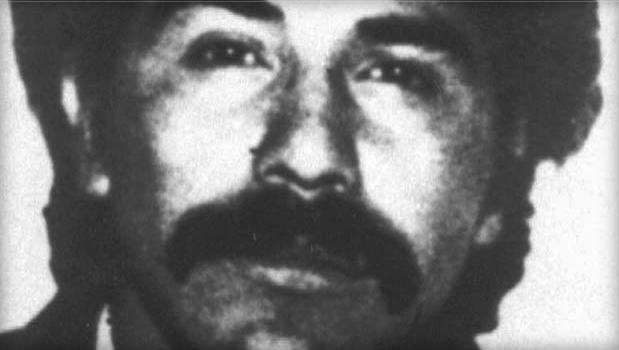
Despite subsequently pleading ignorance, the PGR knew that a court in Jalisco had approved Caro Quintero’s release on July 1, more than a month before he walked free, the Spanish-language magazine alleged this week.
Electronic records obtained by Proceso show that the PGR did not make any attempt to block the court’s decision or to inform the U.S. government, as it should have done under the terms of a bilateral agreement between the United States and Mexico.
Caro Quintero’s lawyers had submitted 24 injunctions for his release since May 2011, the last of which was filed on March 4, Proceso reported. On July 1, a tribunal in Jalisco finally overturned Caro Quintero’s 40-year sentence on the basis that he had been wrongly tried in a federal court for the abduction and murder of Drug Enforcement Administration (DEA) agent Enrique Camerana in 1985. The defendant should have been tried in a state court because Camerana, who was working undercover, did not hold diplomatic status in Mexico.
In the aftermath of Caro Quintero’s release, which occurred around 2 a.m. on August 9, federal Attorney General Jesus Murillo Karam criticized the “incompetent” tribunal’s decision, arguing that it “should have referred the case to a judge deemed competent.”
He suggested that the PGR had been unaware of the proceedings and that there had been no extradition request from the U.S. government prior to Caro Quintero being set free. However, the U.S. State Department promptly issued a statement affirming that it had “continued to make clear to Mexican authorities the continued interest of the United States in securing Caro Quintero’s extradition.”
Murillo Karam also stated that if Caro Quintero were recaptured he could not legally be tried a second time for Camarena’s murder and could only be extradited to the United States under other charges.
This is unlikely to pose a problem to U.S. prosecutors, as in 1987 a federal court in California indicted Caro Quintero in absentia of additional murder charges, possession of marijuana and cocaine with intent to distribute, and for running a criminal enterprise. He was also indicted the following year in both California and Arizona for breaking federal laws against extortion, corruption and drug trafficking.
Caro Quintero linked to crooked politicians and CIA
More of Caro Quintero’s colorful exploits were brought to light this in a feature by Vice magazine, corroborated by various archive reports from the Los Angeles Times.
Vice reported that the former head of the Guadalajara Cartel, then the most powerful drug gang in Mexico, used to throw lavish parties in Guadalajara attended by high-ranking Institutional Revolutionary Party (PRI) officials, many of whom were on Caro Quintero’s payroll.
Caro Quintero once bought a Mercury Cougar for his girlfriend’s uncle, Guadalajara Mayor Guillermo Cosio Vidaurri, who would go on to govern the state of Jalisco, while on another occasion a henchman of his testified to having spent over four weeks counting by hand a bribe of 400 million dollars, to be paid to a high-level government official.
Perhaps the most shocking revelation in the Vice feature is that in 1992 one of Caro Quintero’s former bodyguards testified in a Los Angeles courtroom that the then Jalisco governor and two federal cabinet members were present in the next room when Camerana was being tortured at one of Caro Quintero’s homes in Guadalajara. Eyewitness Rene Lopez Romero told the court that Defense Minister Juan Arevalo Gardoqui, Interior Minister Manuel Bartlett Diaz, Jalisco Governor Enrique Alvarez del Castillo – who would later became federal attorney general – and a number of other senior officials all listened through an open door as Camarena was interrogated so as to hear what he was saying about their own collusion with drug-trafficking.
Lopez’s testimony led to the conviction of former Jalisco Congressman Ruben Zuno Arce, brother-in-law of former President Luis Echeverria Alvarez, for kidnapping and conspiracy in the murder of Camarena. Zuno died in prison last September.
Finally, Vice also revealed that Caro Quintero had been cooperating with the CIA in the early 1980s in its efforts to aid the Contras guerrillas in their war on Nicaragua’s leftist Sandinista government. In 1990 the DEA issued a report on the Guadalajara Cartel’s close links with the CIA, which found that Caro Quintero had permitted a ranch he owned in Veracruz to be used as a training camp for anti-Sandinista guerrillas from Guatemala.
Mexican military captures Gulf Cartel boss
The latest of Mexico’s kingpins to fall, Ramirez had assumed leadership of the Gulf Cartel after the arrests of Mario Cardenas Guillen and Jorge Eduardo Costilla Sanchez, leaders of rival factions within the gang, last September. Ramirez was left vying for control of the cartel with Miguel “El Gringo” Villarreal, who is believed to have been killed in a bloody three-hour shootout on the streets of Reynosa, Tamaulipas in March.
Once one of Mexico’s most powerful drug gangs, the Gulf Cartel has seen its influence wane since 2010, when its former enforcers Los Zetas turned feral and began their own ultra-violent criminal enterprise. However, the Gulf Cartel is still believed to control most of the cocaine and marijuana trafficking from Matamoros, Tamaulipas into Brownsville, Texas.
The U.S. State Department had offered a reward of five million dollars for information leading to Ramirez’s capture, while the Mexican government also offered around three million dollars.
The capture of Ramirez comes just a month after top Zetas boss Miguel Angel Treviño Morales, alias “Z-40,” was detained near Nuevo Laredo on July 15. The Institutional Revolutionary Party (PRI) government led by President Enrique Peña Nieto had said it would focus more on eliminating low-level violence than on pursuing Mexico’s most wanted drug lords, but the latest arrests suggest it is following the National Action Party (PAN) strategy of bringing down the country’s highest profile targets.
 The Tequila Files