Viva México Podcast Episode 8: Laughter Behind Walls
Mexico’s leading millennial comedian Sofía Niño de Rivera tells us about her own brand of standup, her work in prisons and her meeting with Mexican president Enrique Peña Nieto. We also discuss Donald Trump’s latest attempts to antagonise Mexico, his decision to pardon the controversial sheriff Joe Arpaio, and Mexico’s offer to help those affected by the flooding in Houston.
Watch the video of our interview with Sofía below:
Gorditas are one of Mexico’s greatest breakfast foods
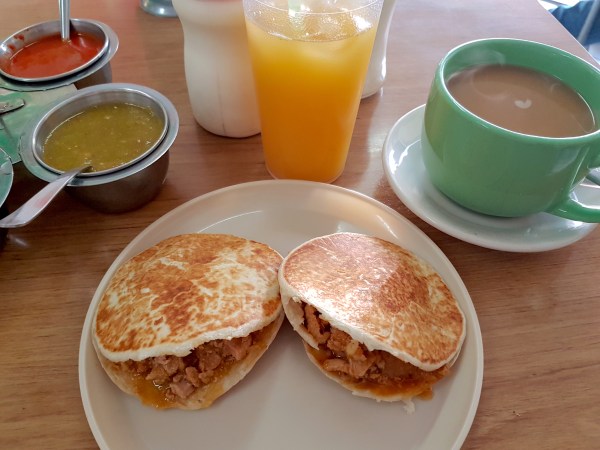
Torreón’s gorditas are made with flour instead of the more common corn variety.
There might not be another breakfast in the world quite as good as Mexico’s. From staples like chilaquiles, molletes or huevos rancheros to regional specialties like machaca, tortas ahogadas or Jalisco-style barbacoa, few countries have mastered the art of breakfast so well.
And in the northern city of Torreón there is one undisputed breakfast king: the gordita. Located in Coahuila state, Torreón is a scorchingly hot industrial city surrounded by imposing hills, dry lake beds and miles of desert. Every morning, thousands of Laguneros, as locals are known, of all ages and social classes flock to their nearest gordita merchant.
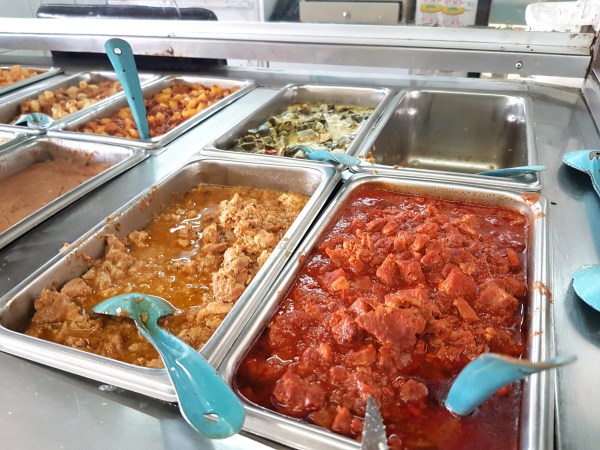
Gorditas can be stuffed stuffed with any combination of meat, cheese, eggs, beans or veg.
They are not hard to find. On almost every street there’s someone selling gorditas, from humble vendors on bicycle carts to chain restaurants like La Pestaña.
The gordita, meaning “little fatty,” is a popular snack across Mexico, typically consisting of fried masa dough stuffed with any combination of meat, cheese, eggs, beans, or veg. In Torreón, however, the dough is made with flour. Slightly thinner than the corn variety and a little lighter on the stomach, it almost resembles pita, with a beige surface beautifully mottled with golden brown speckles.
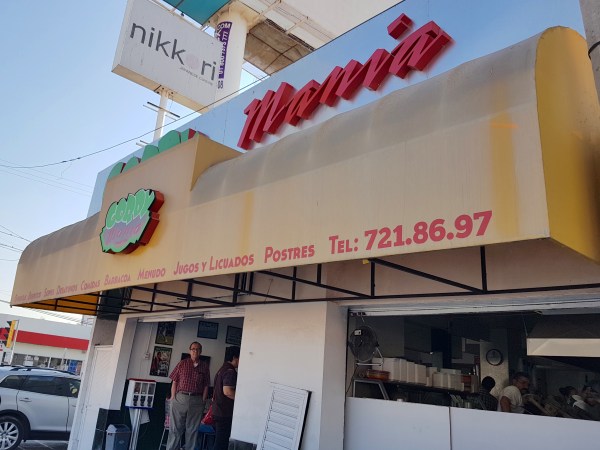
Gordy Mania opened 24 years ago and now sells 500 to 600 gorditas every day.
To understand this local obsession, I visited Gordy Mania, a small, family-run establishment on a busy Torreón street, early one Friday morning…
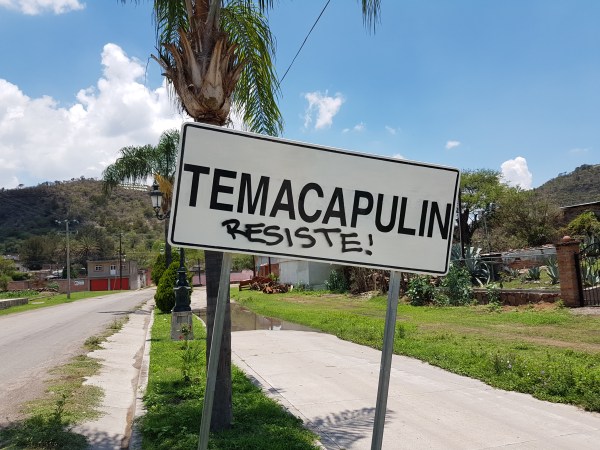
Temacapulín residents have resisted the government’s plans for 12 years
Abigail Agredano fears her 96-year-old mother would not survive being uprooted from their hometown in the highlands of western Mexico, where its 400 mostly elderly residents are battling a government plan to dam the nearby Río Verde.
“If they manage to force us out, I think she and many others would die immediately,” Agredano, head of the Committee to Save Temacapulín, told the Thomson Reuters Foundation.
Damming the Río Verde would supply water for major urban areas in the state of Jalisco and neighboring Guanajuato but leave Temacapulín and the smaller villages of Palmajero and Acasico underwater.
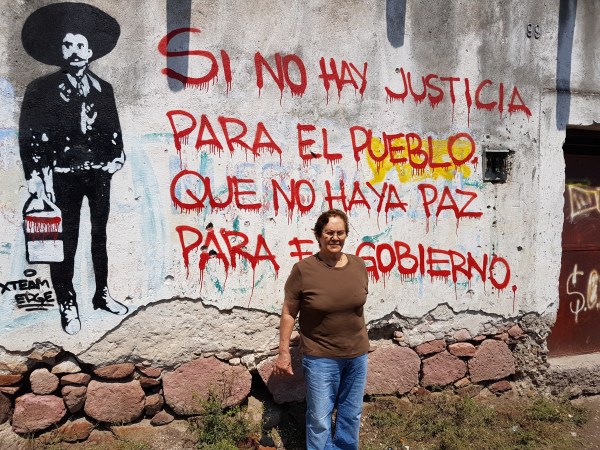
Abigail Agredano is leading the campaign to save Temacapulín from being flooded.
While the dam was proposed a dozen years ago, the campaign has grown more urgent this summer since Jalisco Governor Aristóteles Sandoval abandoned a pledge he made in 2013 to save Temacapulín.
Construction of the dam was halted at 80 meters (262 ft)after a Supreme Court ruling in 2013 and, as the partially finished dam has not been sealed, the river still runs through it.
But Sandoval, a member of the ruling Institutional Revolutionary Party (PRI), said in late June the government now intends to raise the Zapotillo dam to 105 meters, a height that would seal the fate of the three tiny towns.

If the government plans go ahead this entire town will end up underwater.
“Saving Temacapulín is no longer an affordable option,” Sandoval said, due to growing water demands of the state capital Guadalajara, Mexico’s second biggest city…
Click here to read this feature in full at the Thomson Reuters Foundation
Here’s a short video I made about the situation in Temacapulín. Feedback is welcome.
 The Tequila Files