Governor-elect spurs overhaul of Jalisco’s executive branch
The proposal, drawn up by Sandoval, his transition team and over 200 analysts, aims to address shortcomings in the state government by eliminating some governmental departments and creating others.
Currently being considered by the State Congress, it is a kind of “Pact for Jalisco,” akin to the “Pact for Mexico” that the country’s three major parties signed in December following the inauguration of President Enrique Peña Nieto.
A major focus of the proposal is on increasing security in Jalisco, with Sandoval hoping to achieve this by merging the responsibilities of the Public Security Agency, the Secretary General and the State Attorney General’s Office. The governor-elect also plans to create an elite metropolitan police force with a unified command, instead of simply relying on the different municipal police branches that operate in Guadalajara.
The leftist Citizen’s Movement has warned that approving the bill would risk creating a greater “concentration of power” in Jalisco, while the National Action Party (PAN) has assured that it will not hand the incoming administration “a blank check” to govern how it pleases. Several civic society organizations have also raised concerns that the risk of abuses of power would be greater under a more centralized government.
The former mayor of Guadalajara, Sandoval, 39, ended 18 years of PAN rule in Jalisco by winning last year’s state election. He claimed 38.73 percent of the vote, with Enrique Alfaro of the Citizen’s Movement coming second with 34.18 percent.
Raicilla: Mexican moonshine or Jalisco’s most overlooked liquor?

Native to Jalisco, raicilla is a potent moonshine liquor produced in the coastal region around Puerto Vallarta. It is made in 16 Jalisco municipalities from the “lechugilla” agave, a smaller, greener plant than the blue agave used in tequila production, most commonly found in the desserts of Chihuahua and Sonora and the Sierra Madre mountain range.
Racilla was first distilled in the early 17th century and became the drink of choice for miners based in the mountains of western Jalisco. The harsh, unique-tasting spirit was originally named raicilli in order to escape taxes and restrictions on alcohol production.
Brewed in very small-scale operations, for years raicilla was hawked by clandestine roadside vendors in recycled plastic bottles. It remains most commonly manufactured and sold in the towns of Atenguillo, Etzatlan, Guachinango, Hostotipaquillo, Mascota, San Sebastian del Oeste, Talpa de Allende, El Tuito and Cimarron Chico de la Raicilla, which takes its name from the drink.
Only in recent years has raicilla become a legitimate product, with the Ministry of Agriculture, Livestock, Rural Development, Fishing and Food (SAGARPA) now estimating annual sales of up to 100,000 bottles, mostly sold in local craft shops and restaurants.
Slightly sweet, but with a harsh flavour, raicilla is clear, or has a very faint brown tinge, and can vary significantly in quality. It can be consumed straight, with salt and lime, on the rocks, or mixed with grapefruit soda. Contrary to popular myth, the drink has no hallucinogenic properties.
For the last five years, Mascota has hosted the annual Raicilla Cultural Festival, with the most recent edition taking place last December. Supported by the municipal government and the Jalisco Department of Tourism, the event features tastings, tours and lectures on raicilla production and the history of the drink, plus live music and dancing.
Perhaps the best known raicilla distiller is Destilador del Real, based in Cimarron Chico de la Raicilla. Real combines traditional production techniques with modern technology to create more refined blanco, reposado and añejo raicillas, each at 36 percent ABV (alcohol by volume).
In 1997, Real owner Jorge Dueñas secured a collective “Raicilla Jalisco” mark to protect production and established the Mexican Council of Raicilla Promoters. All raicilla producers must now be members of the council and there are currently around 70 members.
The “Raicilla Jalisco” mark means that production is officially regulated to guarantee a quality product and also serves as the first step toward securing a protected designation of origin.
Destilador del Real does not have a store in Guadalajara but Dueñas comes to the city to sell his produce every Thursday and Friday from 11 a.m. To pick up a bottle call him on 322-131-6270 or for more information on Real call 322-297-2863.
Alternatively, 400 Conejos bar, located at Avenida Chapultepec 20A, stocks seven different brands of the spirit. These include the establishment’s own brand, La Venenosa Raicilla, with two different versions available for 310 or 330 pesos per bottle.
For more on mezcal and pulque see my feature on top tequila alternatives.
Jalisco bids farewell to divisive governor
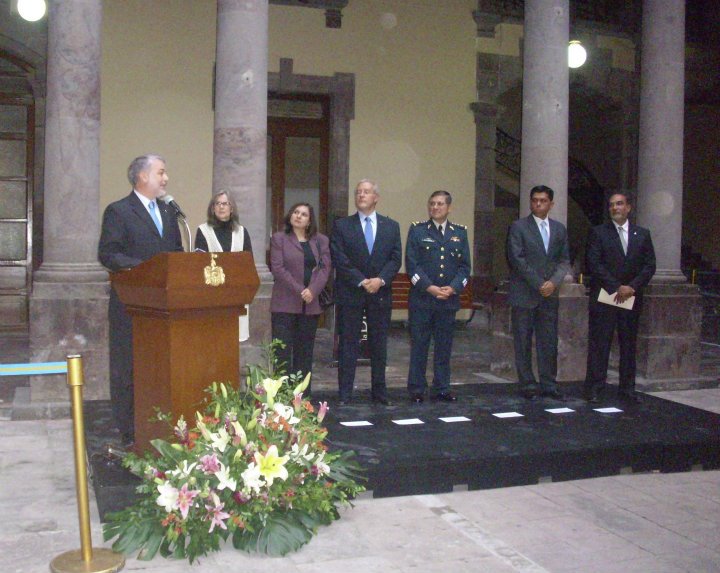
According to last year’s Jalisco Como Vamos survey, 43 percent of the public disapprove of Gonzalez’s administration, 41 percent approve and 14 percent are undecided (the remaining two percent chose not to answer).
Of course the most important referendum on Gonzalez’s term in office came in the state elections last July, in which the National Action Party (PAN) lost control of Jalisco after 18 years in power.
The state had become a PAN stronghold, but Gonzalez left voters so disillusioned that his would-be successor Fernando Guzman lost not only to the Institutional Revolutionary Party (PRI) candidate Aristoteles Sandoval, but also to Enrique Alfaro of the leftist Citizen’s Movement.
Guzman garnered a measly 19.87 percent of the vote, with the PAN winning in only 22 of Jalisco’s 125 municipalities and retaining just 12 seats in the State Congress, down from 16 in 2009. Following the election debacle, PAN membership in Jalisco dropped late last year from 34,801 to 17,887.
Gonzalez’s stock has taken a similarly sharp decline and his short-lived bid to become the PAN nominee in last year’s presidential election suggests the best days of his political career are now behind him. Upon bowing out of the presidential race, Gonzalez declared that he would not seek a position as a federal congressman or senator because “I do not want to put together a political career just to make money for myself.”
So where did it all go wrong for the outgoing governor?
Gonzalez endured a difficult sexenio in which Jalisco was hit by a rise in drug-related violence, swine flu and avian flu epidemics and the effects of the global economic recession. He was also afflicted by personal tragedy when his brother Cesar Gonzalez died from a fall at a hotel in Tenacatita last July.
It would be unfair to blame Gonzalez for the epidemics nor the rise in drug violence over the last six years, as this was a trend which swept most of Mexico, the result of the federal government’s war on organized crime.
But Gonzalez’s record on social and economic policy merits close scrutiny. He indebted Jalisco more than any governor before him, racking up a deficit of over 15 billion pesos during his administration, making Guadalajara the most indebted city in Mexico and leaving the state with a total outstanding debt of more than 20 billion pesos.
Despite such lavish expenditure, wealth inequality continued to grow. The latest government figures state that there are now 352,000 people living in extreme poverty in Jalisco, 22,000 more than when Gonzalez took power in 2007.
The governor also courted controversy with his conservative, Catholic stance on social issues throughout his term in office.
In 2010, Gonzalez told a conference that the idea of same-sex marriage “makes me nauseous.” He later refused to apologize for the homophobic remark, despite over 300 people registering complaints with the Jalisco Human Rights Commission.
Gonzalez’s close friendship with the polemic former Archbishop of Guadalajara, Cardinal Juan Sandoval Iñiguez, also resulted in great controversy.
In 2008 it emerged that Gonzalez had donated 90 million pesos of public funds to the cardinal’s project to build a martyrs’ sanctuary on the Cerro del Tesero hill in the southern outskirts of Guadalajara. The donation was a clear infringement of the historic division between church and state in Mexico and Sandoval was forced to return the money after a public outcry.
What followed was an infamous incident and arguably Gonzalez’s defining moment as governor of Jalisco. Fired up on tequila, Gonzalez emplored his critics to “go f–k their mothers” during a public speech at a Catholic fundraiser.
Many people never forgot that outburst, but it has not entirely overshadowed some of the governor’s more positive accomplishments. In 2011 he oversaw the Guadalajara Pan American Games, declared “the best games in history” by Mario Vazquez, the president of the Pan American Sports Organization.
Although opinion is mixed regarding the legacy of the games, Gonzalez’s government delivered world-class sporting infrastructure such as the Telcel Tennis Center and the Scotiabank Aquatics Center in the Parque Metropolitano, and also renovated key areas of the city ahead of the event.
Furthermore, much of the debt incurred by the Gonzalez administration can be attributed to the costs of staging the games, a factor that past governments have never been affected by.
Gonzalez also supported Guadalajara’s successful bid to host the Creative Digital City, an ambitious digital media project that the federal government says will create 20,000 jobs and generate up to ten billion dollars of investment over the next five years. In total, Gonzalez says that more than 155,000 new jobs were created during the last six years, while Jalisco received over 13.8 billion dollars of private investment in that time.
Gonzalez also brought about educational gains across Jalisco, spending 6.1 billion pesos in schooling infrastructure and overseeing a rise in the average level of education from eighth to ninth grade. The rate of illiteracy simultaneously dropped from 5.2 percent of the population to 3.9 percent, while the percentage of young people graduating from secondary school, preparatorias and higher education rose at every level.
Yet such achievements have not been enough to outweigh the governor’s shortcomings in the public consciousness and he will not be missed by the majority upon leaving office.
“Jalisco is better off,” has been Gonzalez’s slogan of late. He repeated it throughout his farewell speech at the Palacio del Gobierno on Wednesday morning, touting his achievements in the hope of putting a positive spin on his legacy. Given how the public voted last year, it seems that much of Jalisco disagrees.
 The Tequila Files