Mexico’s Supreme Court endorses same-sex marriage
In a potential landmark decision for gay rights in Mexico, the Supreme Court ruled in favor of three couples seeking same-sex marriages in Oaxaca last week.
The tribunal agreed unanimously on December 5 that a state law banning same-sex marriage was unconstitutional. The judges said Article 143 of Oaxaca’s Civil Code was discriminatory in defining marriage only as the union between a man and a woman.
Although legal in Mexico City since 2010, same-sex marriage remained prohibited in the rest of the country until now. The Supreme Court’s ruling sets a precedent allowing gay and lesbian couples to marry in Oaxaca and perhaps paving the way for others to wed elsewhere in Mexico.
The Catholic Church was quick to denounce the decision, with the Archbishop of Guadalajara, Cardinal Jose Francisco Robles Ortega, stating that the union of homosexuals “degrades” the institution of marriage.
“For Catholics, marriage will always be the union of a man and a woman, in a stable and loving relationship,” Robles said.
“We hope this will not be a precedent for every state in the nation,” he added, suggesting there are “other ways of protecting the rights of minorities without offending the great institution of marriage.”
15 years on, Acteal victims still await justice
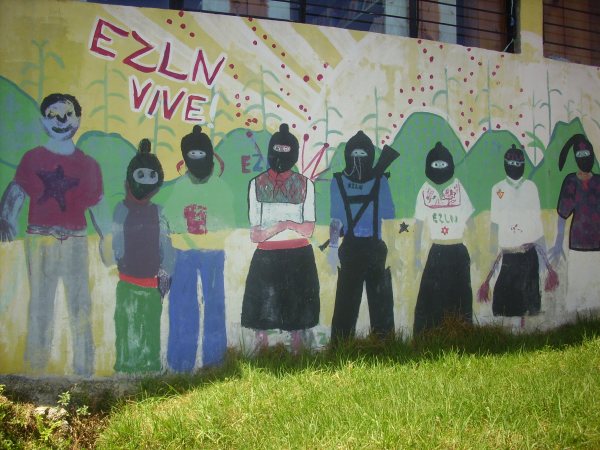
On December 22, 1997, dozens of Mascara Roja paramilitaries entered a church in Acteal, Chiapas and slaughtered those praying inside. The 45 victims, members of pacifist Christian organization Las Abejas, included 15 children – the youngest being a two-month-old baby – and 21 women – four of whom were pregnant.
They were murdered because of their support for the Zapatista Army of National Liberation (EZLN), an indigenous rebel group which claims autonomy in the mountains and jungles of Chiapas.
Fifteen years on from the Acteal massacre, most of the perpetrators have been released from jail and any sense of justice or closure for relatives of the victims remains conspicuous by its absence.
In September, Manuel Santiz Perez became the latest person convicted of participation in the atrocity to be released by Mexico’s Supreme Court. Of the 84 originally convicted, 37 were released in September 2009 when apparent violations of their legal rights came to light. Another 15 of the perpetrators were released for “good behavior” in October 2010.
On Saturday, Las Abejas issued a statement condemning the “mass release of paramilitaries” and denouncing the news that Mascara Roja and Paz y Justicia – another infamous anti-EZLN paramilitary group – recently resumed operations in the southern state. The state government “manages” the conflict in Chiapas and “allowed the reactivation” of these groups, Las Abejas said.
To add insult to injury, many suspect the Acteal massacre is now being manipulated for political reasons in an ongoing feud between former presidents.
Last month, Ernesto Zedillo, who ruled Mexico from 1994 to 2000, claimed immunity in response to a civil lawsuit brought against him in the United States last year on behalf of several apparent victims of the massacre. The mysterious lawsuit was filed on behalf of ten anonymous Acteal residents by Rafferty, Kobert, Tenenholtz and Hess, PA, a corporate law firm from Miami which had never previously handled a human-rights case.
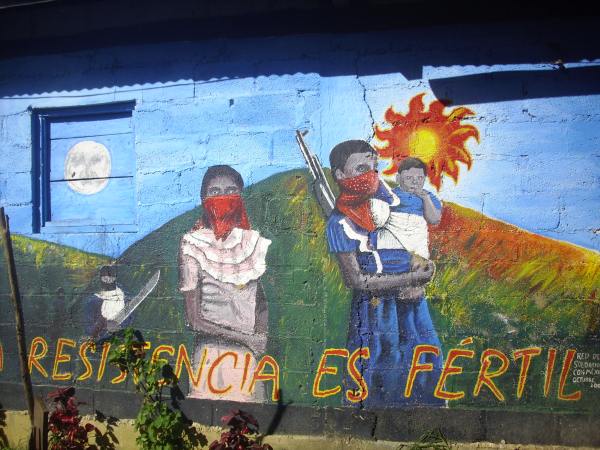
The plaintiffs, who say they were wounded or lost family members in the attack, are suing the former president for 50 million dollars on the grounds that his government allowed Mascrara Roja to commit the atrocity and then covered up the killings.
“Zedillo knew or should have known about the events that led to the slaughter of Acteal and the human rights abuses committed during the killing,” read the complaint issued in September 2011.
Zedillo, who now lives in Connecticut and teaches at Yale University, issued a 26-page document in November affirming that he could not be prosecuted for actions taken as president and dismissing the claims against him as slander based on anonymous sources. In September the U.S. State Department had suggested Zedillo be granted immunity and he is now awaiting a federal court ruling on his legal status.
The Institutional Revolutionary Party (PRI) has long been accused of arming and bankrolling indigenous paramilitary groups to combat the EZLN during Zedillo’s administration, although no evidence has been unearthed to prove he was personally responsible for the Acteal massacre.
The most damming indictment came in September 2011 from Emilio Chuayffet, Zedillo’s interior minister at the time of the massacre. Chuayffet (who was named last week as President Enrique Peña Nieto’s education minster) told investigators in Chiapas that Zedillo, his Private Secretary Liebano Saenz and the then Chiapas Governor Julio Ruiz Ferro were all guilty of “conspiring to impede and hide multiple warnings ahead of the impending massacre.”
Las Abejas also believe that the Acteal killings were part of the government’s plan to eradicate the Zapatista rebels and their supporters, but they remain highly suspicious of the plaintiffs, publicly stating that “for us, these people do not exist.” Likewise, the Fray Bartolome de las Casas human rights center in Chiapas claims no knowledge of the lawsuit, insisting the case “has nothing to do with the victims” in Acteal, whom it has long represented.
So who could it be that is suing Zedillo? In recent months a number of Mexican journalists and political analysts have suggested that his presidential predecessor Carlos Salinas de Gortari instigated the lawsuit in a drawn-out act of vengeance.
Univision news revealed last week that the Miami lawyers handling the case have represented members of the Salinas family before, while in October, Raymundo Riva Palacio wrote in 24 Horas that even “if not entirely designed by Salinas, (the case) was promoted and managed by him personally.”
The animosity between the former PRI presidents dates back to 1995, when Zedillo ordered the arrest of Carlos Salinas’ brother Raul for money laundering and complicity in the murder of his ex-brother-in-law, a PRI official named Ruiz Massieu. Duly convicted, Raul Salinas served ten years in prison before being absolved of all charges. As a result of the convictions he also had 74 million dollars confiscated by Swiss authorities who said the money had been obtained illicitly.
Salinas’ lawyers have denied his involvement in the case against Zedillo, but this has done little to stem speculation that the Acteal lawsuit is far from the sincere bid for long-denied justice that it claims to be.
Instead, it seems the victims’ suffering is being hijacked; becoming a mere tool of revenge in a personal feud between two former presidents who both showed little but disdain for the Zapatistas and their sympathizers during their respective administrations.
Peña Nieto unveils experienced cabinet
Dismissing any notion that he represents a “new” Institutional Revolutionary Party (PRI), President Enrique Peña Nieto named an experienced cabinet of 25 men but just three women, with an average age of 63 years, at his inauguration on Saturday.
Loyal to those around him, Peña Nieto appointed a number of allies from the State of Mexico, which he governed from 2005 to 2011.
Transition team leader and former Hidalgo governor Miguel Osorio Chong takes the most senior position in the cabinet as interior minister. Having held some of the most influential positions inside the PRI, Osorio will now oversee all domestic security and intelligence duties as well as the federal police if a proposed restructuring is approved by Congress.
The new president’s campaign manager and closest adviser Luis Videgaray will run the treasury department. Tough, smart and ambitious, Videgaray also served as finance minister under Peña Nieto in the State of Mexico.
Representing the party’s old guard are the likes of Emilio Chuayffet, 61, and Jesus Murillo Karam, 64, named education secretary and attorney general respectively, while new Tourism Secretary Claudia Massieu Salinas – the niece of former President Carlos Salinas de Gortari – provides another link to the PRI of old.
A former interior minister and governor of the State of Mexico, Chuayffet is a famous adversary of Elba Esther Gordillo, the controversial head of the Mexico’s powerful but corrupt teacher’s union. His appointement will distance the government from Gordillo, a former PRI member who left to found the New Alliance Party (PANAL) in 2005.
Another former Hidalgo governor, Murillo has also presided over Mexico’s lower house, the Chamber of Deputies, and served as both PRI secretary general and President Ernesto Zedillo’s undersecretary of public security. As attorney general, he is the only cabinet member whose position must be approved by the Senate.
While the majority of the cabinet are PRI stalwarts, Peña Nieto did make a few non-partisan appointments, offering some indication of how he will govern in certain areas.
The naming of Jose Antonio Meade – who served as treasury secretary under former President Felipe Calderon – as foreign secretary suggests foreign policy will now be focused less on security and more on trade and economic development.
Furthermore, putting former Mexico City Mayor Rosario Robles in charge of social development implies that Peña Nieto favors a progressive attitude toward social policy. Robles was president of the leftist Party of the Democratic Revolution (PRD) from 2002 to 2003 but later resigned amid a corruption scandal.
As the only member of Mexico’s Green Party (PVEM) with a cabinet seat, Juan Guerra will have his green credentials tested as minister of the environment and natual resources. Guerra also served under Peña Nieto in the state of Mexico, when the latter urged him to join the PVEM to bring the party closer to the PRI in the presidential campaign.
 The Tequila Files