In episode six of the Viva México podcast, Booker Prize-winning novelist DBC Pierre tells us how growing up in Mexico influenced his writing and gave him “an extraordinary capability for bullshit”. We also speak to the historian Andrew Paxman about his new biography of William Jenkins, an American magnate who became the richest man in Mexico and “the gringo that Mexicans most loved to hate,” long before Donald Trump. Plus, all the latest on Trump’s meeting with Mexican president Enrique Peña Nieto at the G20, and the upcoming NAFTA renegotiations.
Paxman’s book “Jenkins of Mexico” is available on Amazon here. We highly recommend it.
Click here to listen to previous episodes of the Viva México podcast
Mexico’s most-wanted: A guide to the drug cartels
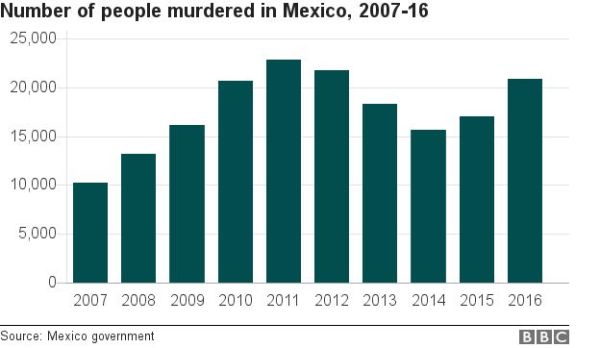
 More than 200,000 people have been killed or have disappeared since Mexico’s government declared war on organised crime in December 2006.
The military offensive has led to the destruction of some drug gangs, splits within others and the emergence of new groups.
With widespread corruption and impunity exacerbating Mexico’s problems, there is no end in sight to the violence.
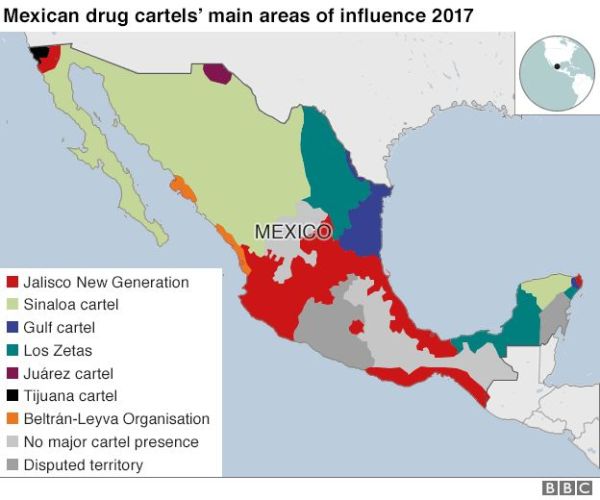
Which are the most powerful cartels today? And who is behind them?
The Sinaloa cartel
Founded in the late 1980s, the Sinaloa cartel headed by Joaquín “El Chapo” Guzmán has long been considered Mexico’s most powerful criminal organisation.
Having outfought several rival groups, the Sinaloa cartel dominates much of north-west Mexico and makes billions of dollars from trafficking illicit narcotics to the United States, Europe and Asia.
However, the cartel’s future is uncertain after Guzmán was recaptured in 2016 following two daring prison breaks. He was extradited to the US in January and now awaits trial in New York…
Mexico’s unlikely visitor: Leon Trotsky arrived in Mexico with blood on his hands, but quickly became a free speech fighter
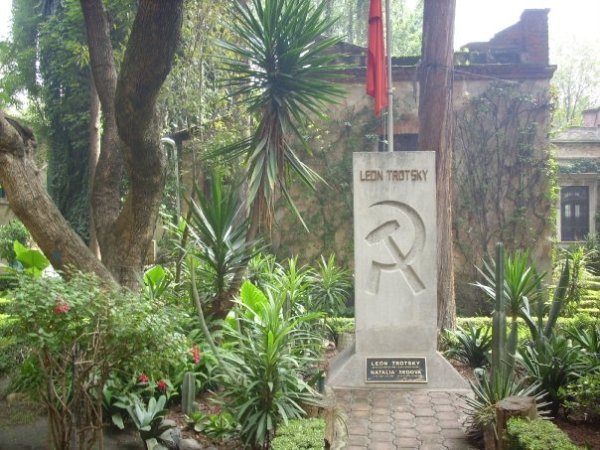
Leon Trotsky’s ashes are buried at his former home in Mexico City.
Deep, wide holes still mark the walls of the house where Leon Trotsky lived in exile in Mexico City’s bohemian Coyoacán neighbourhood. Granted asylum two decades after leading the Russian Revolution of 1917, Trotsky spent his final years hiding from Soviet assassins and exhorting the importance of free press and artistic expression.
Responsible for the repression and murder of thousands of political opponents during Russia’s Red Terror, Trotsky was an unlikely advocate for free speech. Yet, having been exiled by Joseph Stalin and airbrushed from Soviet history after losing out in a power struggle with his former comrade, he was no stranger to censorship himself.
Embraced by a small community of artists and intellectuals, Trotsky stayed active in Mexico, founding a local Marxist magazine and launching an international initiative for revolutionary art. Then he was murdered by a Stalinist agent.
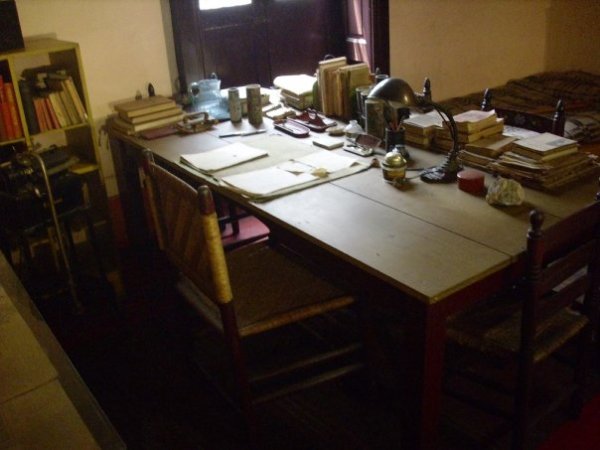
Trotsky was reading at his desk when he was murdered by a Stalinist agent armed with an ice pick.
A century on from the Russian Revolution and 80 years since Trotsky arrived in Mexico, his time there continues to pique public interest. His former home, now a museum, draws some 17,000 foreign visitors and 50,000 Mexican students a year, while The Chosen, a new film based on his assassination, was bought by Netflix and released in 190 countries in April.
Trotsky’s presence in Mexico, a nation that had only emerged from its own decade-long revolution in 1920, proved divisive from the outset. The socialist-leaning president Lázaro Cárdenas had offered him asylum after Trotsky had difficult spells in Turkey, France and Norway, but the decision did not go down well with Mexico’s Kremlin-backed communist party nor left-wing newspapers…
This article is available for free for a limited time at Index on Censorship
 The Tequila Files