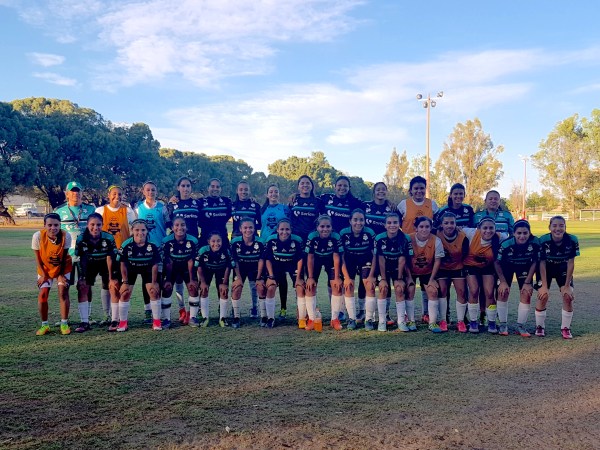
Santos Laguna’s new women’s side will compete in the 16-team league.
Yuliana Adriano started playing soccer at age 7 at her parent’s ranch in Esmeralda, a village with 2,000 inhabitants in the northern Mexican state of Durango. She dreamed of playing professionally one day, but understood that would be unlikely since there was no professional women’s league in Mexico.
After leaving home to receive a better education and play for a school team, Adriano was called up to Durango’s state all star team, although they only trained and played together sporadically. And yet Adriano continued to improve. By the time she became a teenager, Adriano was a bonafide talent. And coincidentally, at that exact same time, the Mexican soccer federation announced the formation of the Liga MX Femenil, a 16-team league that kicks off on July 29. Adriano, 14, was signed by the league and assigned to the Santos Laguna team.
“We’re going to put a lot of effort in so that they make the women’s league equal to the men’s one,” Adriano said with a smile. “I’d love for us to have the same wages and all the things that they have. We’re going to show them that being men doesn’t make them better than us.”
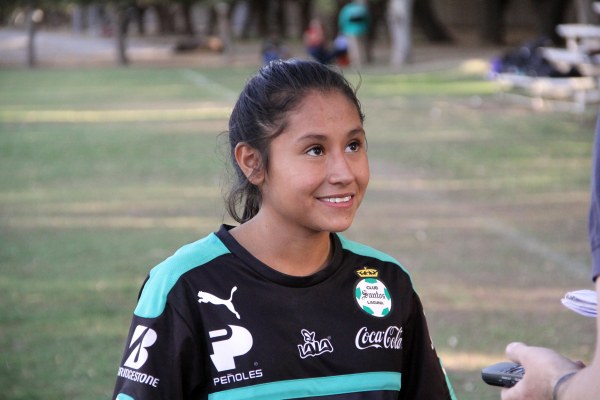
14-year-old Yuliana Adriano scored the first goal in the history of Santos’ women’s team. (Photo by Kim Tate/Santos Laguna)
This is the first women’s competition in Mexico to mirror the men’s Liga MX, with each season split between Apertura and Clausura tournaments. The only structural difference is that the clubs will be divided into two eight-team groups, with the top two from each group going through to the playoff semifinals. The first final will take place in December.
There are still many hurdles for the league to overcome—particularly with regard to wages, broadcast rights and sponsorship—but the hope is that the league will help raise the level of the women’s national team and create opportunities for girls like Adriano to fulfill their potential…
Corbyn surge raises hopes that Mexico might soon have a friend in No. 10 Downing Street

Jeremy Corbyn met Andrés Manuel López Obrador in Tabasco last Christmas.
When Labour leader Jeremy Corbyn outperformed expectations in the UK’s recent general election, he upended the country’s political culture and energised a generation of young supporters.
But his achievement also sparked a wave of optimism among activists in Mexico, who are starting to hope that they might soon have a friend in 10 Downing Street.
Britain’s Conservative government has forged close ties with Mexico’s Enrique Peña Nieto administration, which has been tainted by corruption scandals, worsening violence and accusations of spying on journalists and activists.
And while Theresa May has sought to appease Donald Trump, who has threatened and offended Mexico at every opportunity, Corbyn has become an unlikely source of inspiration for Mexican activists.
Corbyn, whose wife, Laura Álvarez, is Mexican, often speaks at solidarity events organised by London’s Mexican community. He has, in parliament, condemned Mexico’s media censorship and human rights abuses, and led demonstrations against Peña Nieto’s state visit in 2015 while the British government was signing controversial oil deals.
Corbyn also wrote to Mexico’s ambassador to express “deep concern” over the disappearance of 43 students abducted by police officers in southern Mexico in 2014.
Omar García, who escaped on the night his classmates from the Ayotzinapa college were attacked, met Corbyn and his wife while touring Europe last year to raise awareness about the situation in Mexico…
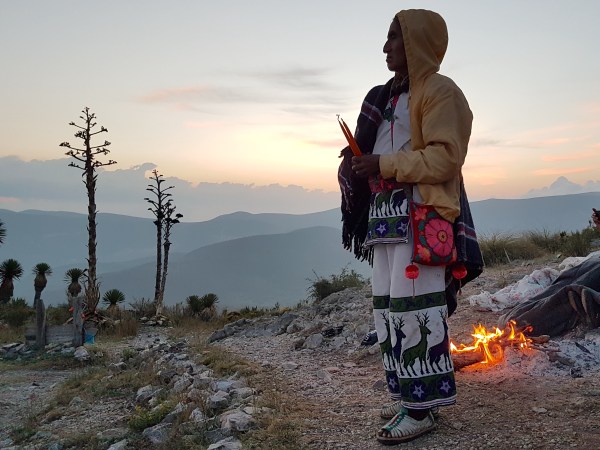
A Wixárika elder looks out at the sacred lands of Wirikuta at dawn.
As dawn broke on a sacred mountaintop in northern Mexico, a group of indigenous pilgrims dragged a sacrificial calf into their stone circle and slit its throat. They then dipped candles in the warm blood still gushing from the animal’s throat and lit them, creating a circle of light.
The heart was next. The tribesmen cut it from the calf’s chest, cooked it in campfire ashes, and ate it as a gesture of respect for the dead animal.
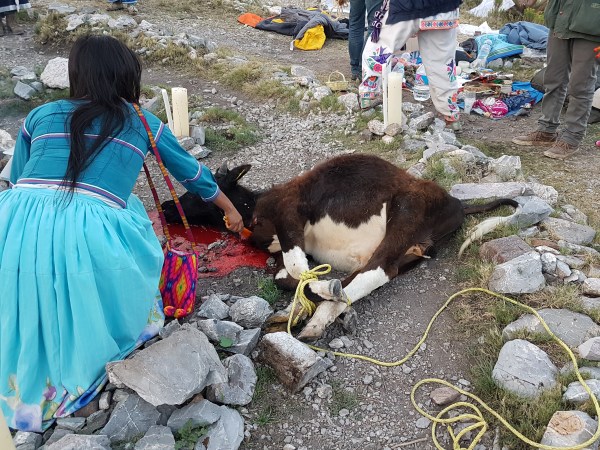
Aukwe Mijarez dips candles into the warm blood of the sacrificial calf.
The ceremony was a plea to the tribe’s gods to defend their ancestral lands from transnational mining companies and their people from displacement at the hands of predatory drug cartels. The Wixárika have inhabited this region of northern Mexico that stretches across four states to the Pacific coast. Today, the Wixárika number 45,000, and they worry that these emerging threats signal the erasure of their culture.
Ceremonies like this one are fueled by peyote, a hallucinogenic cactus sacred to the Wixárika, or Huichol, people, and vital in facilitating conversation with their gods. But thanks to a booming illegal peyote tourism industry nearby, even that part of their culture is in jeopardy.
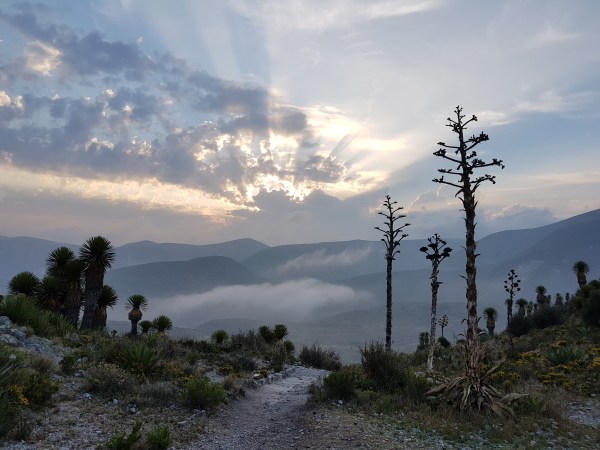
Dawn breaks over the mountains where the Wixárika believe the sun was born.
The Wixárika have taken practical measures against these existential threats but they believe they need divine intervention to ensure their survival. VICE News accompanied the indigenous group’s leaders on their annual pilgrimage to the Cerro Quemado, a cactus-covered mountain in San Luis Potosí where they believe the sun was born. This year’s voyage took on added urgency as it came just days after two Wixárika activists were murdered in nearby Jalisco state.
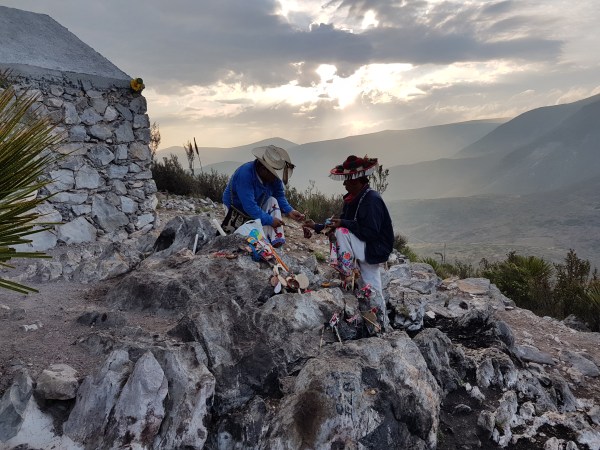
The rocky Cerro Quemado mountaintop serves as an altar for the pilgrims’ elaborate offerings.
Miguel Vázquez, a prominent land rights activist, was fatally shot by gunmen believed to work for the Jalisco New Generation cartel in the town of Tuxpan de Bolaños on May 20. His brother Agustín was killed after visiting him in the hospital that night…
 The Tequila Files