Abducted children freed from Zapopan hideout
Dominic and Abby Maryk, now 11 and 9 respectively, were allegedly abducted by their father Kevin Maryk, 40, in 2008.
Following a private investigation, Mexican federal police raided a property in a gated community in a remote rural area just off the highway to Tesistan last Friday. Maryk and his friend Robert Neil Groen, 41, were arrested at the scene.
The raid occurred after private investigator Juan Manuel Estrada Juarez, president of the Guadalajara-based FIND Foundation, contacted Interpol and Mexico’s federal police. Estrada himself had been passed information by Wilhelm Von Mayer, another private investigator from the United States.
Estrada told the Reporter that criminal complaints have been filed against the two suspects for possession of firearms, drugs and child pornography allegedly found at the home.
The alert was first raised when Maryk and Groen’s neighbors recognized the kids from recent news reports. Police said the tip came after the children had been moved five times, including to Puerto Vallarta and Guadalajara.
The children from Winnipeg were reunited with their mother Emily Cablek over the weekend.
“I cannot put into words how grateful I am for the wonderful support I received from the community over the past three years,” Cablek said in a statement released Monday. “We have a long road ahead, and I want my children to feel completely safe through all of it, they deserve nothing less.”
The parents were divorced, with Cableck retaining custody over the kids, while Maryk had visitation rights. The children first went missing during a court-approved vacation with their father in August 2008.

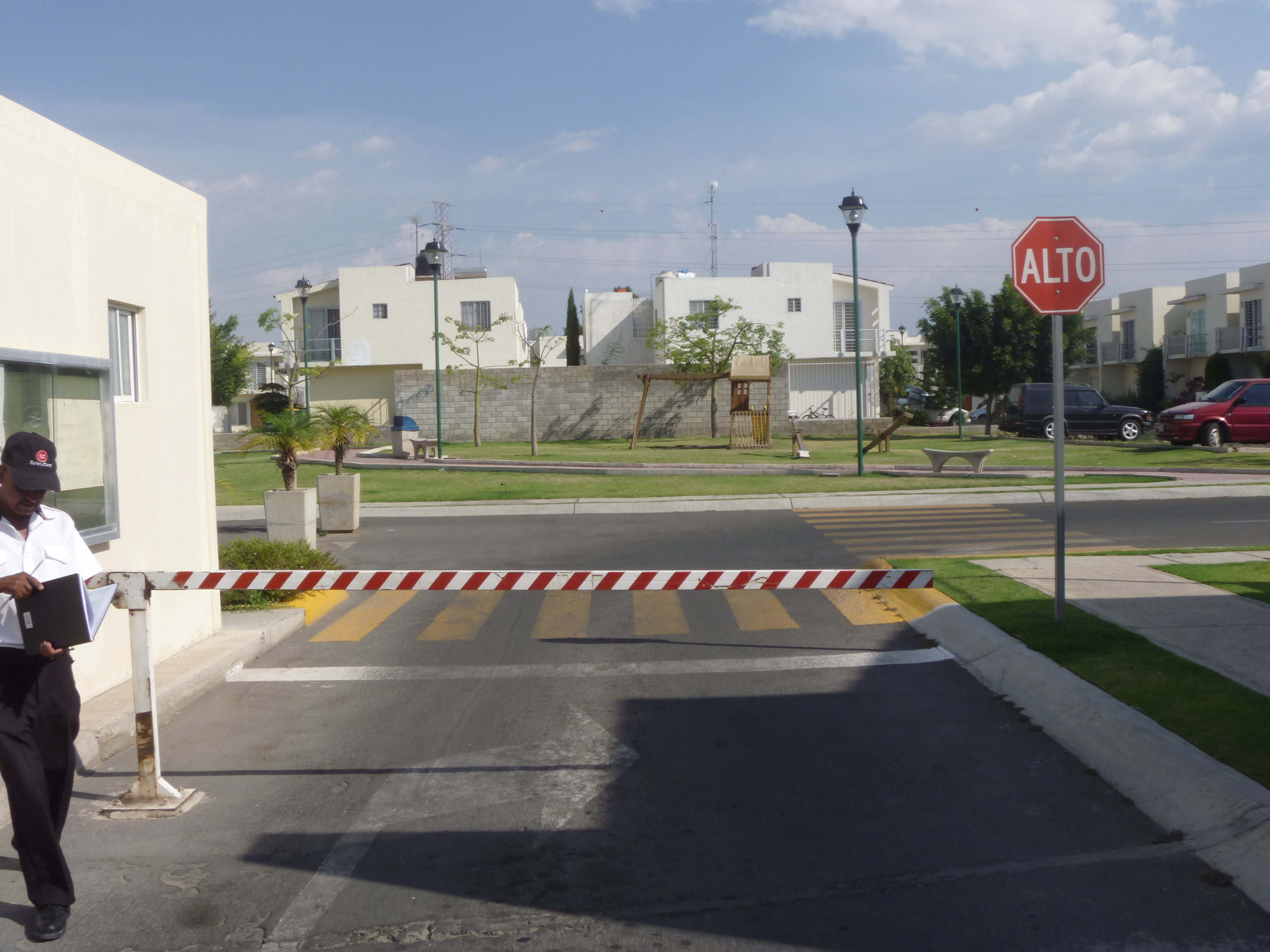
The quiet Jardines de las Fuentes compound where the kids were held was an ideal hideout, one of many gated communities in the area offering residents both privacy and security.
Maryk and Groen had fortified their home, lining the perimeter walls with barbed wire, installing security cameras above the door and keeping four attack dogs to warn off uninvited guests.
Like many of those living in the compound, they kept a low profile. Many of their neighbors told the Reporter they had never seen the pair and none of the staff working in the nearest convenience store recognized their mugshots.
A security guard told the Reporter he often saw Dominic and Abby playing in the park in front of their home.
“They were calm and normal. They didn’t look at all unhappy or unwell,” he said, surprised at the news of what had allegedly taken place. “Sometimes things happen here that shouldn’t happen,” he added.
“Everyone thought it was strange that the kids didn’t go to school,” said another neighbor who had often seen the two men and the children. “They would only leave with the kids very late at night and return early in the morning.”
Winnipeg police said both men will be charged with conspiracy to commit an indictable offense, while Maryk also faces charges of abduction in contravention of a court order. The pair are being held in a federal prison in Mexico City and are expected to be extradited to Canada within the coming weeks or months.
Mexican authorities are investigating whether Maryk and Groen have links to local drug gangs, while police in Canada are still searching for a third suspect, Cody McKay, from Winnipeg.
I also wrote a freelance report on this story for Canada’s Winnipeg Free Press.
Students rally against Peña Nieto, Televisa
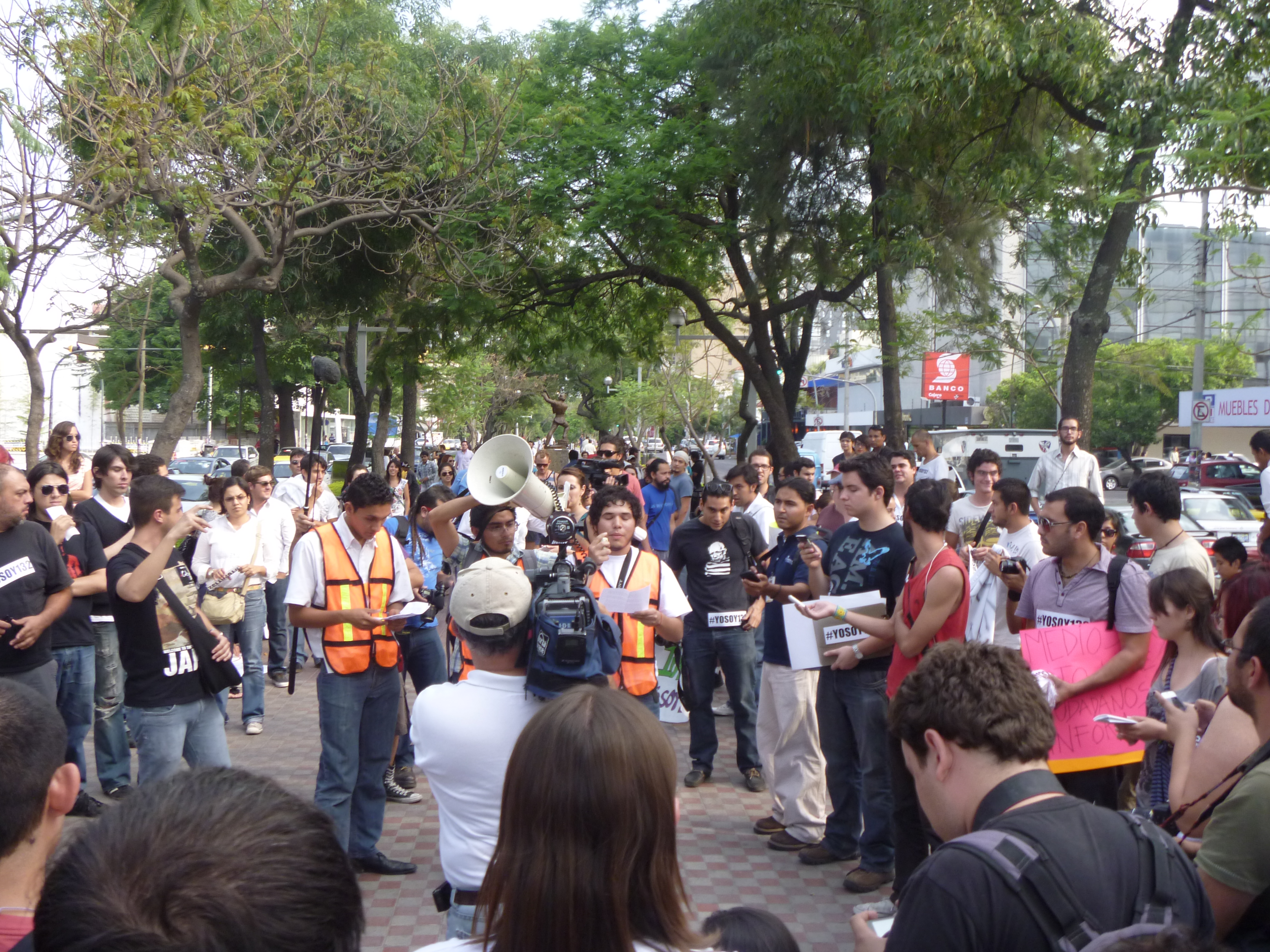
Protestors marched in 15 states on Saturday to express their displeasure with presidential frontrunner Enrique Peña Nieto and the Institutional Revolutionary Party (PRI), which ruled Mexico with an iron fist from 1929 to 2000.
Over 40,000 students and young people converged peacefully in Mexico City’s Zocalo, while around 3,000 Tapatios marched from Guadalajara’s Plaza Liberacion to the Parque Revolucion. From there, the demonstrators moved to Televisa’s Guadalajara offices to protest the influential media giant’s support of Peña Nieto, before ending the march in Avenida Chapultepec.
The student movement against Peña Nieto was galvanized earlier this month when he was heckled during an appearance at the private Universidad Iberoamericana. The PRI claimed that its political opponents had put the students up to it or even sent outsiders to disrupt the interview.
Days after the event, 131 students from the Iberoameriana posted a video online in which they displayed their university IDs and affirmed that they had not been sent by anyone, but were fed up of lies and corruption.
In solidarity with those students, the movement became known as “Yo Soy 132” (I’m number 132). The union of students from private and public universities is notable as class divisions have historically kept the former from joining the latter in political protests.
Coordinated via social networks, Yo Soy 132 held more marches in major cities across Mexico, including Guadalajara, on Wednesday night.
Unlike in Saturday’s demonstrations, the organizers of the march did not specifically target Peña Nieto, although many of those who took part made their dislike of the PRI candidate clear.
“We’re not against Peña Nieto. We’re a non-partisan movement,” explained Montse Narro, a Yo Soy 132 coordinator. “We’re a student movement, here in Guadalajara, in Mexico City, in Queretaro, Puebla, Monterrey and many other places.”
While not affiliated with any political party or candidate, Narro said that “we want people to vote, but we want them to make a conscious, informed decision to vote.”
The idea is for a more constructive focus than the ballot spoiling movement that emerged during the 2009 mid-terms. “Just complaining achieves nothing; we must make proposals and give opinions and constructive criticism,” said Narro.
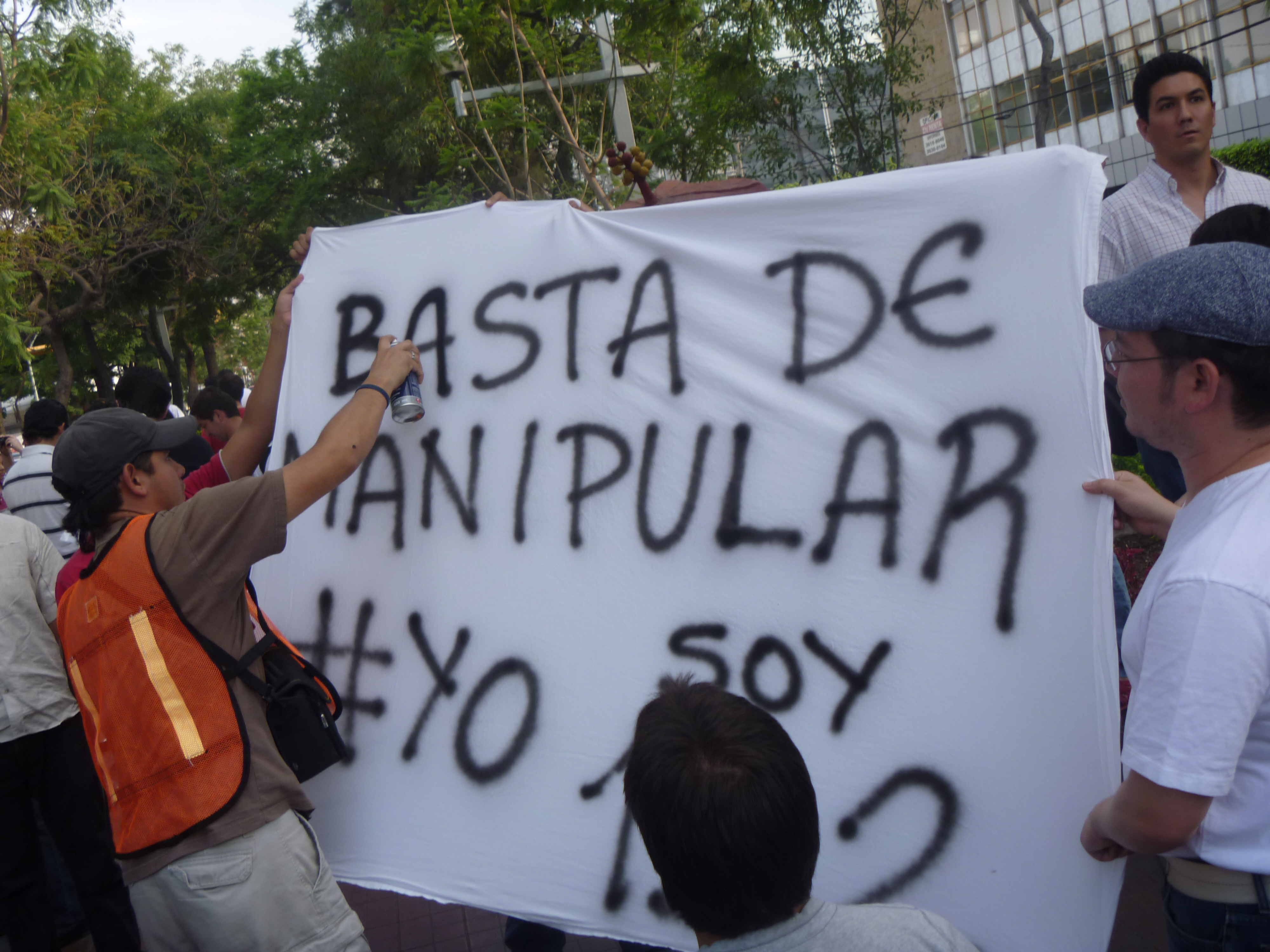
Yo Soy 132 is also highly critical of Mexico’s mainstream media – especially Televisa. Carrying placards with anti-Televisa slogans, some 300 students took part in the march down Avenida Chapultepec toward the Niños Heroes Glorieta and the Televisa offices on Avenida Alemania.
“We do not agree with the way the media manipulates the news. We do not agree with the way Televisa presents things, they have to be impartial and say it how it is,” Narro said.
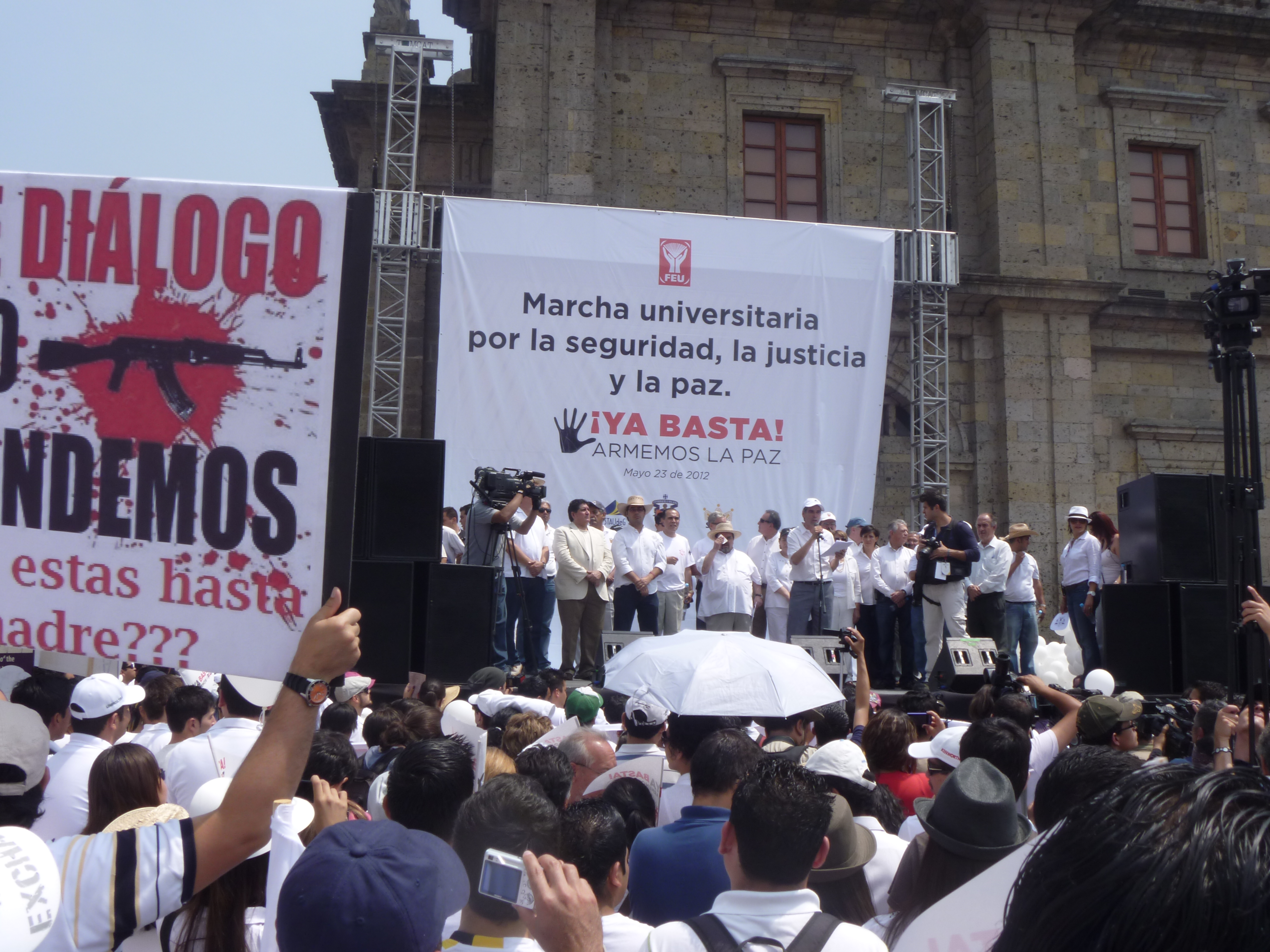
With the university accused of supporting the Institutional Revolutionary Party (PRI) this week, those leading the march sought to emphasize that this was a non-partisan event.
“We’re not votes, we’re human beings!” cried Marco Nuñez Becerra, president of the Federation of University Students (FEU), in an impassioned address after leading a minute’s silence in remembrance of student victims of organized crime.
Around 30,000 students from the UdeG and its affiliated preparatorias took part in the silent march which culminated in a demonstration in the Plaza de Armas beneath the blistering midday sun.
All dressed in white, carrying placards and waving flags, the protesters demanded justice and full investigations into the cases of 11 UdeG students murdered over the past year. Cries of “justice” and “we want peace” repeatedly rang out.
Speakers included UdeG Rector Marco Antonio Cortes Guardado, representatives of the Movement for Peace with Justice and Dignity and three mothers whose children have disappeared or been killed.
The most recent victims include Itzel Adilene Rodriguez Garcia, an 18-year-old student from Preparatoria 10, who was kidnapped and later found dead in Zapopan earlier this month. There were also four UdeG students among the 18 who were massacred and dumped beside the Chapala highway in Ixtlahuacan a fortnight ago.
UdeG protests are a curious phenomenon. Organized from above by the university rector and student union leaders, these are not the spontaneous grass-roots demonstrations that more commonly spring up in other educational institutions.
Not everyone in attendance agreed with the politics of those behind the march. A group of six students carried banners stating, “I am marching for peace, not for the political interests of my university.”
One of these students, Jacob Olvesa, lamented the partisan nature of the UdeG hierarchy, explaining, “everyone knows the Jalisco PRD (Party of the Democratic Revolution) controls the university.” He described it as “an enormous contradiction that the university leads peace marches” given the rumors of gangsterism that plague the history of the UdeG and its affiliated unions. All six affirmed that they would be voting for Enrique Alfaro of the Citizen’s Movement, not the PRD or PRI candidates.
These were not the only students speaking out against the university hierarchy this week. On the eve of the protest, 100 FEU members quit the organization.
They accuse the FEU and UdeG leadership of supporting Jorge Aristoteles Sandoval Diaz, the PRI candidate for governor of Jalisco, and persecuting supporters of Alfaro.
UdeG kingpin Raul Padilla is strongly opposed to Alfaro’s candidacy, having waged a bitter feud with the former Tlajomulco mayor in recent years. Padilla is a highly influential figure within the Jalisco PRD, with whom Alfaro split less than a month into his campaign.
 However the PRD lags way behind all other parties in the gubernatorial race and many believe Padilla favors a PRI victory.
“They told us if we were not with the PRI then we should go to hell,” said former FEU member Victor Vazquez at a press conference on Tuesday, revealing that some of those who resigned from the union had been beaten and threatened via email and telephone.
“We were intimidated for being in favor of the candidacy of Enrique Alfaro. The Federation itself has been preventing Alfaro entry to universities,” Vazquez said.
After Wednesday’s peace demonstration, the FEU president told the Reporter there was no truth in the allegations.
“This is part of what’s called a ‘dirty war’ and when they do not have proof this ends up being laundry-room gossip,” said Nuñez. “The FEU is a non-partisan organization. They cannot say that I have criticized them for being in favor of a certain candidate.”

