‘I can’t believe how I used to live’: from gang war to peace treaties in Monterrey
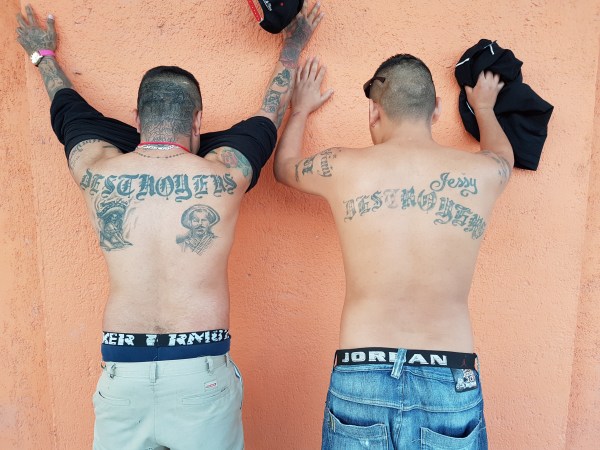
Two rehabilitated former members of Monterrey’s Destroyers gang who now work for NPT.
Juan Pablo García was six years old when he left home and joined a street gang. Over the next 14 years he sold marijuana for a local kingpin, became the leader of his own gang and developed a heavy cocaine addiction. Like thousands of others who hustle on the dusty streets of Monterrey, Mexico’s third-biggest city, he was the product of a society that has spawned a seemingly endless cycle of violent crime.
“I grew up in a very poor neighbourhood. We didn’t even have water or basic services,” García recalls. “After my dad abandoned us I wanted to earn money on the streets to support my mum, but I ended up getting involved with gangs.”
It was only when he “found God” at the age of 20 that García managed to break the cycle, although it took another three months of homeopathy and abstinence to kick his cocaine habit. Now 42, he is helping others to escape gang life and return to school or find formal employment opportunities.
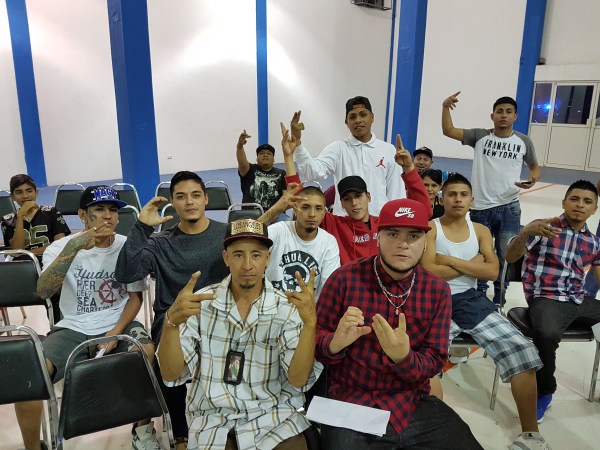
NPT estimate that there are 2,400 street gangs in the Monterrey area alone.
In 2011 García founded the NGO Nacidos Para Triunfar (Born to Triumph; NPT) in a bid to prevent vulnerable youths from joining street gangs and becoming foot soldiers for large predatory drug cartels. “At this time Monterrey was controlled by the cartels,” he says. “There were a lot of kidnappings and carjackings. People didn’t want to leave their homes.”
García has since brokered over a dozen truces between more than 100 street gangs that were once locked in longstanding feuds over territory and respect. Almost 400 former delinquents have graduated from NPT’s educational programme and the aim is to remove 2,000 kids from gangs in the Monterrey area.
Thirteen gangs signed a truce at a gym hall in Monterrey’s San Bernabé neighbourhood in January. A dozen police officers brandishing submachine guns kept watch beneath the broken streetlights outside as 300 adolescents filed in wearing baseball caps, chains and baggy jeans.
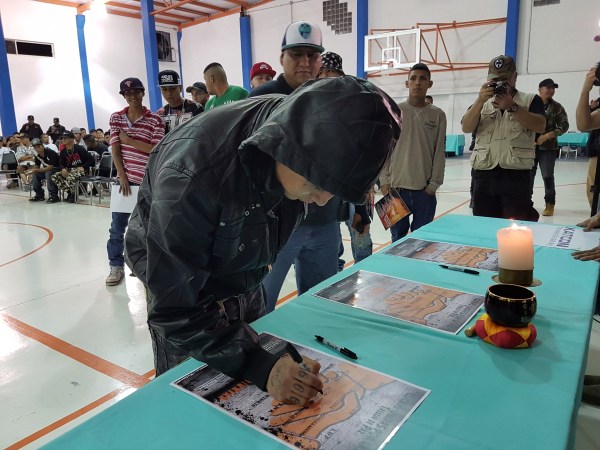
The leaders of 13 warring street gangs signed a truce in a gym hall in Monterrey in January.
Each gang leader had to sign the treaty and embrace their rivals but the pact almost broke down when one pair exchanged overly aggressive fist bumps. A tense standoff ensued but García persuaded them to make up. Celebrations followed, with the attendees sharing tacos and soft drinks before skanking together to live vallenato music.
Eduardo, a 16-year-old member of the TFP gang, one of the approximately 2,400 gangs in the city, hopes the truce will bring lasting peace. “We fight over things that aren’t worth it. I’ve seen stabbings and the crazier guys even pull out pistols or machetes,” he says. “It would be great if the gangs stop fighting but these rivalries go back many years. It’s hard to let your guard down but this foundation is really helping us.”

NPT have now brokered over a dozen truces between more than 100 street gangs.
Eduardo’s girlfriend, Alexa, joined his gang last year. She was only 11 when she started drinking and smoking marijuana but now hopes for a brighter future. “I’m about to finish high school,” she says shyly. “I’d like to go to university and become a family lawyer.”

Jalisco’s governor welcomes foreign talent ‘with no discrimination of origin, religion or legal status’
Donald Trump’s obsession with tearing up NAFTA, bringing back jobs, deporting millions of undocumented immigrants and making Mexico pay for his infamous wall has inspired much fear and uncertainty south of the border, causing the peso to plummet to record lows.
Tens of thousands of Mexicans marched across the country on Sunday to show they will not be bullied, but also to castigate their own president, Enrique Peña Nieto, whose approval ratings have slipped to 12 percent partly because of his meek response to Trump’s threats.
In Mexico’s burgeoning tech sector, however, concern is offset by recognition of an opportunity to build a more self-sufficient scene and capitalize on Trump’s rejection of foreign talent.
Long famed as the birthplace of tequila and mariachi music, the western state of Jalisco is now known as “Mexico’s Silicon Valley” due to the proliferation of local and multinational tech firms clustered around the state capital Guadalajara.

Mexico’s CityDrive is growing while Uber has lost business over its past links to Donald Trump
Last week, Jalisco governor Aristóteles Sandoval ran a bold full-page ad in Politico magazine offering to work with any American tech firms affected by Trump’s policies, while providing opportunities for their 85,000 foreign workers “with no discrimination of origin, religion or legal status.”
“If the United States shuts the door on people with visas and skills then of course we’ll open the doors to them here in Mexico, where there’s no barriers for talent,” Sandoval said in an interview with Motherboard on Monday before flying to California for talks with local officials and dozens of major tech companies and startups…
Feast your eyes upon Mexico’s most underrated tacos
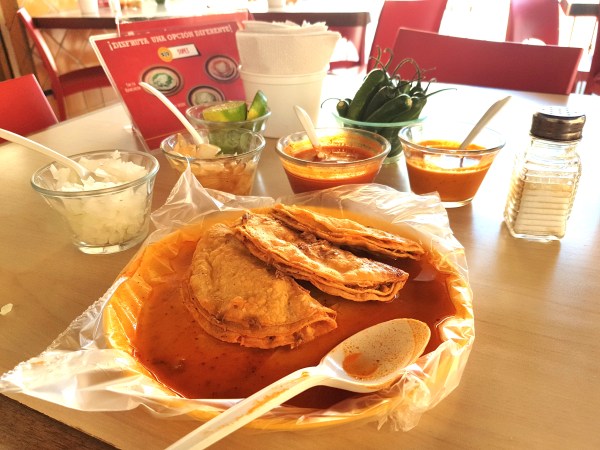
Most people at Tacos Charlie order their tacos “bañados”—literally bathed in sauce.
Everyone loves tacos al pastor. Beef steak, chorizo, and shrimp tacos are also hugely popular choices in both Mexico and the United States. But some regional specialties remain tragically overlooked. Jalisco-style tacos de barbacoa, for example, are perhaps the most underrated members of the taco family.
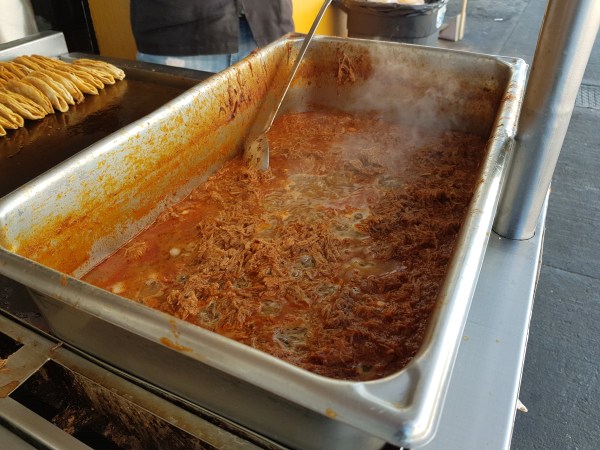
The barbacoa is made with shredded beef slowly braised with chiles and tomatoes.
The central Mexican state of Hidalgo is rightly famed for its barbacoa: a succulent, pit-roasted mutton served over soft corn tortillas and often washed down with a mug of pulque. But there are other ways of doing barbacoa and few are better than the slow braised beef packed into crunchy corn tortillas found in the western state of Jalisco.

Once stuffed with meat, the corn tortillas are glazed and crisped on the comal.
Here in Guadalajara, the Jalisco state capital, the quality of barbacoa can vary considerably from one establishment to another, but when it’s done right it’s better than practically any other taco filling. Although generally considered a breakfast food, tacos de barbacoa also make a fine lunch and I’d probably eat them for dinner as well if they were still on sale anywhere in the evening. (I’ve looked; they’re not.)
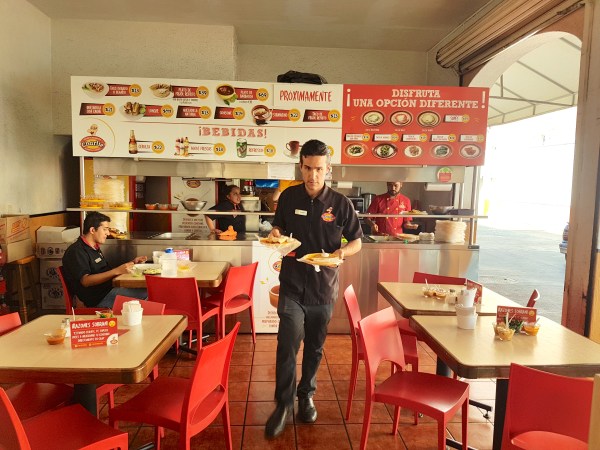
Tacos Charlie is one of the best places in Guadalajara to try tacos de barbacoa.
Once stewed in a tomato- and chile-based broth, each helping of shredded beef is typically stuffed into two tortillas and then fried on the comal until the outside turns satisfyingly crispy. Meanwhile the inner layer remains soft and soaks up the flavor from the meaty juices. Add one spoonful of diced raw onion, another of fried onion, a pinch of cilantro, a squeeze of lime juice and a dollop of salsa, and you’re in taco heaven…
 The Tequila Files