Pollution turned this Mexican river into a toxic hell
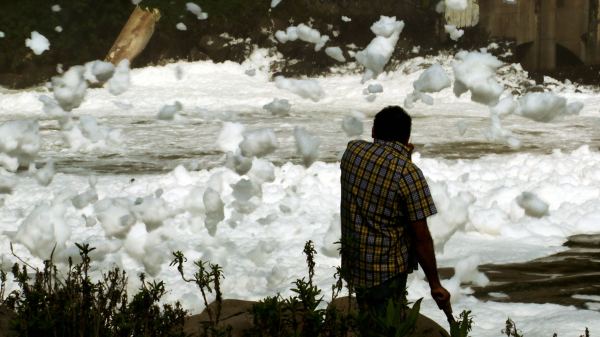
Industrial pollution creates clouds of toxic waste at El Salto. Photo by IMCINE-Tecolote Films-PIANO.
El Salto de Juanacatlán was once a majestic waterfall where locals would fish, bathe, and play. Today the air stinks of sulphur, yellow-tinged water cascades over the rocks, and clouds of bright white foam collect at the foot of the falls before drifting downstream.
After years of watching the authorities fail to acknowledge the seriousness of the problem, desperate locals are now intensifying their calls for action. They claim it is already too late for 628 locals who they say the pollution has killed in the last eight years. That includes 72 deaths in 2015, the worst year to date.
“My mother and two sisters died of cancer,” said Samuel Álvarez, a pensioner with white stubble and few teeth, as he ambled down the town’s uneven streets on his morning walk. “We used to live right next to the river and I think it was caused by them inhaling the industrial fumes every night.”
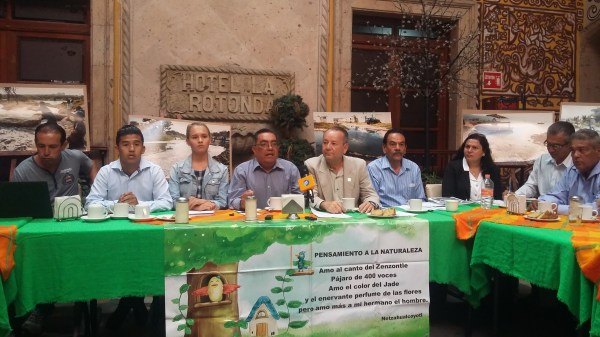
Environmental activists from El Salto demand that the government find a solution.
The devastation of El Salto began in the 1970s as industries began to congregate in the now decrepit town located on the southeastern outskirts of Guadalajara, the second-largest city in Mexico and the capital of the state of Jalisco…
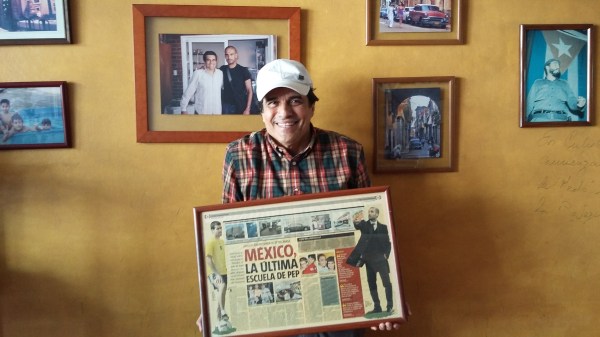
Guardiola used to eat at José Luis Bracamontes’ restaurant La Cocinita del Medio after training everyday.
The city of Culiacán in north-west Mexico, best known as the bastion of the notorious Sinaloa cartel fronted by the billionaire drug kingpin Joaquín “El Chapo” Guzmán, was an unlikely place for Manchester City’s new manager, Pep Guardiola, to begin the process that would culminate in him becoming the world’s most sought-after coach.
Baseball, not football, has long been the most popular sport here and the newly founded local side Dorados de Sinaloa were minnows locked in a desperate relegation struggle when Guardiola, who turned 35 that month, arrived in January 2006.
It was hardly the typical destination for a veteran footballer looking for one last pay cheque but, having won more than a dozen trophies at Barcelona and made a fortune playing in the Qatar Stars League, the Olympic gold medallist and European Cup winner did not make the move in search of further financial reward or another trophy to add to his collection.
Instead it was here, under the tutelage of his old friend Juan Manuel Lillo, who had taken over at Dorados the previous summer, that Guardiola began to prepare for what has proved one of the most spectacular managerial careers in modern football history.
“We were in our second year in the top division and we’d just brought in Juan Manuel Lillo as our coach,” recalls the Dorados founder and former president, Juan Antonio García. “He told me there was a real possibility that we could sign Pep, who’d just reached the end of his contract in Qatar. Pep was already taking his coaching badges and the objective of playing in Mexico was above all to be close to Juan Manuel.”
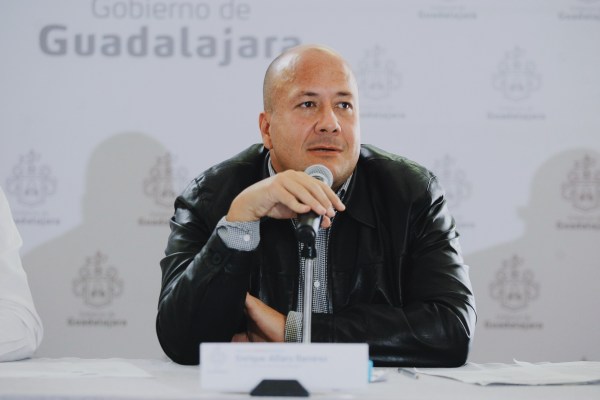
Guadalajara Mayor Enrique Alfaro says his administration refuses to communicate with criminal gangs.
When María Guadalupe Aguilar reported the disappearance of her 34-year-old son José Luis Araña on the outskirts of Guadalajara, she was surprised that the police asked her to fund the investigation.
“They told me they needed money to search for him, to cover their petrol costs and to pay for intelligence reports,” she says. “Stupidly, I believed everything at first.”
Aguilar, a retired nurse, eventually paid almost 70,000 pesos (£2,860) to several different police officers in the hope they would help locate her son. They made no progress and she eventually had to sell her house to fund her own ongoing investigation.
“This kind of corruption has become very normal,” Aguilar reflects, five years on from her son’s disappearance. “Unfortunately I now have no house, no money and, mostly importantly, I still don’t have my son.”
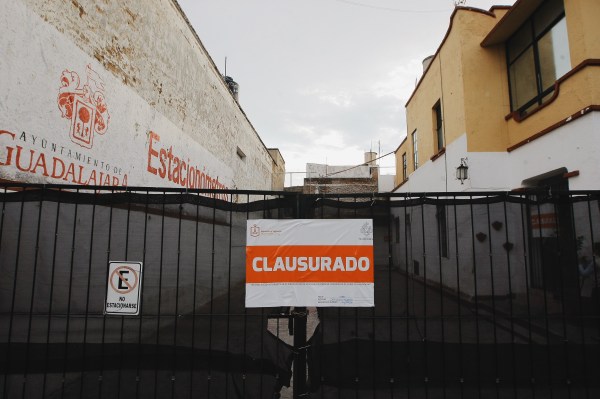
The municipal government recently shut down a firm contracted to run Guadalajara’s parking meters for cheating the city out of 100 million pesos.
But having grown all too accustomed to paying the price for corruption, residents of Guadalajara, Mexico’s second biggest metropolis, have begun to push back against this pervasive culture, with political newcomers, civil society and even local technology firms putting forward fresh ideas to create a more transparently run city.
It is hard to overestimate the impact of corruption in Mexico. It affects almost every aspect of governance and development, from policing and political appointments to public works and private construction projects. Global economics experts estimate that corruption accounts for between 2% and 10% of Mexico’s GDP, while Transparency International ranked Mexico a lowly 95th on the list of the world’s least corrupt countries in 2015, alongside the Philippines and Mali…
 The Tequila Files