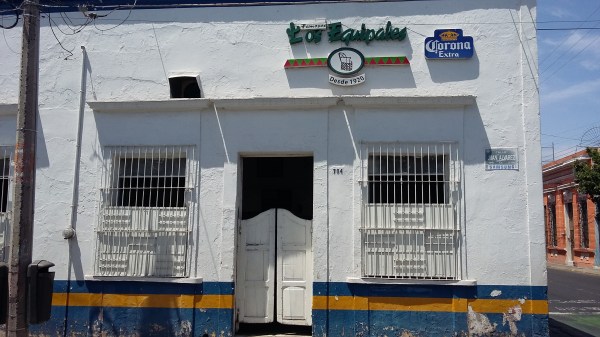
Guadalajara’s Los Famosos Equipales cantina was founded in 1920.
Today’s professional soccer players must follow super-strict diets to ensure they’re in optimum physical condition when they step onto the pitch, but this has not always been the case. In mid-20th-century Mexico—long before sports nutrition was a thing—the stars of Chivas de Guadalajara, the nation’s most popular soccer team, had a very different way of preparing for each game: getting fired up on tequila.
The Chivas team from this era is widely regarded as the greatest in Mexican history. Known as the “Campeonísimo” or “ultimate champions,” they won 15 trophies, including seven Mexican league titles, in eight years from 1957 to 1965. But was pre-gaming the secret to their success?
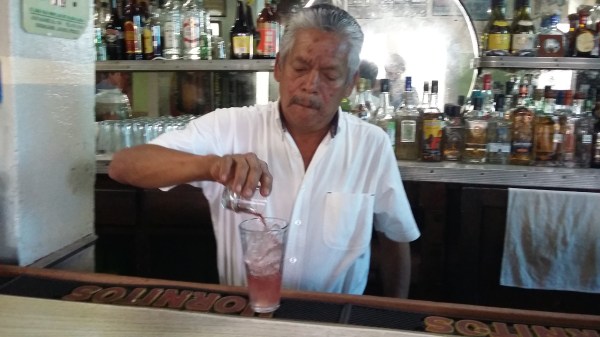
Cuco the waiter prepares the house cocktail “Nalgas Alegres” (Happy Buttocks).
Cuco, a senior waiter at Los Famosos Equipales cantina in downtown Guadalajara, tells me the players used to come in for a quick refreshment on the morning of each game. “They would come in at 11 AM and down a shot or two of tequila and then go and play at 11:30,” Cuco says. “It was a tradition they had so that they’d start the game feeling happy.”
Parking cars on the edges of Mexico’s informal sector

Rafael leads an informal union of parking attendants in Guadalajara.
Leonardo has been working on the scorched streets of Guadalajara, Mexico’s second biggest city, for eight years. To some, he is a criminal who extorts honest citizens and claims ownership of public spaces. To others, he is a useful handyman whom they trust with their car keys each morning.
Having failed to find a formal job to support his wife and four children, 42-year-old Leonardo is one of the 57 percent of workers who labour in Mexico’s informal economy, according to a 2015 study (PDF) by the Organisation for Economic Cooperation and Development.
Like all informal parking attendants, known here as ‘franeleros‘ or ‘viene-vienes‘, Leonardo has his own designated patch, where he helps locals to park and then keeps watch over their cars. Those who have been working the longest claim the right to the city’s busiest blocks, he explained.

Some locals accuse parking attendants of extortion but others trust them with their car keys.
“On a good day, I can make up to 600 pesos (about $35) but another day I might only make 50 pesos ($3),” Leonardo told Al Jazeera.
Easily recognised by their baseball caps, baggy T-shirts and jeans, and the washcloths slung over their shoulders or hanging from their back pockets, franelerostypically charge 20 to 40 pesos ($1 to $2) to watch over people’s cars in a city where robberies are all too common.
However, many locals view franeleros as an annoyance and fear they will purposely damage their vehicles if they refuse to pay up…
Click here to read this feature in full at Al Jazeera English.
One of my resolutions for this year was to start video blogging and do more audiovisual work. So here’s the first ever Tequila Files video blog entry. I plan to tackle different themes or important issues facing Mexico each week and I’ll hopefully get some interesting guests on in the weeks to come. I also plan to cover some sports and cultural stuff, but to start with I decided to address one of the most common questions I get: how dangerous is it to be here? Comments, questions, suggestions and constructive criticism are all welcome.
 The Tequila Files