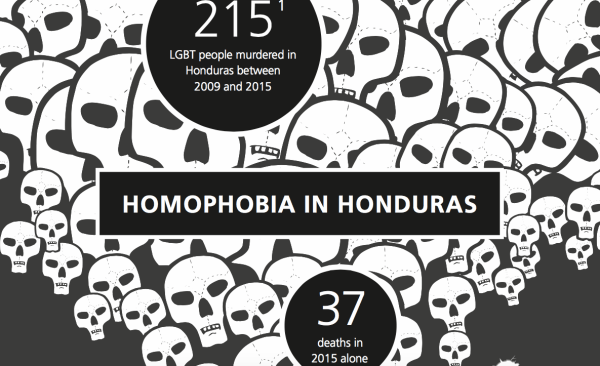
Homophobic violence in Honduras has skyrocketed since the 2009 coup.
A year after returning from exile, Honduran gay rights activist Donny Reyes still fears a murderous attack at any minute. “I’ve been imprisoned on many occasions. I’ve suffered torture and sexual violence because of my activism, and I’ve survived many assassination attempts,” he said, in an interview with Index on Censorship.
Activists in Honduras must contend with a constant barrage of threats and, often fatal attacks. Reyes, the coordinator of the Honduran lesbian, gay, bisexual, and transgender advocacy group Arcoíris (Rainbow), had spent 10 months abroad for his own safety, but felt an obligation to return to the frontline of the fight against discrimination. “To be able to continue with my personal life and my work I have to be conscious that [death] could come at any moment,” he said…
This feature appears in full in the Spring 2016 edition of Index on Censorship magazine. It is also available online for a limited time only and can be read here.

“You taste like a lie,” the smartly dressed narcocorrido (drug ballad) singer Gerardo Ortiz croons before he walks in on his voluptuous lover in bed with another man. Ortiz calmly pulls out a pistol and shoots the man in the head, splattering his blood against the bedroom wall. He then gropes his scantily clad girlfriend, grabs her by the throat, and locks her in the trunk of his car.
Armed police officers burst into his home but it’s already too late. Ortiz nonchalantly flicks his cigarette to the ground, igniting a trail of gasoline that engulfs the car and burns his girlfriend alive. The singer then flashes a creepy smile and swaggers away with flames crackling behind him.
Narcocorrido singers are notorious for glorifying violence but the video to Ortiz’s new single “Fuiste Mía” (You Were Mine) — which has over 20 million hits on YouTube — has proven particularly controversial for appearing to encourage femicide in a country where a woman is murdered every four hours.
Over 5,000 people have signed two online petitions calling for YouTube and the Mexican authorities to ban the video. Mexico’s interior secretary and members of congress have also advocated censorship, while local officials say Ortiz could even face criminal charges for inciting gender violence.
The video was shot last December in the municipality of Zapopan, a hotspot for violence against women in the western state of Jalisco. It was filmed with the help of local police officers, as two patrol cars seen in overhead shots are clearly marked “Zapopan municipal police,” although their identification numbers have been covered up with tape.
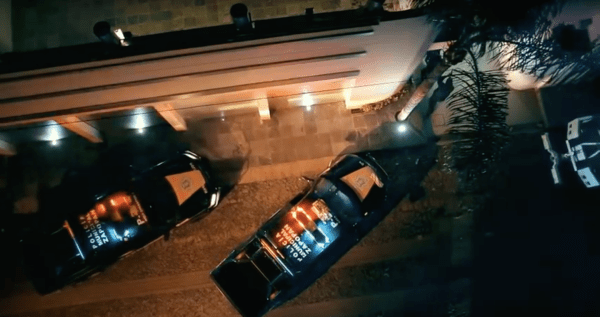
Gender violence is a major problem in Mexico, where seven women were murdered every day in 2013 and 2014, according to the National Institute of Statistics. Zapopan has been particularly badly affected and it was one of eight municipalities where the Jalisco state government declared a gender alert in February, triggering the release of federal funds and the adoption of heightened security protocols to reduce the level of violence against women.
Sofía Virgen, the Jalisco coordinator of the Latin American and Caribbean Committee for the Defense of Women’s Rights, coauthored an open letter to Zapopan’s municipal government on Monday, demanding an investigation into the use of any public resources in the production of a video that completely undermines the aims of the gender alert.
In an interview with Noisey, Virgen, whose sister Imelda was raped and murdered by hitmen allegedly hired by her husband in 2012, said the video “contributes to this culture of femicide and even justifies it. And this is just an example of all the songs and videos that promote all this violence that has become so normal in our culture.”
On Wednesday Zapopan Mayor Pablo Lemus announced that his office had formally reported the video before the state attorney general’s office for encouraging or condoning crime, which is a criminal offence in itself in Mexico. Lemus said his government had turned down a request by video production firm Andaluz Music to allow four police cars and six officers to appear in the video. Three police officers were fired on Wednesday after it was discovered that they participated in the shoot without authorization, the mayor added.
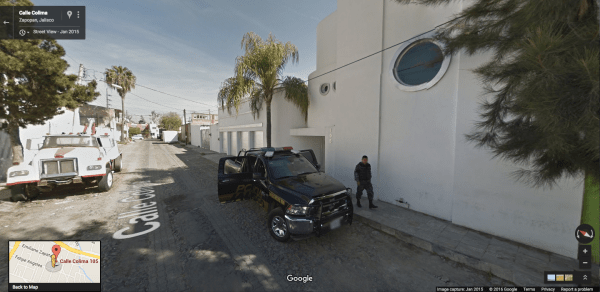
The location of the shoot has also proven controversial. The video appears to have been filmed at 105 Colima street, a building that was raided by state police in November 2014 after neighbors reported hearing gunfire. The police reportedly arrested 14 people at the house, which was said to have been used as a clandestine casino, and seized an array of illegal firearms, including an AR-15 assault rifle and an AK-47 with a mounted grenade launcher.
It is unclear who owns the building or who gave Ortiz permission to film there. Jalisco’s attorney general, Eduardo Almaguer, denied this week that state police had ever seized the property, yet Google Street View images taken in January 2015 — two months after the raid — show state police cars still stationed outside. Almaguer has adopted a tough stance against narcocorrido artists. He warned last year that they are “not welcome in Jalisco” and this week asked authorities in the town of Tepatitlán to cancel an upcoming Ortiz concert.
Ortiz is one of the biggest stars of the narcocorrido genre. Derived from norteña folk music played on accordions and sousaphones, it is often compared to American gangsta rap and has grown hugely popular across Mexico and the southwest United States. Artists like Ortiz and El Komander play to packed arenas on both sides of the border, drawing a frenzied reaction to their gory ballads that glorify the narco lifestyle.
Mexican kingpins are believed to invite bands to play at their parties, while up-and-coming gangsters often commission artists to write songs about them in a bid to gain greater notoriety. Ortiz, who was born in Pasadena, California, has become closely associated with Mexico’s powerful Sinaloa Cartel and his 2013 hit “Dámaso” — an ode to a flamboyant young member of the cartel — has clocked up over 169 million views on YouTube.
It is a dangerous industry, as feting members of one cartel risks drawing the wrath of rival gangs. Dozens of narcocorrido singers have been gunned down in recent years. Ortiz survived a shooting that left his manager and his driver dead in 2011 and he also had to suspend a show in the State of Mexico last year after shots rang out in the crowd.

Despite the storm of controversy his latest video has provoked, Ortiz has not shown any sign of regret. In response to the mounting criticism, he posted a meme on Instagram last week with the words: “My video, violent and disturbing? You’ve gotta be shitting me.”
Others within the industry have also come to Ortiz’s defense. Conrado Lugo, a narcocorrido producer from Sinaloa, told Noisey it would be a mistake to press charges against him.
“It’s not condoning crime because it’s a work of art,” he said. “Imagine if this logic were always applied, they’d have to censor all the scenes in telenovelas, movies and TV series that condone violence.”
Lugo also noted that the hugely popular ranchera singer Alejandro Fernández did not face criminal charges after releasing the controversial song “Mátalas” (Kill Them) in 2003, in which he explicitly implores the listener to “get a gun if you want or a dagger if you prefer and become a murderer of women”.
Nonetheless, activists like Virgen, who are determined to change Mexico’s culture of machismo, hope the authorities will finally set a precedent by prosecuting Ortiz for condoning femicide.
“It’s great that they’re taking action,” Virgen said. “I think it’s really important that this has sparked a debate.”
This article was originally published by Noisey México. Click here to read it in Spanish.
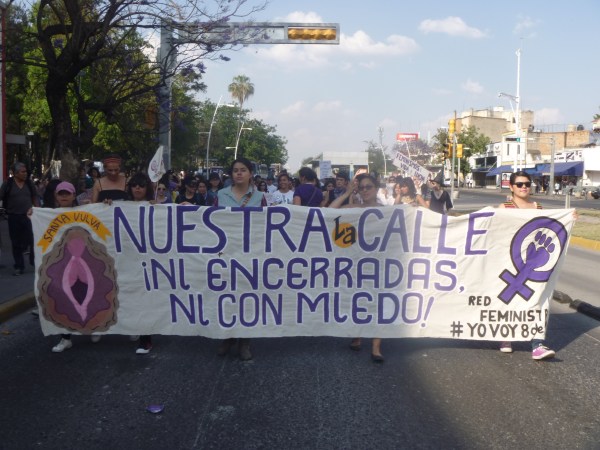
There has been a significant rise in the number of killings and disappearances of women in Jalisco in recent years.
When 19-year-old Denisse Velasco left school earlier this month in Guadalajara, Mexico’s second biggest city, she walked as she always does to a bus stop on Avenida Americas. It was 11am on March 7, and there was no one else around when a taxi pulled up beside her.
“Get in, they sent me for you,” the driver told her. Unconvinced that anyone would have called her a taxi without letting her know, Velasco chose to ignore him.
“Then he started shouting rude words and telling me to get in,” she recalled. “In that moment I heard a voice over the taxi radio say: ‘Get out and grab the bitch.'”
The driver was slim, with light skin, blue eyes, and gray hair, and he stood about 5 feet 6 inches. When she saw him getting out of the car, Velasco fled and took refuge in a nearby pharmacy.
“I was in shock but when I explained what had happened to the people inside they told me the taxi was no longer there,” she said.
It was one of many similar attempted abductions of young women in recent weeks across Guadalajara, the capital of the western state of Jalisco. Yet local authorities have sought to downplay the problem, and many of the victims have encountered difficulties when they tried to report what happened to the police.
The attempted kidnappings highlight a concerning trend in Jalisco, where the number of women reported missing has risen steadily in each of the last four years, peaking at 1,161 disappearances in 2015. Another 187 women were reported missing here in the first two months of this year, prior to the surge of cases in March that has drawn greater attention to this issue…
 The Tequila Files