Mexico set to release another culprit of infamous drug agent murder

Don Neto was convicted for the 1985 murder of DEA agent Kiki Camarena at this home in Guadalajara.
One of the godfathers of Mexican drug trafficking looks set to see out the last ten years of his sentence in the comfort of his own home after a federal court granted him permission to be held under house arrest earlier this month.
Ernesto Fonseca Carrillo, better known as “Don Neto,” was one of the most prominent leaders of the Guadalajara Cartel, Mexico’s first dominant drug-trafficking organization, throughout the 1970s and 1980s.
He was arrested in Puerto Vallarta in 1985 and sentenced to 40 years of imprisonment for his role in the abduction, torture and murder of DEA agent Enrique “Kiki” Camarena in Guadalajara earlier that year.
One of the most infamous crimes in the history of Mexico’s drug war, the killing provoked the largest manhunt in DEA history and soon led to the breakup of the Guadalajara Cartel…
Click here to read this article in full at Latin Correspondent.
Mexican babies might have been sold for up to $20,000 to American couples
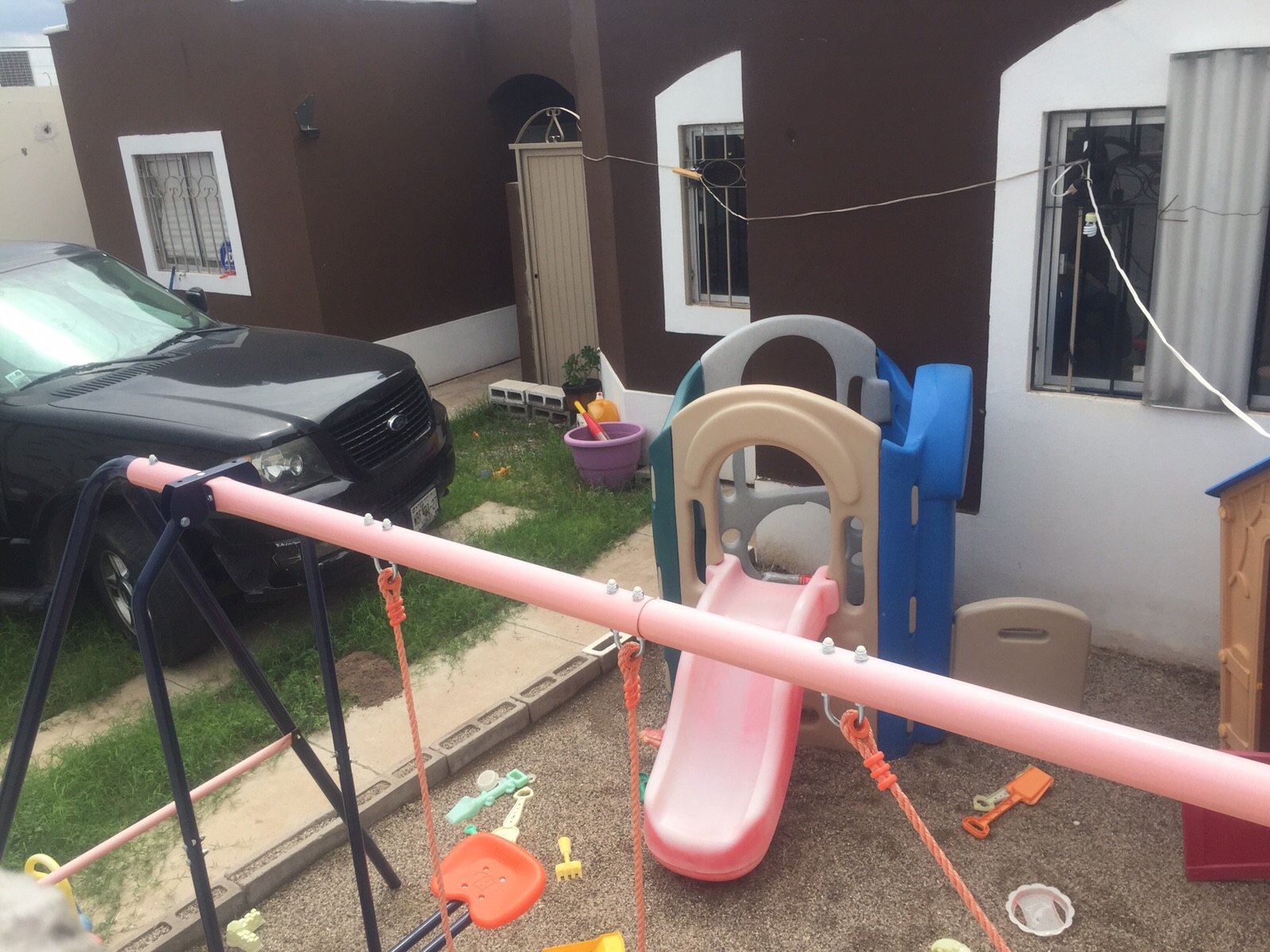
Two of the chief suspects lived at this home with the daughter they illegally adopted.
A cross-border baby trafficking ring allegedly operated by welfare officials in northern Mexico — and then covered up by state prosecutors — is highlighting the issue of human trafficking in the country.
The infant trafficking ring reportedly involved officials from the Sonora state child welfare agency using their access to vulnerable single mothers to obtain babies they then sold in Mexico for up to 150,000 pesos, or $8,875. Babies were also allegedly sold in the United States for up to $20,000.
With the investigation inching along, the authorities arrested several people in Mexico accused of illegally adopting babies in the scam, but released them soon after and returned to their care the children they allegedly bought…
Mexican teachers and students battle for academic freedom

“You have 72 hours left to live. I’m coming for you, you fucking whore.”
Dr Rossana Reguillo Cruz, a sociologist and anthropologist based in Guadalajara, Mexico’s second biggest city, has been receiving such death threats on a daily basis via social media on account of her outspoken support of 43 missing students from Ayotzinapa training college in the country’s south.
Nine months after the students were abducted by corrupt police officers, then thought to have been murdered and incinerated by a local drug gang, the tension between the government and the academic community continues to build. One of the worst atrocities in an antagonistic relationship that has simmered for half a century, the incident has also shed light on wider education-related concerns, with students and academics from private and public universities repeatedly denouncing government aggression and violation of their rights to freedom of expression in recent months.
The intimidation experienced by Reguillo, who works at the private Western Institute of Technology and Higher Education (ITESO), began on 26 February, after she expressed her solidarity with Ayotzinapa over Twitter. Ever since, she has received chilling and often graphic threats, sometimes as often as four or five times a day. Twitter has suspended the offending accounts but the threats keep reappearing under slightly different usernames. “It’s a terrible feeling to not have freedom of expression,” she says between drags on a cigarette in her humble university office. “If I retweet someone else, they immediately attack them as well.” She says she has been forced to change her daily routine and feels afraid to leave her home.
With the death threats proving relentless, ITESO issued a statement signed by hundreds of students and professors from local universities on 24 March. “We demand that the authorities fulfill their responsibility to guarantee academics’ rights and protect their freedom and their physical and moral integrity,” it read.
“The government and its security and justice apparatus are obligated to guarantee the freedom to organise and demonstrate; the freedom to investigate and share findings, however painful and revealing they are,” the statement continued. “In reality, we often see government agents join those who steal, persecute and criminalise.”
The previous week, ITESO had complained of police officers illegally entering its campus in pursuit of a student they mistakenly suspected of involvement in a robbery. Footage of the incident showed heavily armed officers aggressively manhandling the student, who walked on crutches and claimed to have arrived late for an exam. ITESO denounced the invasion of private property without a warrant and called for the authorities to show greater “respect for human rights”.
Invasion of university grounds has proven a sensitive issue since last November, when police in the capital entered the campus of the National Autonomous University of Mexico (UNAM) and confronted student demonstrators outside its Ché Guevara auditorium. When the crowd refused to disperse, an officer opened fire with live rounds that left two students injured.
Mexico’s largest public university, UNAM is fiercely protective of its “autonomous” status, which was decreed in 1929 to enable the university to manage its curriculum, budget and security without external political pressure. The shooting provoked an uproar, with UNAM students denouncing the “constant harassment” they have suffered for years and expressing unease at the increasingly “tense atmosphere” building in Mexico.
Days later, UNAM student Sandino Bucio was abducted by plainclothes federal agents immediately after leaving the campus. Witnesses filmed the moment that Bucio, an active participant in the Ayotzinapa demonstrations, was bundled into an unmarked car and driven away. Bucio claims his abductors grabbed his testicles, repeatedly beat him and threatened to rape and murder him. Fortunately, the YouTube footage of his abduction caused such an outcry on social media that the authorities had little option but to promptly release him.
While that incident highlighted the power of social media, there are also suspicions that the government is utilising legions of fake accounts, or bots, to bring down politically inconvenient trending topics on Twitter. A BBC report revealed that the bots operate by sending out thousands of spam messages tagged with the offending hashtag. It is thought that once Twitter detects the spam, it removes the trending topic in question.
“The political powers have realised how much social networks and alternative media can empower citizens, and they’re worried about it,” Reguillo said. “The objective of these armies of bots isn’t just to take down trending topics; it’s to interrupt civic debate. For me there’s nothing that damages freedom of expression more than scaring people and interrupting debate,” she added. “That’s why it’s so important to defend this free space for debate, open dialogue and even dissidence.”
Reguillo views recent events in Mexico as stark reminders of 2 October 1968, when a summer of confrontations culminated in the army massacring hundreds of leftist student demonstrators in Mexico City. The Institutional Revolutionary Party (PRI), which ruled from 1929 to 2000, continued to target student activists throughout the next decade, with an estimated 2,000 dissidents killed or disappeared in what became known as the “Dirty War”.
After 12 years in exile, the PRI reclaimed power with the election of Enrique Peña Nieto in 2012. Tensions were reignited before he was even elected, with the #YoSoy132 student movement leading public opposition to the return of the PRI.
The movement emerged when students from the Ibero-American University jeered Peña Nieto over his role in the brutal repression of demonstrations in San Salvador Atenco in 2006, when he was the governor of Mexico State. With 131 students taking part in the heckling of Peña Nieto, the #YoSoy132 (I’m the 132nd) movement was born.
While the majority of Mexico’s many student and teacher demonstrations are peaceful, it is not uncommon for them to turn violent. Another extreme example came on 24 February, when members of a teacher’s union prompted a heavy-handed response by attacking federal police officers outside the airport in Acapulco. The protesters, who were demanding payment of withheld salaries and the safe return of the 43 missing students, allege that the officers retaliated by raping at least three female teachers and beating 65-year-old retiree Claudio Castillo Peña so badly that he died hours later.
“Undoubtedly what we’ve seen in the last three years is the return of the most horrible aspects of 1968 and the 1970s,” Reguillo said, noting “an increase in repression, threats and surveillance” against students and academics under the current administration. “They’re trying to scare people into not participating in the political process,” she added, referring to the local and congressional elections taking place across Mexico on 7 June.
Not all Mexican academics share Reguillo’s concerns. Dr Sergio Cárdenas, a specialist in higher education policy at Mexico’s Centre for Research and Teaching in Economics (CIDE), believes there has been “a very important evolution” since the dark days of 1968.
“The current government’s stance has been very condescending towards student movements but I don’t think there’s been widespread repression,” Cárdenas said. While acknowledging “isolated cases” of authoritarianism, he maintains that, “in general, there’s more freedom and respect for rights than before.”
As evidence of this, he pointed to the mass demonstrations led by thousands of students from Mexico City’s National Polytechnic Institute (IPN) last September. The students were protesting a new bylaw and university plans that would lower educational standards at IPN, meaning those already studying engineering degrees would no longer graduate as engineers but as less sought-after technicians.
The students, who forced the resignation of 24 IPN directors, “created a well organised, pacific movement with very precise aims that was met with a non-violent response from the government”, Cárdenas noted.
Yet, far from being an isolated incident, some Mexicans see the forced disappearance of the 43 students as an escalation of state hostility towards the network of rural colleges that includes Ayotzinapa. These state-funded “Normal Rural” colleges were established in the 1920s and 1930s to provide teacher training for students from impoverished backgrounds, although past graduates have infamously included several leftist guerrilla leaders.
Cristian Esteban, a student at the Atequiza Normal Rural college in western Jalisco state, said his classmates also suffered police brutality during a demonstration on behalf of local farmers last December. He also noted that that government has severely cut funding in recent years, leaving the colleges with “revenue problems and decayed infrastructure”.
Esteban believes that the government is targeting the colleges for political reasons, because they jar with the neoliberal education model it has sought to impose through recent reforms.
“The Normal Rural schools have created many social leaders over the years,” he said. “We’re not just teachers; we’re advocates for the rural community. The government doesn’t like the fact we try to create social consciousness and know how to mobilise the people.”
The fate that befell the trainee teachers from Ayotzinapa demonstrated the risks that educators face if they engage in activism in Mexico. The present situation might not be quite as extreme as it was in 1968, but there is little cause for optimism. With students, professors and even schools themselves seemingly under threat, the fight for academic freedom looks set to become ever more intense.
This paper has been published in Index on Censorship, Vol.44, Issue 2 by SAGE Publications Ltd, All rights reserved. ©
 The Tequila Files