Widespread concern over media censorship and freedom of expression erupted across Mexico this week after the firing of Carmen Aristegui, one of the nation’s most respected journalists.
MVS Radio said it dismissed Aristegui, who hosted a hugely popular morning talk show, and her team of investigative reporters because they “compromised the name of the business” by lending their support to a new whistle-blowing platform without the company’s consent.
However, many in Mexico, including Aristegui herself, suspect the decision to fire her team was driven by pressure from a government that has been frequently embarrassed by their hard-hitting reporting.
A combative and influential reporter who also hosts a television show on CNN México, Aristegui was named the second most powerful woman in the country last year by Forbes México.
After being dismissed late on Sunday night, she gave a brief statement on Monday, affirming that her team, who work collectively under the name Aristegui Noticias, would be taking legal action to “fight for the freedom of expression” in Mexico.
Aristegui expanded upon her team’s position in a defiant press conference broadcast live on YouTube to more than 77,000 viewers on Thursday evening.
Although she admitted that she could not prove it, Aristegui said she suspects that the government intervened in a minor internal dispute that could have been resolved with a simple phone call in order to force her dismissal.
After proposing a meeting with the MVS owners on Monday and expressing her team’s desire to resume work “under the same conditions” as before, she ended the broadcast with a warning that Mexico is up against “an authoritarian machine” and is at serious risk of regression…
Click here to read this article in full at Latin Correspondent.

In several communiques issued from his remote jungle hideaway, Subcomandante Marcos, the iconic, pipe-smoking spokesperson of the Zapatista rebel movement, has invoked the Mexican Magna Carta – as the nation’s constitution is often informally referred to – to assert the indigenous population’s right to common resources and protection from state power.
Yet the Zapatistas say their demands for work, land, housing, food, healthcare, education, independence, freedom, democracy, justice and peace have forever been ignored.
Meanwhile, Mexico’s constitution is being stripped of its relevance with every passing year: basic rights including freedom of expression are being threatened by an avalanche of constitutional amendments and even existing rights are being eroded by the government’s failure to enforce the rule of law.
After independence in 1810, Mexico adopted several constitutions before settling on the current version which was enacted in 1917 during the ongoing Mexican revolution. Each constitution was derived from the last, but all drew some influence from the United States constitution of 1789, which in turn was partly based on England’s original Magna Carta of 1215.
The Mexican constitution has never been quite as venerated as its US equivalent but throughout the 20th century it remained an important touchstone to which elements of society would cling.
The Mexican left was once “obsessed by invoking elements of the Constitution, whether it’s about the freedom of the press, land rights, workers’ rights or the secularisation of education,” said Dr. Benjamin Smith, a professor of Mexican history at the University of Warwick.
“People did believe in it for quite a long period of the twentieth century. I would say it’s only been the last 20 years since President Carlos Salinas de Gortari got rid of all the socially distributive parts of the Constitution that people have really ceased to believe in it,” Dr. Smith added.
Throughout his six-year term, Salinas, who represented Mexico’s dominant political force, the Institutional Revolutionary Party (PRI), modified the Constitution 55 times in order to pass a range of neoliberal reforms. These included the privatisation of Mexico’s telephone and banking industries, as well as a controversial land reform that sparked the Zapatista uprising. As a prerequisite for Mexico to enter into the North American Free Trade Agreement (NAFTA) with the United States and Canada, Salinas amended Article 27 of the Constitution to revoke the indigenous population’s historic right to communal land.
Furious that one of the major gains of the Mexican Revolution of 1910 to 1920 had suddenly been erased, thousands of Mayan descendants rose up in arms on 1 January, 1994, the day that NAFTA came into effect. The rag-tag Zapatista army briefly seized control of several cities in the southern, poverty-stricken state of Chiapas, before a military counter-offensive forced them back into the dense forests and misty highlands where approximately 150,000 of them live in autonomy to this day.
There have now been over 600 amendments to the Constitution since 1917. The last president, Felipe Calderon, made 110 changes, more than any of his predecessors, but his successor, the PRI’s Enrique Peña Nieto, is already well on course to surpass that figure. He made 45 modifications in the first half of 2014 alone, more than in any other year in Mexican history.
Most Mexicans are not even aware of many of these changes, much less consulted about them. Recent amendments range from minor alterations to major reforms of the education, and energy sectors aimed at modernising Mexican society and galvanising the underperforming economy.
While at first glance Mexico’s Constitution appears to offer robust protection of freedom of expression, closer inspection reveals that this is not so clear cut. Freedom of the press was first established in the Constitution of 1824 and it was enshrined again alongside freedom of speech in the 1857 and 1917 versions of the Constitution. Articles 6 and 7 of the two most recent editions respectively guarantee freedom of expression and prohibit state censorship.
However, Dr. Smith points out a major caveat. “Articles 6 and 7 establish complete freedom of speech and freedom of the press, unless you infringe the Law of the Press, which is a federal law that curtails journalists’ rights. Many state governments have also passed their own press laws which curtail journalists’ rights even further,” he explained. “So in the 1920s and 1930s loads of journalists were imprisoned, but at the same time the Mexican government was very keen to persuade the outside world – like it is today – that there was freedom of the press, which is central tenet of being a democracy.”
This remains a pertinent issue. The western state of Sinaloa, which is notorious for drug-related violence, passed an extremely restrictive bill in July that prohibited local journalists from reporting “information related to public safety or law enforcement”, accessing crime scenes or photographing, filming or recording audio of anyone involved in a crime. The media would have been limited to publishing information from official press releases issued by the Sinaloa Attorney General’s Office, but the legislation caused such an uproar across Mexico that the governor was forced to repeal it almost immediately.
In contrast, there have also been constitutional amendments aimed at extending greater protection to the press. In June 2012 the government altered Article 73 to allow federal authorities to investigate and prosecute crimes committed against freedom of expression and information. Alongside subsequent legislation passed in April 2013, the amendment, which had been advocated by various human rights organisations, ensures greater legal protection for journalists, demonstrators and anyone else targeted for exercising their freedom of expression, while also allowing federal authorities to step in when such crimes would previously have fallen under state jurisdiction.
“Until now, the federal authorities, claiming lack of competence over these crimes, have exacerbated impunity,” press freedom watchdog Article 19 noted at the time. Article 19 said it hoped the reform would “be a step towards combating the environment of impunity for crimes against freedom of expression,” but there has been little evidence of this and none of the cases of murdered journalists have since been solved.
This reflects a much wider problem across Mexico. According to the latest government statistics, only 6.2 percent of the 33.1 million crimes committed in Mexico last year were investigated, while even fewer of these crimes were ever solved or punished In this context of absolute impunity, Mexico’s biggest problem is not the content of its Constitution but the government’s complete inability to enforce its existing laws.
This paper has been published in Index on Censorship, Vol. 43, Issue 3 by SAGE Publications Ltd, All Rights Reserved. ©
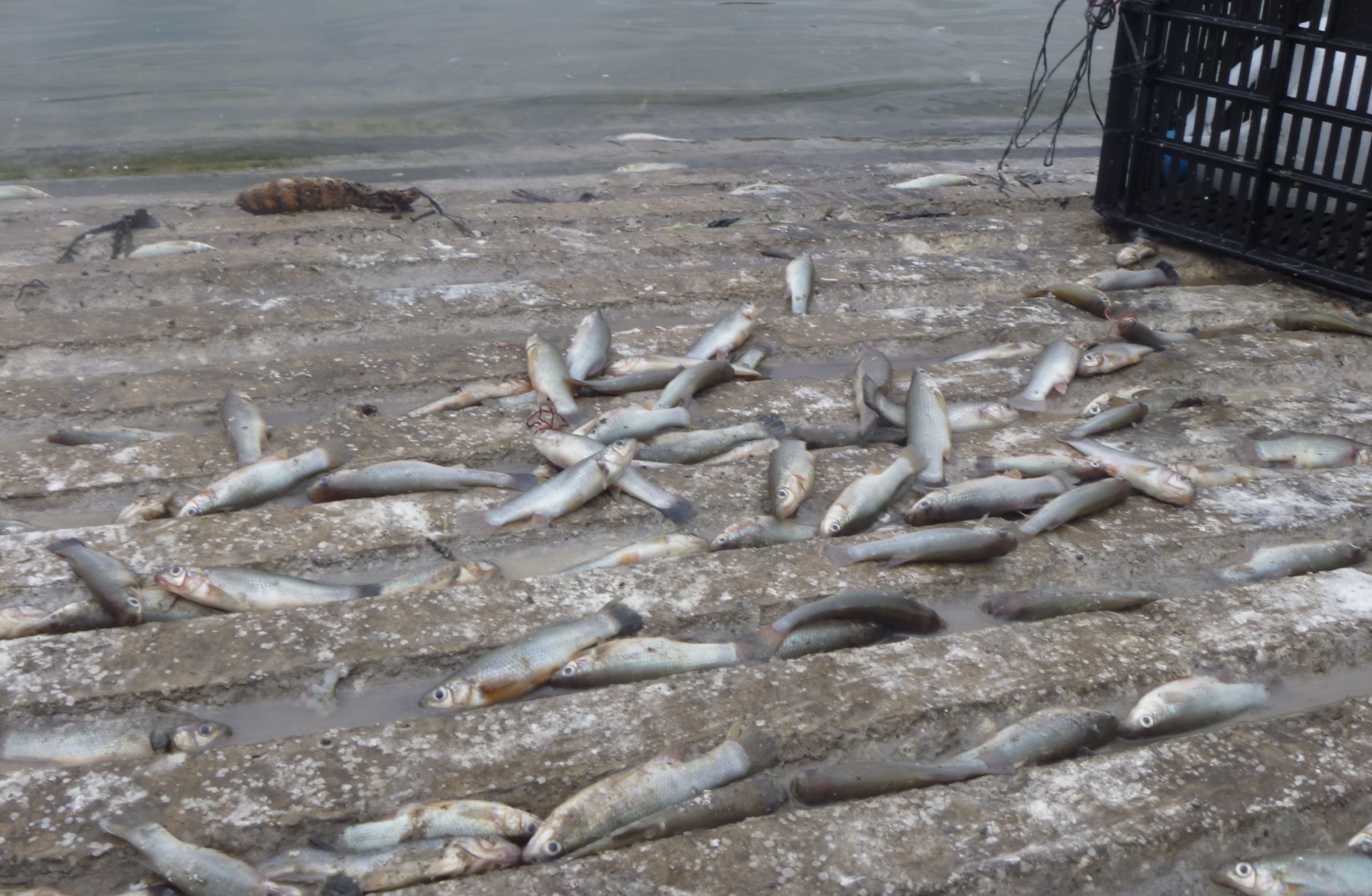
Environmentalists say the proposed bill would offer little protection against pollution of Mexico’s water supply.
After intense pressure from civil society, Mexico’s Congress has suspended discussion of a controversial bill that academics and NGOs say would effectively privatize the administration and distribution of water in the country.
Last week, Mexico’s lower house, the Chamber of Deputies, agreed to take the proposed General Water Law off the legislative agenda “until further notice” due to disagreement over the implications of the polemic bill.
Manlio Beltrones of the ruling Institutional Revolutionary Party (PRI), which proposed the new law, explained that the delay will be “for whatever time is necessary so that doubts and misinformation that certain politicians have taken up as their campaign, can be cleared up.”
Lawmakers from the PRI, its allies in the Green Party (PVEM), and the right-wing opposition National Action Party (PAN), had approved the bill at committee stage, but a coalition of leftist legislators then raised concerns that it would hand control of Mexico’s water supply over to the mining, energy and other corporate sectors.
Civil organizations and NGOs have asked lawmakers to reject the bill, with the Coalition of Mexican Organizations for the Right to Water slamming it as “unsustainable, unfair and discriminatory.”
Several environmental organizations have argued that the bill provides only the most minimal protection against the pollution of Mexico’s water supply, as well as enabling privatization of the resource and the use of water in fracking to extract shale gas…
Click here to read this article in full at Latin Correspondent.
 The Tequila Files