Mexican president embroiled in worst crisis of his administration
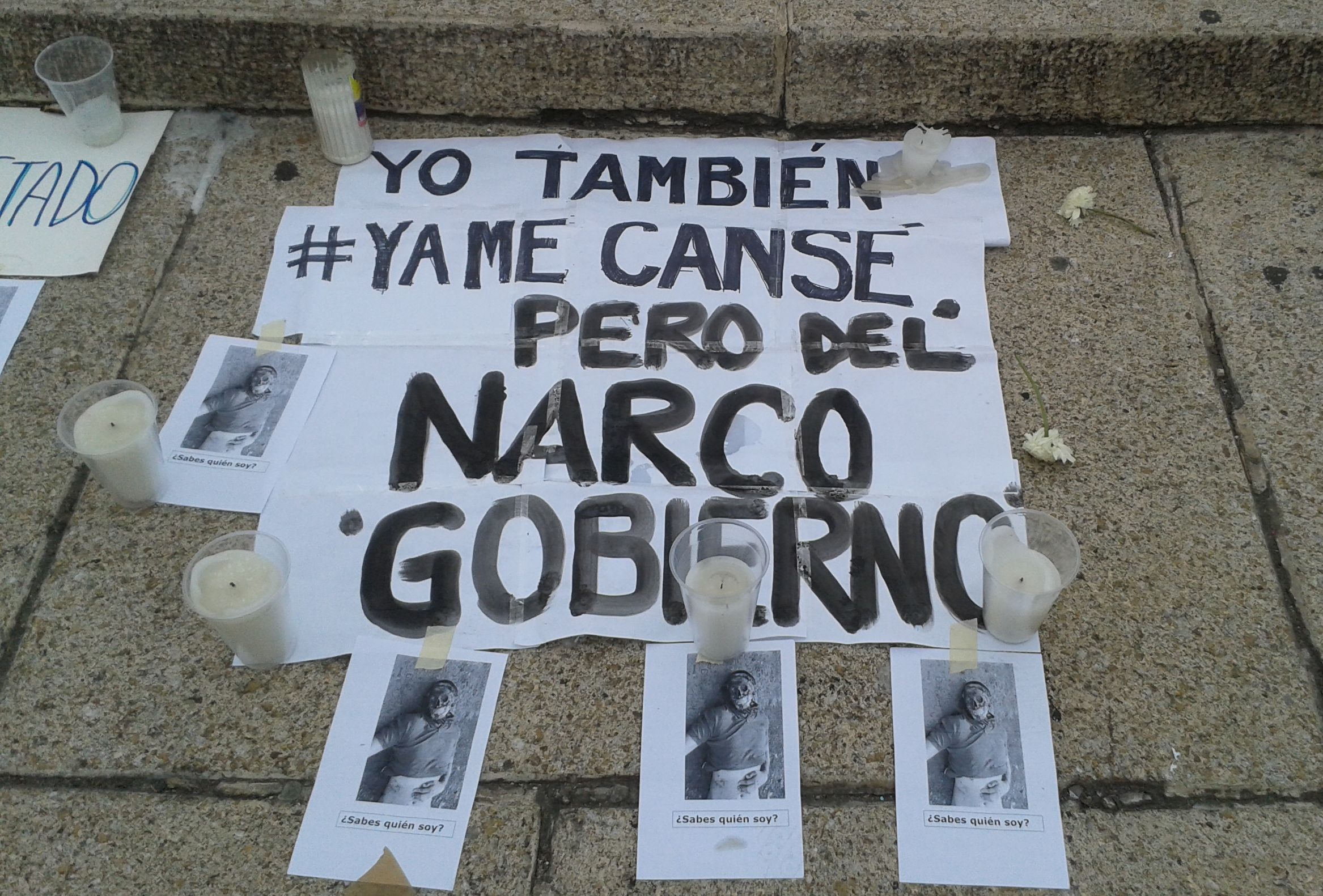
“I’m tired too, but of the narco government,” reads this sign, in reference to the Attorney General’s gaffe.
Outrage over the disappearance and probable murder of 43 students shows no sign of abating in Mexico, with President Enrique Peña Nieto and Attorney General Jesús Murillo Karam bearing the brunt of public anger over the last week.
In a press conference in Mexico City last Friday, Karam announced that three members of the Guerreros Unidos drug gang had admitted to murdering the students, burning their bodies and throwing plastic bags full of their ashes into a nearby river.
Shortly after delivering this delicate news to the victims’ parents, the Attorney General grew tired of answering questions and called the press conference to a close. “Ya me cansé,” he said, meaning, “Enough, I’m tired”.
The insensitive phrase immediately became a trending topic on social media under the hashtag #YaMeCansé, with thousands of Mexicans posting messages like “Enough, I’m tired of corruption” and “Enough, I’m tired of living in a narco state”.
Many people called for Karam to resign, but he was unrepentant on Monday, explaining that the remark was the result of emotional exhaustion and a lack of sleep…
Click here to read this article in full at Latin Correspondent.
Reporting on the fate of Mexico’s 43 missing students
I made my live TV debut on Sky News in the UK last Saturday, discussing the fate of the 43 missing students from the Ayotzinapa college and the massive impact the case has had in Mexico.
It was my first time on television (unless you count this brief appearance on the HuffPost Live online channel) so there were a few nerves and I need to work a bit on the intonation, but that aside it didn’t go too disastrously and I would definitely like to do more broadcast journalism in the future.
I happened to be in Mexico City at the time and while I was there I witnessed some of the pain, suffering and rage that people have been experiencing all across Mexico in the wake of this atrocity.
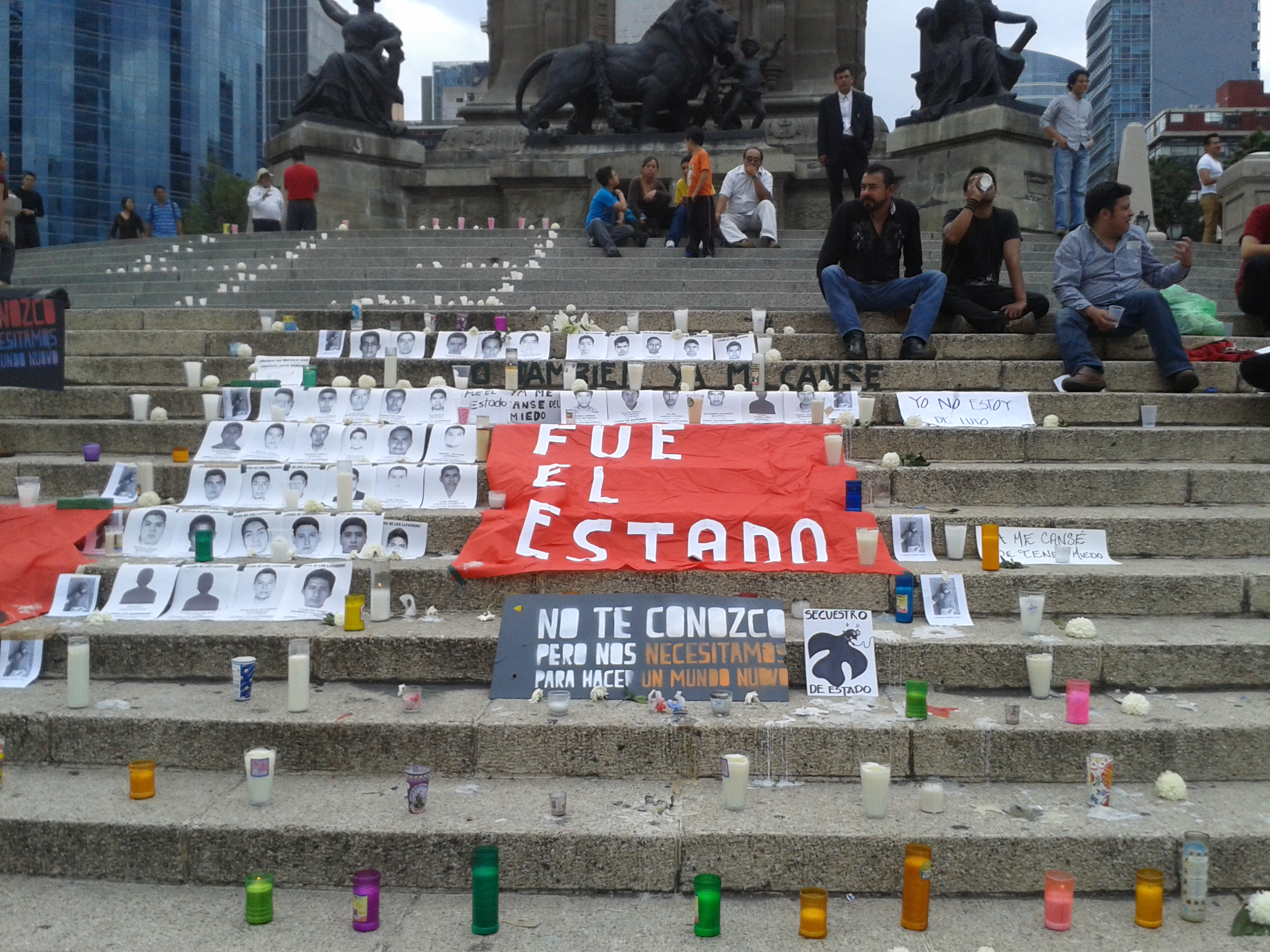
A banner proclaims “it was the state” that was responsible for the disappearance of the 43 students.
The Angel de Independencia, one of the capital’s most famous landmarks, on the iconic Paseo de la Reforma, was filled with candles, photos of the missing students and messages expressing solidarity with the victims or anger at the government.
Later that night, thousands would march through the city to the main square, where masked protesters (or agent provocateurs) firebombed the entrance of the National Palace.
It’s hard to predict what will happen now. Earlier today a reporter from Portugal’s Expresso newspaper asked me to comment on the situation and I told her that in my five years in Mexico I’ve never experienced an atmosphere of anger and unrest like this.
The only thing that seems clear is that people are not going to let this be forgotten and are determined to do something to fight the rampant corruption that facilitates tragedies like this.
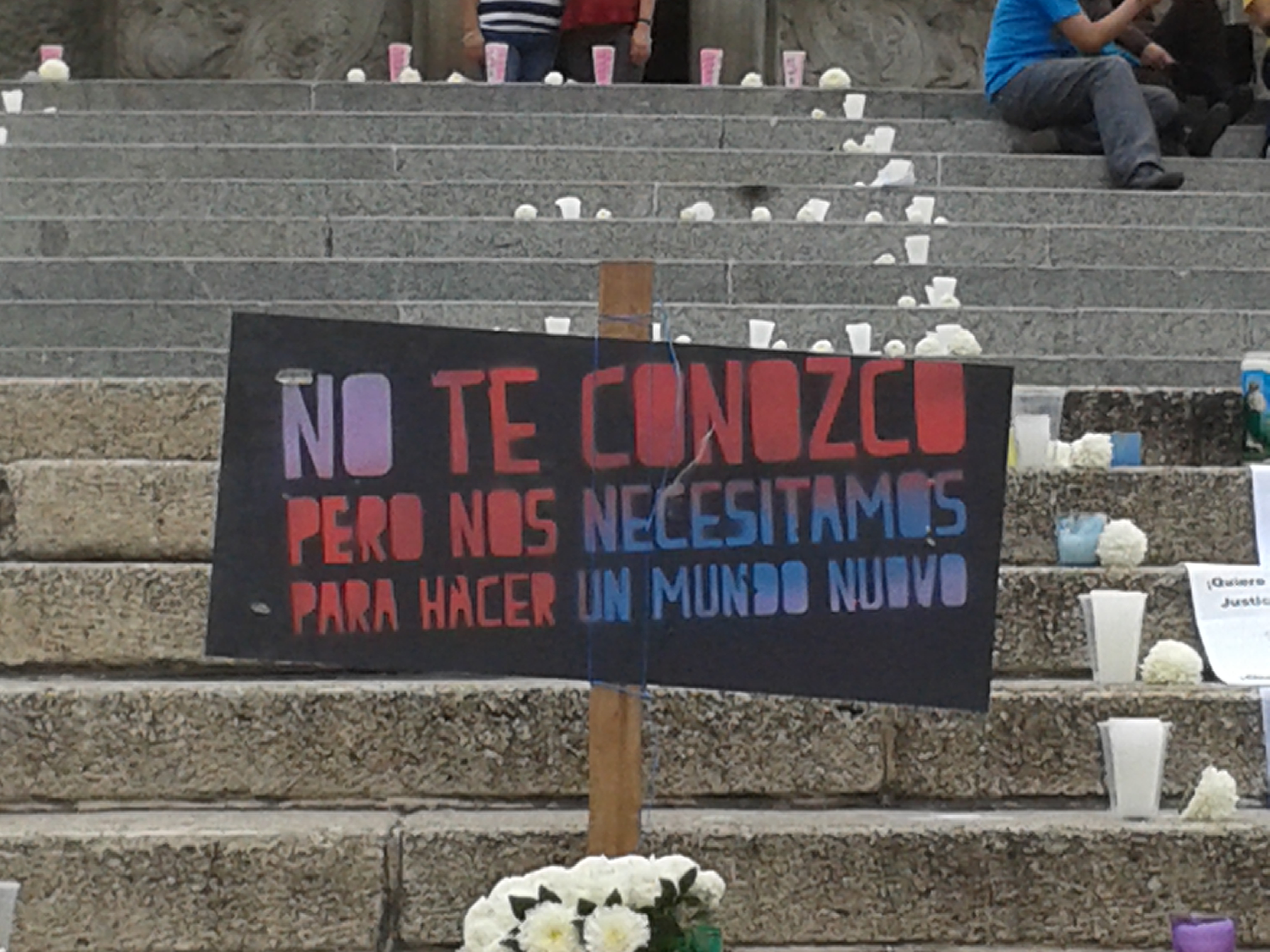
“I don’t know you but we need each other in order to create a new world,” reads this sign.
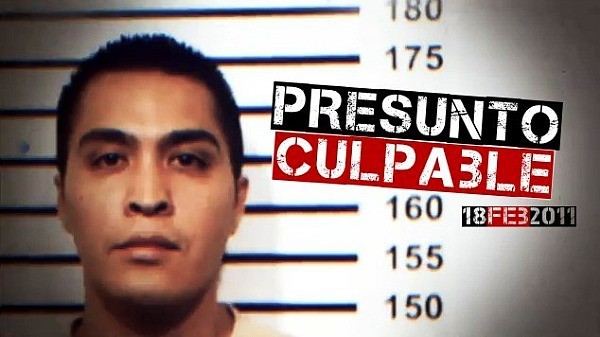
Mexico’s most successful documentary, Presunto Culpable laid bare the deep flaws in the justice system.
Following their arrest in a grimy, working-class borough of Mexico City early Tuesday morning, the fugitive former mayor of Iguala, José Luis Abarca, and his wife, María de los Ángeles Pineda Villa, will now face justice.
They stand accused of ordering the abduction of the 43 students who disappeared outside the town of Iguala in the southern state of Guerrero on September 26.
The negative publicity caused by the case and the immense pressure on the government to solve the crime mean the suspects are likely to be tried sooner than many defendants are in Mexico, where the judicial process can be painfully slow.
But when they do stand trial, there will be no jury to decide whether or not they are guilty, and the judge will hear no verbal testimony from prosecutors, witnesses or the accused.
Instead, as is the norm in Mexico, the judicial process will consist almost entirely of written evidence submitted to a judge who will then singlehandedly determine the outcome of the trial…
Click here to read this feature in full over at Latin Correspondent.
 The Tequila Files