Illicit arms factories busted in Guadalajara

Along with the AK-47, the AR-15 assault rifle is the weapon of choice for most Mexican drug cartels.
Mexican authorities have shut down two clandestine weapons factories in Guadalajara, in what is thought to be the first instance of criminals producing their own firearms in the country.
A joint investigation by the U.S. Bureau of Alcohol, Tobacco and Firearms (ATF), Mexico’s Attorney General’s Office (PGR) and the Jalisco state police led to the discovery and dismantling of the labs where criminals were assembling AR-15 assault rifles.
The authorities arrested four men and decommissioned 18 firearms at two properties in Guadalajara’s Villa Guerrero and Antigua Penal neighborhoods, revealed Jalisco Attorney General Carlos Najera in a press conference on Tuesday morning.
“This group is dedicated to sending arms to Michoacan and we also believe that they are selling arms to the local cartel, the Cartel Jalisco Nueva Generacion,” Najera said. “This is a strong blow against organized crime.”
The suspects are believed to have manufactured around 100 assault rifles in recent months, using parts imported from the United States, Najera said. They were equipped with highly sophisticated machinery and advanced software that enabled them to make precise incisions and finish assembling the weapons, he added.
The AR-15 is a semi-automatic version of the M-16 assault rifle used by the U.S. armed forces. Along with the AK-47, is the weapon of choice of most Mexican drug gangs. Such arms are typically smuggled into the country from the United States or Central America, but the existence of assembly plants within Mexico is another indication of the sophisticated nature of today’s cartels.
Where are Mexico’s missing students?
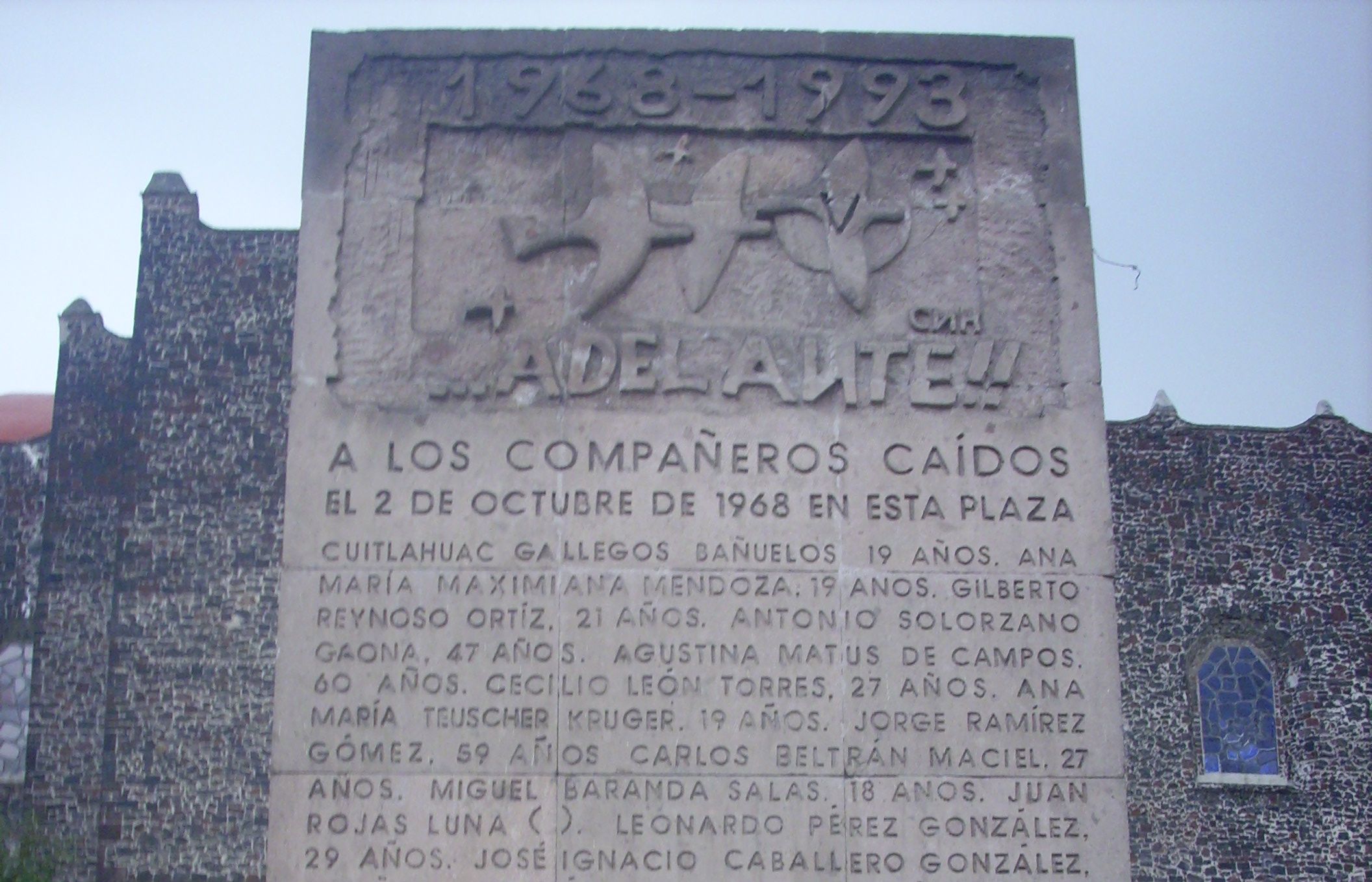
The attacks in Iguala represent one of the worst instances of violence against students in Mexico since October 2, 1968, when the military massacred hundreds of leftist student demonstrators in Tlatelolco, Mexico City.
Forty-three Mexican students are still missing a week after police and other unidentified assailants shot dead six unarmed civilians in Iguala, a small city in the southwestern state of Guerrero.
The students are activists from the Ayotzinapa teacher training college who had come to Iguala on Friday, September 26 to collect donations to fund planned demonstrations. They were protesting against what they consider discriminatory hiring practices that favor teachers from urban backgrounds over rural ones.
The students said they were hitchhiking back to their college on local buses that night when they came under attack by municipal police officers and other unidentified gunmen. The police gave chase and opened fire, later claiming that the students had hijacked the buses.
Three students were killed on the spot, along with a woman who was hit later that night when her taxi came under fire. Gunmen also shot at a bus carrying third-division soccer team Avispones – having presumably mistaken it for a bus seized by students – causing the vehicle to crash and killing the driver and a 15-year-old member of the team.
At least 17 others were injured and 57 students went missing in the aftermath of the attacks…
Click here to read this story in full at Latin Correspondent.
Jalisco is in favor of medical marijuana
The western Mexican state of Jalisco supports allowing marijuana for therapeutic use but opposes increasing the amount currently permitted for recreational use, a public survey showed this week.
The Jalisco Electoral Institute revealed on Wednesday that of 13,662 Jalisco residents who participated in the survey, 60.77 percent favored allowing those who suffer from terminal, chronic or degenerative diseases to keep five plants or 150 grams of marijuana in their homes, while 39.22 percent were against the proposal.
However, when it came to raising the amount of marijuana allowed for recreational use from five to 30 grams, the results were reversed with 60.9 percent of participants voting against the proposal and only 39.09 percent voting yes.
Jalisco has traditionally been considered one of Mexico’s most conservative states, but the results show that public opinion on marijuana has grown much more liberal in recent years. The survey was sponsored by the left-wing Party of the Democratic Revolution (PRD), which hopes to pass a bill based on its results.
The outcome does not guarantee any change in Jalisco’s laws, but it could help set new precedents for more democratic decision making and will put pressure on the state’s legislators to consider allowing medical marijuana…
Click here to read this article in full at Latin Correspondent.
 The Tequila Files