Mexico City profile for Sportcal Insight

“Is this your first time in Mexico City? It’s a monster, isn’t it?” soccer agent Dario Vidali asks his newest recruit upon driving him into Mexico’s sprawling capital. “But even the ugliest monster has its charms.”
Vidali is a fictitious character in Mexico’s popular 2008 comedy Rudo & Cursi, but his description of Mexico City is certainly fitting.
Once synonymous with kidnappings and severe pollution, Mexico City has worked hard to improve its image over the last decade. The liberal local government has kept the capital free from the drug-related violence that has plagued parts of Mexico and it has been widely lauded for its efforts to improve air quality.
In a bid to combat obesity, crime and drug addiction, the city government has installed 600 open-air gyms across the city for free public use. Urban renewal has seen once-rundown neighbourhoods flourish and tourists have flocked to visit the capital’s ancient ruins, gaze at its famous murals and dine in its many world-class restaurants.
Previously the Aztec capital of Tenochtitlan, the city was home to several majestic ball courts in which two teams would compete to force a rubber ball through a narrow stone hoop using only their elbows, knees, hips and heads. Historians believe the losing or even winning teams were often sacrificed to the gods.
Centuries later in 1968 – with such practices firmly in the past – Mexico City became the first Latin American city to host the Olympic Games, a feat not to be repeated for almost 50 years until Rio de Janeiro stages the Olympics in 2016…
Click here to read this feature in full in the fourth issue of Sportcal Insight magazine (pages 40-41).
Missing Mexican congressman found dead in Zacatecas

Images from surveillance cameras appear to show the moment Gomez was abducted on Monday.
Mexican authorities discovered the charred body of federal congressman Gabriel Gomez Michel in Zacatecas on Tuesday morning, less than 24 hours after he was kidnapped in Guadalajara.
A member of the ruling Institutional Revolutionary Party (PRI), Gomez represented the eighth district of western Jalisco state in Mexico’s House of Deputies. He was abducted at around 5 p.m. Monday while driving to Guadalajara’s international airport to catch a flight back to Mexico City.
CCTV images circulating on social media purportedly show the moment that Gomez was kidnapped at the intersection of 8 de Julio street and the Periferico ringroad in the municipality of Tlaquepaque. The images show men aboard a white Toyota Sienna pulling up beside Gomez’s black Suburban, although Mexican newspaper Excelsior reported that assailants in as many as six vehicles participated in the abduction by surrounding the victim’s car.
Jalisco Prosecutor General Carlos Najera confirmed the following day that the bodies of Gomez and one of his assistants had been found in a burnt-out car in Apulco, Zacatecas, just across the border from Jalisco. The bodies were badly burned but DNA tests are expected to confirm the identities of the victims.
Gomez, who served as mayor of El Grullo, Jalisco from 2010 to 2012, is the first federal legislator to be murdered since Moises Villanueva, also of the PRI, was killed alongside his chauffeur in the southern state of Guerrero in September 2011.
Guadalajara’s tortas ahogadas will fix your hangover
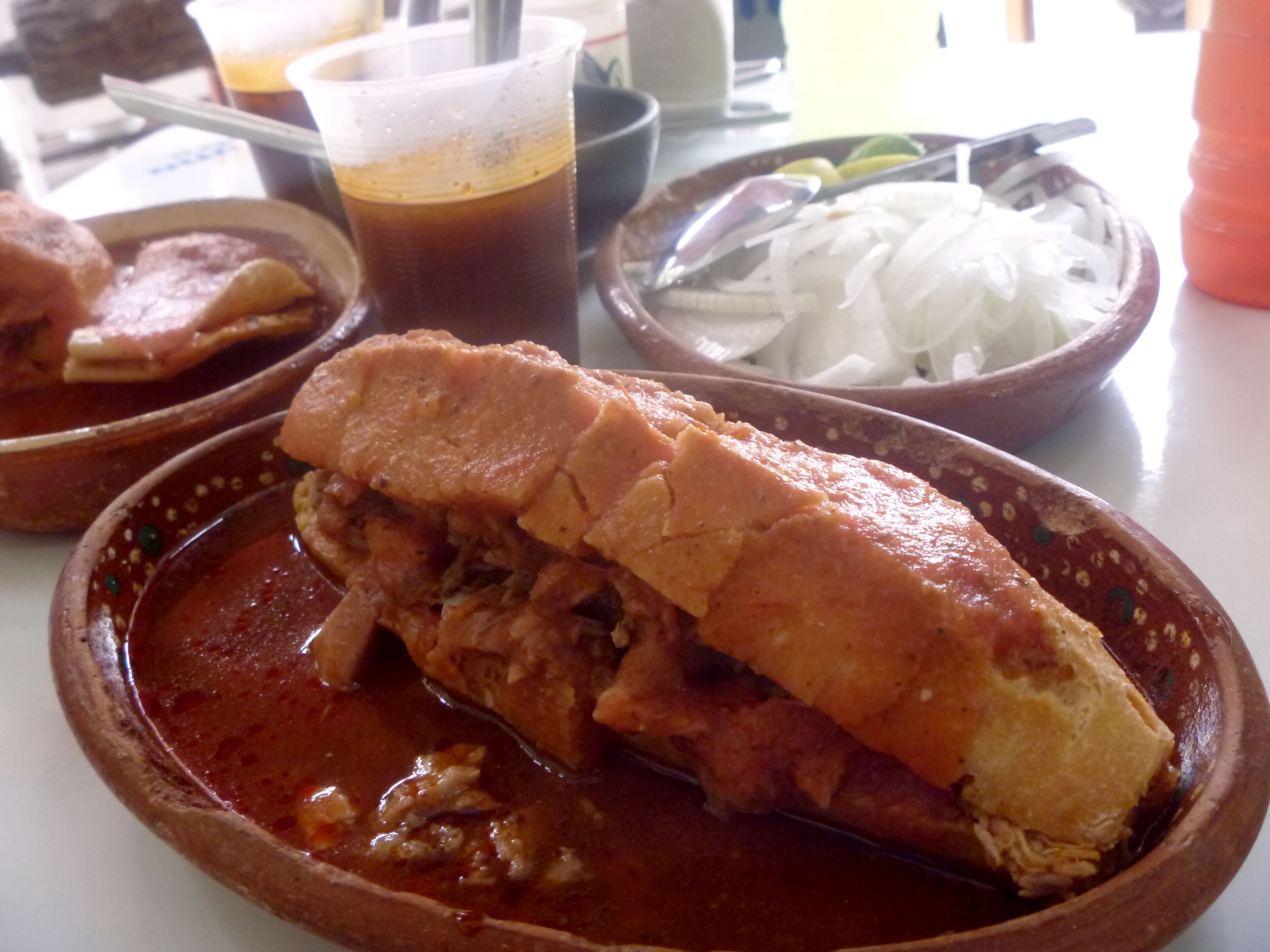
Every Sunday morning, thousands of Guadalajara residents engage in a ritual that is every bit as sacred as Mass. Before, after, or instead of slinking into church, they brave the scorching midday sun to find a hole-in-the-wall eatery where they can chow down a torta ahogada and sweat out the previous night’s tequila.
The city’s signature dish, the torta ahogada (literally a “drowned sandwich”) is essentially a pork-stuffed baguette seasoned with salt and lime juice, garnished with raw slices of onion and swamped in so much spicy salsa that it must be eaten with a spoon. Unique to Guadalajara, Mexico’s second biggest metropolis, it is considered a potent hangover cure.
“We get more customers at weekends when people come in to recover from a night of partying,” says Armando Segura from Betos, a family-run restaurant in the heart of Santa Teresita, a colorful working-class neighborhood reminiscent of small-town Mexico. Bunched around the tables and perched on the unvarnished log bench out front are half a dozen local families and several disheveled partygoers still up from the night before…
 The Tequila Files