
Tlajomulco Mayor Ismael del Toro announced on Tuesday that he has broken off relations with the Jalisco state government.
Tlajomulco Mayor Ismael del Toro announced on Tuesday that he has broken off relations with the Jalisco state government and accused Governor Aristoteles Sandoval of waging a “dirty war” in a bid to “destroy” his administration.
Three days earlier, Mexico’s Proceso magazine revealed that the state government had set up a “war room” dedicated to destabilizing del Toro’s government and ending the political aspirations of his predecessor Enrique Alfaro. Citing a seven-page document that laid out the government’s strategy against the pair, Proceso reported that the Sandoval administration had been waging a secret war against them ever since it took up office in March 2013.
“From the beginning of my administration I established a total willingness to work together with the governor. He seems to have forgotten this agreement,” del Toro wrote on Twitter on Tuesday. “This split will not halt our work which will continue to be serving our citizens and setting an example, as has happened since 2010,” he added, referring to the year when Alfaro was elected.
Sandoval’s Institutional Revolutionary Party (PRI) government has delayed the release of public funds destined for Tlajomulco and blocked the development of new public transport lines between the municipality and the Guadalajara metropolitan area for political reasons, said del Toro, who represents the liberal Citizens’ Movement.
Del Toro demands answers
“We have information from senior state government officials about the existence and intentions of their war room,” del Toro continued. “Now the media has documented their strategy to remove me as mayor and promote the installation of a municipal council … we demand that the Jalisco governor explain to us why his war room is devising a strategy to displace our government.”
This underhand strategy reportedly included the creation of civic associations that could be used to stir up criticism of the Tlajomulco authorities. Del Toro even alleged that certain civic associations were “responsible for poisoning our bodies of water” in a bid to tarnish his administration’s environmental record.
On Tuesday he announced the deployment of municipal police officers to protect Lake Cajititlan from deliberate acts of pollution. “Tlajomulco will not allow its citizens to suffer or for the stability of the municipality to be affected by us being the target of this attack,” del Toro vowed.
Proceso reported that the attacks are also aimed at preventing Alfaro – who lost the 2012 gubernatorial election by just four percentage points and may run again in 2018 – and the Citizen’s Movement from gaining ground across Jalisco in next year’s midterm elections.
This is not the first time that Alfaro has been the target of dirty tactics. While campaigning for governor in 2012, he complained that lies were spread about him via automated messages left on many voters’ voicemails. In recent years a number of Facebook users in Jalisco have also seen crude anti-Alfaro propaganda that his opponents have paid to appear on people’s newsfeeds.

Tlajomulco’s municipal government has been the target of a dirty war waged by the Jalisco state government, according to Mexico’s Proceso magaizne.
Mexico’s most transparent administration
Last year the del Toro administration was named the most transparent in all of Mexico and the first to receive a perfect score of 100 in the annual study by non-profit group Citizens for Transparent Municipalities (Cimtra). In contrast, the conservative National Action Party (PAN) administration that governed Tlajomulco just four years earlier had received a score of 34.2, making it one of Mexico’s least accountable governments.
The Citizens’ Movement is very popular in Tlajomulco, where it invites the electorate to vote on what their taxes should be spent on. Del Toro also voluntarily submits to regular referendums in which citizens have the power to revoke his administration’s mandate to govern if dissatisfied with their performance. This has not happened yet.
Despite the popularity of the Citizens’ Movement in Tlajomulco and the Guadalajara metropolitan area – where Alfaro won more votes than Sandoval in 2012 – the party has many enemies across the state of Jalisco. Proceso reported that the PRI’s dirty campaign against Alfaro and del Toro has support from elements of the right-wing PAN, the leftist Party of the Democratic Revolution (PRD) and the Green Party, plus academics from the public University of Guadalajara and the private ITESO university.
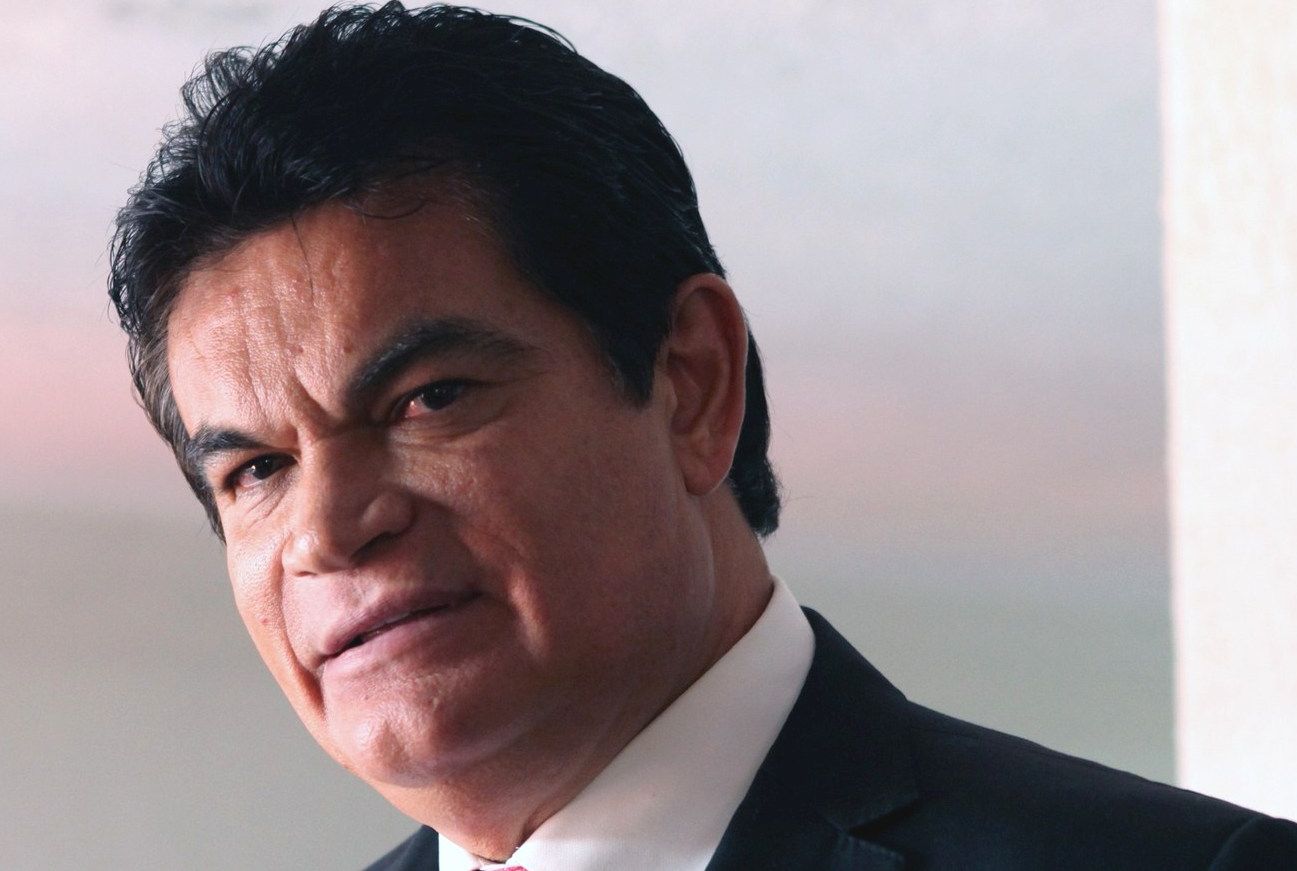
Sinaloa Governor Mario Lopez Valdez has long been dogged by accusations of corruption.
Following a fierce public backlash the governor of Sinaloa has vowed to repeal legislation passed last week that would have effectively prohibited local reporters from covering crime.
Introduced by Governor Mario Lopez Valdez, the controversial bill was passed unanimously by Sinaloa’s state congress on July 31.
But after the Mexican press furiously denounced the legislation, Lopez pledged on August 4 to abolish the bill.
Under the new law, journalists in Sinaloa, a state in northwest Mexico, would have been forbidden from reporting “information related to public safety or law enforcement,” accessing crime scenes or photographing, filming or recording audio of anyone involved in a crime.
The local media would have been limited to publishing information from official press releases issued by the Sinaloa Attorney General’s Office, but no one from that office would have been allowed to speak to journalists without the Attorney General’s express permission…
This is my first piece for Latin Correspondent, a new Latin American news site by the Hybrid News Group. Click here to read the article in full.

Alleged meth kingpin Zhenli Ye Gon remains in custody in the U.S. fighting extradition to Mexico.
A Mexican federal court has sentenced Ye Yong Ping, the cousin of alleged drug kingpin Zhenli Ye Gon, to 25 years of imprisonment for money laundering and manufacturing methamphetamine.
Yong Ping was found guilty of producing of ephedrine, pseudoephedrine, ephedrine acetate and n-acetylmethamphetamine, precursor drugs used to manufacture methamphetamine – or crystal meth as it is more commonly known – at a laboratory in Toluca, Mexico State. He was also convicted of money laundering after it was proven that he was a partner in a business founded with illicit funds in Toluca.
The court acquitted co-defendant Fu Huaxin because of insufficient evidence that he was involved in the criminal enterprise allegedly run by Yong Ping’s infamous cousin, Zhelin Ye Gon. Yet the conviction of Yong Ping is the latest of several recent blows against Ye Gon and his associates.
In July a federal court upheld a prison sentence against his wife, Tomoiyi Marx Yu, who was convicted last year of organized crime and possession of military-grade firearms and ammunition. The charges dated back seven years to when Marx Yu was arrested at the luxury home she shared with Ye Gon in Mexico City’s exclusive Lomas de Chapultepec neighborhood.
In June this year another federal court sentenced Bernardo Mercado Jimenez, a close associate of Ye Gon, to 95 years in jail for smuggling 80 tons of chemical precursors into Mexico. The shipments were unloaded at the Pacific ports of Manzanillo, Colima, and Lazaro Cardenas, Michoacan, and then transported to Toluca, where Ye Gon’s organization allegedly used them to manufacture synthetic drugs.

Zhenli Ye Gon’s opulent home in Mexico City’s affluent Lomas de Chapultepec neighborhood.
Breaking bad
Ye Gon is an enigmatic and controversial figure. Once considered an upstanding pharmaceutical entrepreneur with close ties to Mexico’s political elite, he now stands accused of masterminding a crystal meth empire that would have made even Walter White blush.
Born in Shanghai in 1963, Ye Gon migrated to Mexico in the 1990s where he founded the Unimed pharmaceutical company. He became one of Mexico’s largest legal importers of pseudoephedrine, an ingredient in cold medicines that can also be used to make crystal meth, and in 2002 he became a naturalized Mexican citizen, with President Vicente Fox himself personally handing him his citizenship papers.
However the Mexican government soon began to suspect that Ye Gon was importing more pseudoephedrine than was legally allowed and in December 2006 federal agents discovered 19 tons of precursor chemicals in his name at the port of Lazaro Cardenas. The authorities believe he was using the precursors to manufacture huge quantities of crystal meth for the powerful Sinaloa Cartel.
After months of investigation, in March 2007, the Mexican police and DEA launched a raid on Ye Gong’s Mexico City residence that would go down in history. Ye Gong was not home at the time but the agents who stormed his luxury property uncovered huge stacks of cash stuffed behind false walls and in closets and briefcases. The DEA trumpeted it as “the largest single drug cash seizure the world has ever seen.”
The bust totaled $207 million in U.S. dollars, 18 million Mexican pesos, 200,000 Euros, 113,000 Hong Kong dollars and eleven gold bullion coins. On top of that, the authorities found boxes of expensive jewelry, seven luxury cars, and an arsenal of automatic weapons.

The authorities found over $105 million at Ye Gon’s home, the biggest drug cash seizure ever.
Evading Justice
Ye Gon fled to the United States but was arrested four months later in a restaurant on the outskirts of Washington D.C. He was charged him with conspiracy to import crystal meth but U.S. prosecutors eventually dropped the charges after crucial witnesses refused to testify and the Chinese government refused to hand over key documents.
Mexico demanded his extradition but Ye Gon argued he would not get a fair trial south of the border. Having always maintained his innocence, he even claimed that he had been set up by the Mexican government. Ye Gon admitted that the money was from the Sinola Cartel but claimed that it was destined to be used as a secret slush fund to support the re-election campaign of the governing National Action Party (PAN).
Mexico’s Labor Secretary, Javier Lozano Alarcon, had threatened to kill him unless he agreed to hide duffel bags stuffed with tens of millions of dollars in his house, Ye Gon alleged. He even claimed that if the PAN lost then the money would be used to finance “terrorist” activities.
Unsurprisingly, the Mexican government dismissed his tale as a “ridiculous” and “perverse blackmail attempt” at escaping justice. “These lawyers are unscrupulously and uselessly seeking to blackmail the Mexican government with absurd and unbelievable accusations, in an attempt to discourage the government from bringing all the weight of the law to bear against Mr. Zhenli Ye Gon,” read a statement issued by the federal Attorney General’s Office.
Given the lack of transparency in Mexico and the long history of corruption in government, many Mexicans either believed Ye Gon’s account or distrusted the official version of events, a poll by Reforma newspaper showed. Bumper stickers saying “I believe the Chinaman” even went on sale in Mexico.

Authorities discovered a number of gold-plated, military-grade firearms at Ye Gon’s home.
Viva Las Vegas
Although no longer facing charges in the United States, Ye Gon’s past activities in the country still landed one of Las Vegas’ most famous casinos in hot water. In August 2013, the U.S. Attorney General’s Office fined the Las Vegas Sands Corporation $47.4 million dollars for failing to report Ye Gon’s highly suspicious gambling activities.
All casinos are obligated to alert U.S. authorities to suspicious transactions that may involve dirty money, but Sands made no report of Ye Gon blowing $85 million at its famous Venetian hotel between 2004 and 2007. On the contrary, The Venetian was so enamored with Ye Gon that it showered him with gifts including a complimentary Rolls Royce. Ye Gon also lost another $40 million at a number of nearby casinos, bringing his total losses in Vegas to $125 million.
It remains unclear whether Ye Gon was deliberately losing his money in an elaborate money laundering scheme, or whether he was simply so wealthy that he afford to lose hundreds of millions of dollars on a whim. But serious concerns were raised by the fact that The Venetian reportedly permitted him to transfer his funds from Mexican banks and currency exchanges via a Sands subsidiary in Hong Kong before returning them to Las Vegas. Sands also allowed Ye Gon to transfer money into an aviation account that it used to pay its pilots, so as to avoid the funds ever being directly linked with the casino.
Sands ultimately avoided prosecution after agreeing to cooperate with investigators and make changes to its compliance program. Ye Gon, meanwhile, remains in custody in the United States, immersed in a protracted legal battle to evade extradition.
 The Tequila Files