Review: Juan Pablo Villalobos’ Down the Rabbit Hole
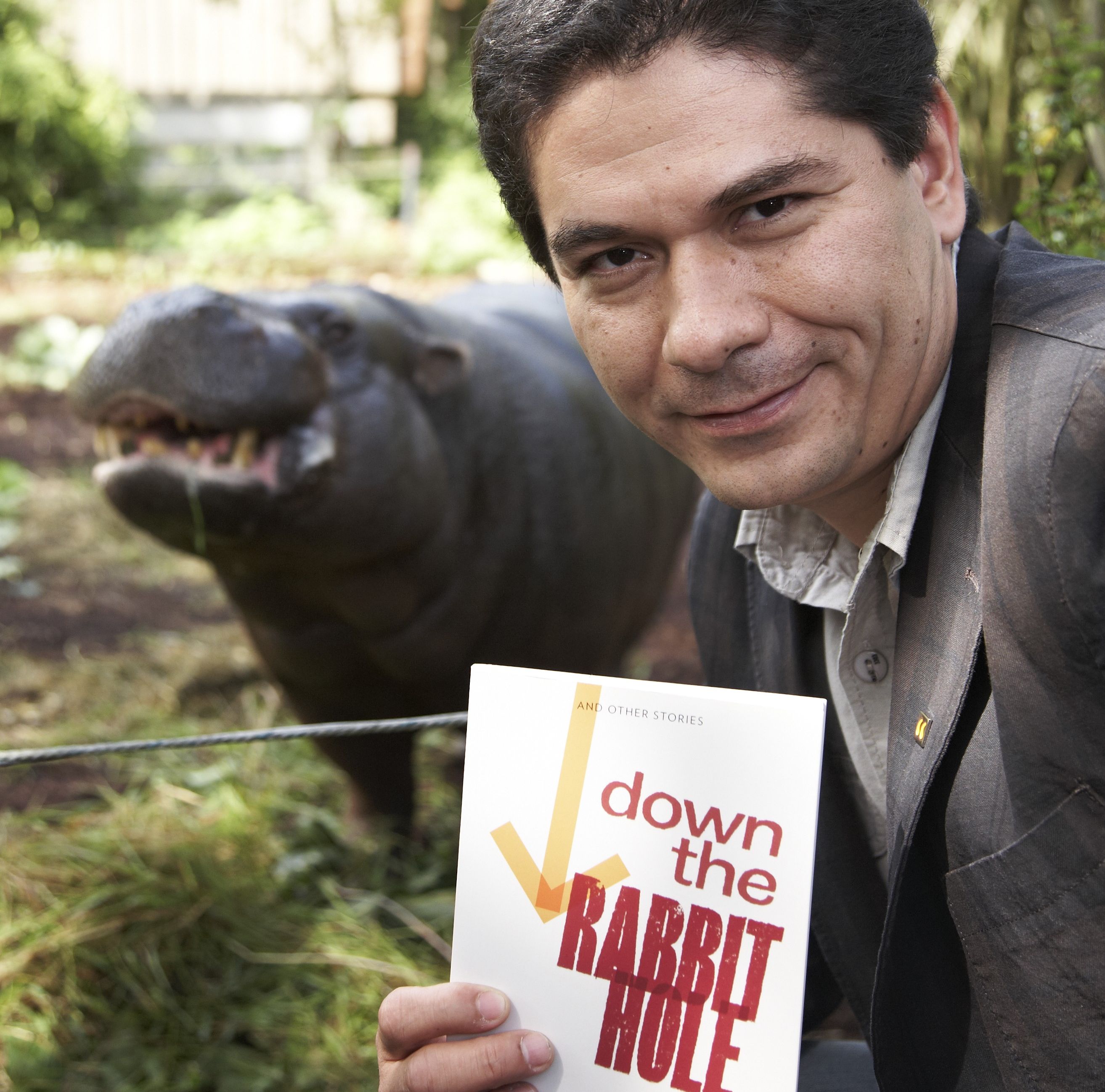
Juan Pablo Villalobos poses with a Liberian pygmy hippopotamus.
I’ve just got around to reading Down the Rabbit Hole, the semi-surrealist debut novella by Tapatio author Juan Pablo Villalobos. This charming but slightly disturbing short story is narrated by the precocious young son of a Mexican drug lord who is desperate to own a Liberian pygmy hippopotamus.
The title is an obvious nod to Alice and Wonderland and the protagonist, Tochtli, is clearly as lonely and bored as Alice was, only his “wonderland” is a remote palace in the realist but still quite surreal context of Mexico’s bloody drug war.
Tochtli, who only knows “about 13 or 14 people” – plus another 10 or so dead people, but they don’t count, he says – lives with his paranoid father and is homeschooled by his minders. The tragicomic novella details his quaint obsession with hats, the French, samurai warriors and that elusive Liberian pygmy hippopotamus of his dreams, while also throwing in dark references to Mexico’s machismo culture and the nightmarish world of the drug war.
Combining elements of magic realism and narco-literature, Villalobos presents the world through an observant but naive set of eyes and illustrates the psychological damage that is being heaped not only on the narrator, but on an entire country that is becoming desensitized to violence. However, most of the gory or serious moments (aside from one great tragedy that comes late in the book) are offset by humor, as young Tochtli frequently misses the point to great comic effect.
“Mexico is a disastrous country,” he proclaims amid widespread reports of beheadings and mutilations. “It’s such a disastrous country that you can’t get hold of a Liberian pygmy hippopotamus. Actually, that’s what you call being a third-world country.” (On a side note, Down the Rabbit Hole also supports my personal belief that pozole, a popular Mexican soup, is “ridiculous,” as Tochtli puts it, “because it’s got cooked lettuce in it … Lettuce is for salads and sandwiches.”)
The first book by Villalobos – who was born in Guadalajara and later moved to Barcelona and then Brazil – Down the Rabbit Hole was released in 2011 and became an instant critical success. It was nominated for The Guardian’s First Book Award and has been translated from Spanish into English, French, Italian, German, Dutch, Portuguese and Romanian. If you’re into Latin American literature it is well worth picking up a copy.
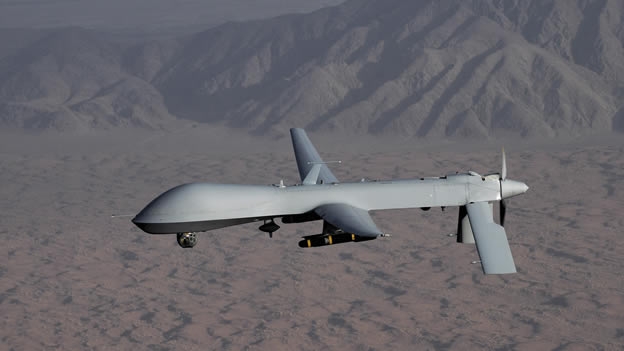
Mexican drug cartels have been using drones to traffic drugs since 2010.
The U.S. Customs and Border Protection (CBP) agency has been operating unnamed aerial vehicles (UAVs) over Mexican territory for years, but now the tables have turned. A slew of recent reports confirm that Mexican drug cartels have begun manufacturing their own drones to smuggle narcotics across the border into the United States.
Mexico’s mega-rich drug trafficking organizations are constantly devising innovative means of outfoxing CBP agents to ensure that their illicit products reach the lucrative market north of the Rio Grande. Shipments are no longer simply hidden in vehicles, flown by light aircraft or ferried via speedboat; they are also fired over the border by customized cannons and shipped in clandestine, custom-built submarines.
One of the most inventive traffickers in recent memory was Joaquin “El Chapo” Guzman, the Sinaloa Federation kingpin who was arrested in February. Guzman devised the first sophisticated tunnels that ran beneath the border in the early 1990s; he shipped drugs via Fedex, stuffed cocaine inside bananas and cucumbers and in cans of jalapeños, and even used catapults to fling bales of marijuana over the border.
Mexico’s most dominant cartel, the Sinaloa Federation has always been quick to grasp the potential of new technology and it has now begun to replace traditional drug “mules” – as those who make the border crossings are known – with a low-risk automated alternative: drones.
Drug traffickers are known to have used foreign-built drones since at least 2010, when Mexico’s Public Security Secretariat (SSP) first acknowledged criminal use of ultra-lightweight UAVs to smuggle cocaine into the United States. SSP Undersecretary Francisco Gonzalez said that the planes weighed about 100 pounds and each could transport 100 kilograms of cocaine per trip. Purchased in Colombia for $1,700, each kilo of cocaine would be worth $8,000 in Mexico and could sell for $30,000 in the United States, Gonzalez explained, meaning that traffickers could earn $2 million for every successful voyage.
The frequency of ultra-lightweight drone voyages began to increase in 2011, with most flights occurring at night into central Arizona, Mexican newspaper El Universal reported, citing the U.S. National Guard. Upon landing and being relieved of their cargo, these ultra-lightweight drones were abandoned, a writer using the pseudonym Juan Doe noted in his Drugs, Guns and Politics in Mexico blog last year, although El Universal suggested that they would often drop off shipments without actually landing.
Since 2012, U.S. law enforcement agencies have reportedly recovered around 150 drones laden with two tons of cocaine and other narcotics, but until the end of last year the cartels were always believed to have used Israeli-built drones that they had imported into Mexico. However, U.S. Drug Enforcement Administration (DEA) sources have now confirmed that cartels have been building larger, more robust drones capable of transporting heavier loads since at least the start of this year, El Universal reported.
“Cartels are adaptive in their use of technology. And drones are a technology becoming more and more available,” Peter Singer, a UAV security and intelligence expert at the Brookings Institute, told Vice last month. “They will match new means to their old ends. The key questions for them as to whether they use drones more and more will be how they allow the cartel to evade surveillance or capture, and lower costs compared to traditional methods.”

‘Narco submarines’ are one of many methods of transportation that drug cartels have devised.
Doe claimed that a drug trafficker told him that the drones were being produced at aircraft assembly plants in Mexico City’s upmarket Santa Fe district and near Queretaro’s Bombardier factory. El Universal then confirmed that Mexican and the U.S. authorities have information that cartels are manufacturing drones in both those cities and in Guadalajara and the northern state of Nuevo Leon.
Working from U.S., European and Israeli designs, Mexican aeronautical engineers are reportedly being paid two or three times their usual salaries to develop drones that meet the cartels’ needs. The drones must have fold-up wings so that they can be recovered quickly and easily transported in trucks, Doe noted. Compared to the ultra-lightweight UAVs, he explained that the “narcodrones” – as they have become known – are less easily swayed by weather and require less remote piloting as they can accurately deliver cargo using GPS technology.
Utilizing drones offers cartels several obvious advantages. It eliminates the risk of cartel operatives being arrested and imprisoned, and reduces the number of face-to-face exchanges in the entire trafficking process. This limits the information that any trafficker could provide authorities if captured, interrogated or persuaded to turn informant. Unlike the ultra-lightweight UAVs, the customized drones are also designed for repeated use and can be utilized to fly cash back from the United States and into the traffickers’ hands.
Homemade drones are also more cost-effective than building submarines to traffic drugs. Citing his cartel source, Doe said drones are “a lot easier and less expensive than running a drug submarine – but the submarines carry a much more substantial narcotics load than the drones do. However, you can build and operate two dozen drone aircraft for the price of one submarine.”
This means traffickers could send decoy drones or deploy entire fleets of drones at once, making it almost impossible for U.S. law enforcement agents to prevent all of the shipments from coming through.
Mexico’s fatal public transport flaws
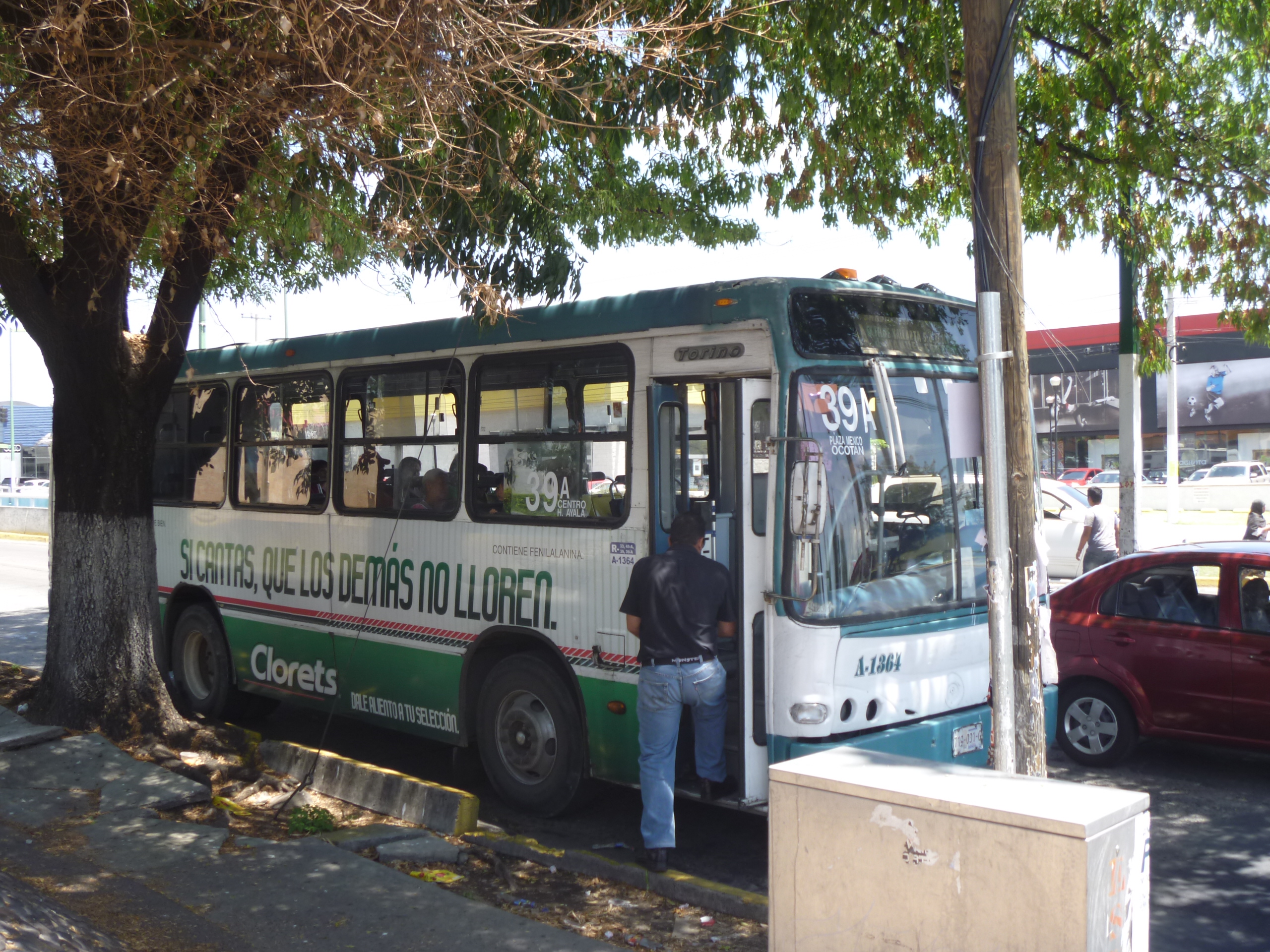
Passengers in Guadalajara complain of high prices, poor service and unsafe conditions.
With almost half the population living in poverty, public buses are the only viable means of transport for many Mexicans. But serious concerns have arisen over the safety, quality and cost of public transport in Guadalajara, Mexico’s second biggest city, where bus drivers complain of exploitation and the number of bus-related deaths is alarmingly high.
Twenty-five people were killed in accidents involving public transport in Guadalajara, the capital of Jalisco state, from January through May 2014.
There are no national records, but the Jalisco Attorney General’s Office says that from 2007 to 2013 there were 317 fatalities involving public transport in Guadalajara alone. Of the 224 bus drivers charged with causing these deaths, 82 were convicted.
“It’s a very grave problem,” Oscar Mora Esquivias, legal director of public transport in Jalisco, told Al Jazeera. “Public transport was not necessarily responsible” for every fatality, Mora stressed, but he admitted that most of Guadalajara’s 5,300 buses are dated and do not meet international standards… Click here to read this feature in full over at Al Jazeera.
 The Tequila Files