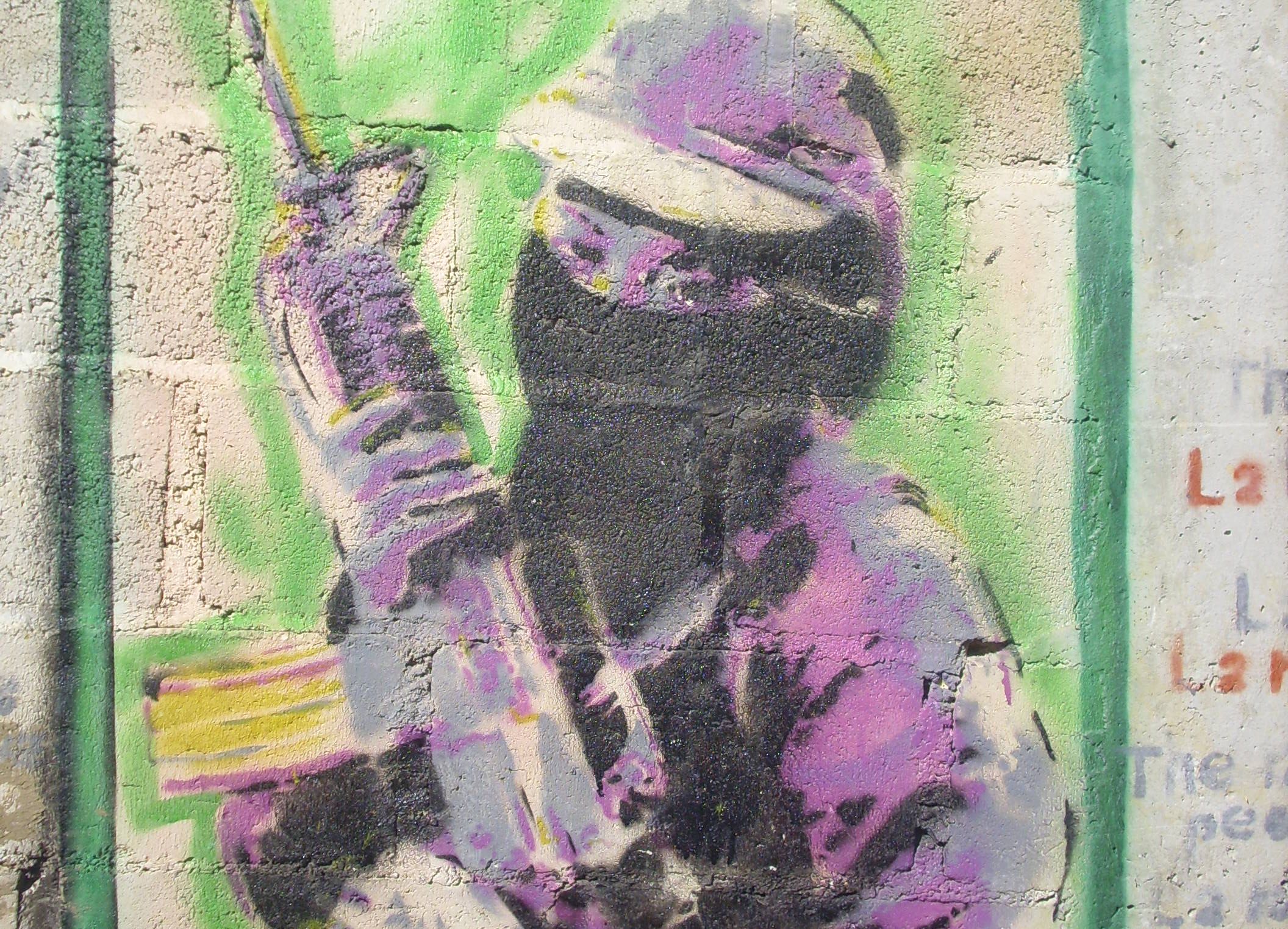
One Zapatista was killed and several more injured in Friday’s clash with the CIOAC.
One member of Mexico’s indigenous Zapatista rebel movement was killed and over 13 people were injured in a clash with militant agricultural workers in the southern state of Chiapas on Friday, May 2.
The conflict began on Wednesday, when members of the Centre for Independent Agricultural Workers and Peasants (CIOAC) hijacked a truck carrying supplies to the autonomous, Zapatista-governed community of La Realidad.
Then on Friday evening CIOAC paramilitaries armed with guns, machetes, sticks and stones invaded the Zapatista territory, destroyed a school in La Realidad and cut off the Zapatista community’s potable water supply. Jose Luis Lopez, 45, a teacher and member of the Zapatista local council, died from several machete blows and gunshot wounds.
The Zapatistas did not allow the Mexican authorities to intervene on their territory but on Saturday they did permit Red Cross paramedics to transport the wounded to the Guadalupe Tepeyac hospital about 100 kilometers away in the town of Las Margaritas. The the number of Zapatista casualties remains unknown.
The following day the Chiapas state government issued a statement affirming that it “deplores and condemns the violence that occurred in the indigenous community of La Realidad, where Zapatista supporters were attacked by members of the CIOAC, and where unfortunately a member of the Zapatista movement was killed.”
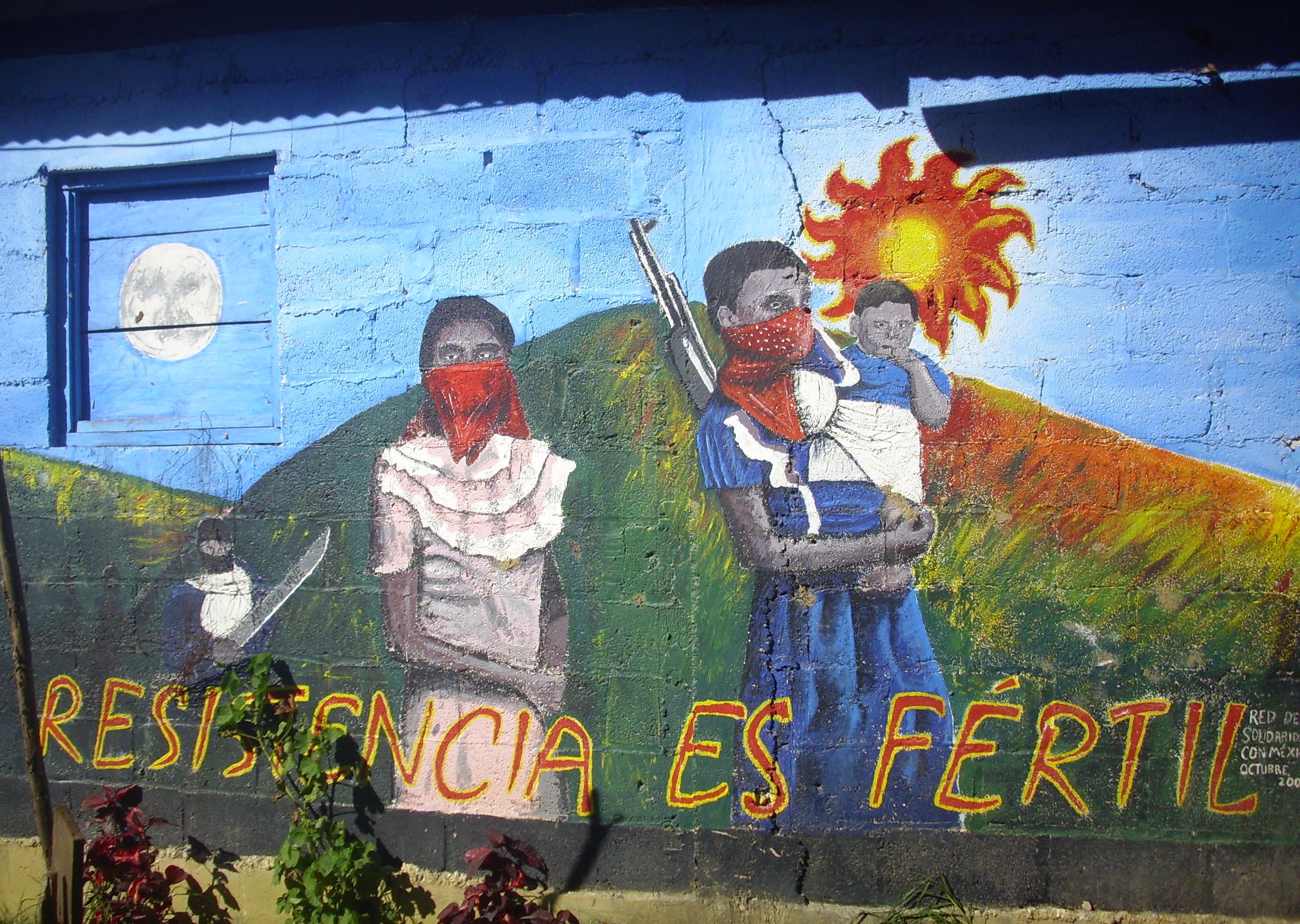
Since the mid-1990s the Zapatistas have become a largely non-violent movement.
Founded in the late 1960s with the support of Mexico’s now defunct Communist Party, the CIOAC split into two branches in 2000 and now has close ties to the nation’s three main political parties. The conflict between the CIOAC and the Zapatistas reportedly began three years ago when the former group began receiving aid from the federal government.
The Zapatistas reject all government handouts and have governed parts of Chiapas since rising up in arms on January 1, 1994. Since the initial conflict the Zapatistas have become a largely non-violent movement, although they remain the victims of regular harassment by the Mexican Army and the government-backed paramilitary groups that have their territory surrounded.
Situated in the heart of the Lacandona jungle, La Realidad is one of five main Zapatista bases. The elusive Zapatista spokesman Subcomandante Marcos is believed to have hidden out there from 1994 until the turn of the century. His current whereabouts are unknown although he continues to publish infrequent communiqués signed from “from the mountains of southwest Mexico.”
The Zapatistas recently celebrated the 20th anniversary of their uprising which drew the world’s attention to the plight of Mexico’s impoverished and marginalized indigenous population. In recent years education has become the primary focus of the Zapatista movement and in August and December last year the rebels invited thousands of sympathizers to exchange ideas and learn about their struggle in a series of classes held in their autonomous communities.

Saul “Canelo” Alvarez dumped Televisa after it blamed him for the death of sparring partner Javier Jauregui.
Guadalajara-born boxer Saul “Canelo” Alvarez has ended his alliance with Mexican broadcaster Televisa following accusations that he was responsible for the death of sparring partner Javier Jauregui.
Alvarez, the former WBC and WBA Light Middleweight Champion, enjoyed a mutually beneficial relationship with Televisa, the world’s largest Spanish-language media outlet, for over five years, culminating in a bout with Floyd Mayweather at the MGM Grand in Las Vegas last September. Alvarez lost on points but the highly anticipated fight broke box-office records and was broadcast by Televisa to a record audience of 45 million in Mexico.
Yet Alvarez’s stock has since fallen and he was fortunate to win by technical knockout against his next opponent, the decidedly less glamorous Alfredo Angulo, on March 8. A week later, despite having helped fuel – and profited from – Alvarez’s rise to superstardom, Televisa publicly turned against him.
In consecutive weekly issues, Televisa-owned magazine TV y Novelas explicitly blamed Alvarez for the death of his friend and sparring partner Jauregui, a former lightweight champion who died in Guadalajara on December 11. Jauregui died at the age of 40 from a stroke, which TV y Novelas alleged was the result of “the terrible blows that he received during his training sessions with the redhead ahead of his fight against Angulo.”
Alvarez paid for Jauregui’s funeral and delayed a trip to watch his brother Ricardo fight in San Antonio, Texas in order to attend the service. Enraged by the allegations against him and the lack of support he felt from Televisa, Alvarez opted to rupture his partnership with the broadcaster ahead of his fight with Cuban boxer Erislandy Lara.
“I’ve decided that my fight on July 12 will not be televised by Televisa for professional and personal reasons. Thanks for your support and we will continue looking for what’s best for all of you and for me,” Alvarez posted on Instagram on April 8.
The fight may not be televised in Mexico unless a compromise agreement is reached with Televisa or an alternative broadcaster is found, with rival network TV Azteca being one such possibility.
Golden Boy Promotions owns Alvarez’s television rights in the United States but the promoter has not clarified conflicting reports over whether the boxer retains ownership of such rights in Mexico.
This is not the first time that a member of the Alvarez family has been accused of killing someone. Canelo’s brother Victor Alvarez is wanted by the Jalisco authorities for allegedly shooting dead Luis Enrique Gama Partida at a private party in the town of Juanacatlan in November 2012.
Canelo is also no stranger to controversy himself, having allegedly hospitalized fellow boxer Ulises “Archie” Solis at a Guadalajara training facility in October 2011.

Guadalajara’s Lucrecia nightclub is allegedly a front for the Sanchez Garza money launderers.
The U.S. Treasury Department has designated Guadalajara’s trendy Lucrecia nightclub for laundering illicit funds for two of Mexico’s most wanted drug barons.
The bar was designated on April 10, along with nine real estate development companies, following a joint investigation by the DEA and the Treasury Department’s Office of Foreign Assets Control (OFAC). The businesses are all linked to the Sanchez Garza family, “a money laundering organization based in Guadalajara, Mexico that began operating on behalf of major narcotics traffickers Rafael Caro Quintero and Juan Jose Esparragoza Moreno (a.k.a. El Azul) in the 1980s,” OFAC said in a statement.
Six members of the Sanchez Garza family were designated under the Foreign Narcotics Kingpin Designation Act last June, while another five relatives were blacklisted on Thursday. “Today’s action prohibits U.S. persons from conducting financial or commercial transactions with these individuals or entities, and freezes any assets they may have under U.S. jurisdiction,” OFAC noted.
“Today’s designation targets those who hide behind seemingly legitimate real estate operations in order to support the illicit finance activities of drug trafficking empires led by Rafael Caro Quintero and Juan Jose Esparragoza Moreno,” added OFAC Director Adam J. Szubin. “OFAC will continue to investigate and uncover the ties between similar types of deceitful operations and money laundering networks.”
A founding member of the Guadalajara Cartel, Caro Quintero is wanted in the United States for the role he played in the abduction, torture and murder of DEA Agent Enrique “Kiki” Camarena in 1985. He was arrested and convicted in Mexico but was controversially released on a technicality last August, having served just 28 years of a 40-year sentence.
“El Azul” Esparragoza is another veteran drug trafficker who used to work with Caro Quintero in the Guadalajara Cartel. He has kept a lower profile over the years but is now believed to be leading Mexico’s powerful Sinaloa Federation alongside Ismael “El Mayo” Zambada, following the arrest of their partner Joaquin “El Chapo” Guzman in February.

OSAC designated five new individuals linked to the Sanchez Garza family on April 10.
Located at Avenida Pablo Neruda 3085 in Guadalajara’s swanky Providencia neighborhood, Lucrecia is a popular hangout for the city’s large student population. The bar last made headlines in March 2013 when the head waiter was shot eight times after refusing to allow an unidentified assailant to enter.
This is not the first time that businesses related to Caro Quintero and Esparragoza have been designated for money laundering in Guadalajara and the state of Jalisco. In June 2013, OFAC imposed sanctions against 18 people and 15 companies that allegedly moved money for Caro Quintero. These included Barbaresco, a popular restaurant in Providencia, and Grupo Fracsa, the company behind the luxury Pontevedra and Zotogrande developments beside Avenida Acueducto in the upmarket Puerta de Hierro area. Another 20 local businesses and one other individual were then designated for laundering money on Caro Quintero’s behalf in October.
In July 2012 OFAC also designated nine entities and 10 individuals linked to Esparragoza, including several businesses run by members of his family in the municipality of Tlajomulco on the southern outskirts of the Guadalajara metropolitan area. Most notably, according to OFAC, Esparragoza’s wife Maria Guadalupe Gastelum Payan and their four children own the Provenza Residencial gated community and the adjacent Pronvenza Center shopping mall on Avenida Lopez Mateos.
The latest figure to be accused of laundering money for Esparragoza was Colombian-Mexican citizen Hugo Cuellar Hurtado, who was designated on February 27. According to OFAC, Cuellar formerly worked for Colombia’s infamous Medellin Cartel and then began supplying cocaine to the Sinaloa Federation in the late 1990s.
OFAC designated two Guadalajara pawn shops owned by Cuellar and a 57-acre ostrich ranch in Tlajomulco, where he recently welcomed a reporter from the New York Times in order to publicly protest his innocence.
The US State Department offers rewards of five million dollars for information leading to the arrest and/or conviction of Caro Quintero and Esparragoza. However, the latest designations may have little or no impact on their money laundering operations within Mexico as the local authorities have taken no apparent action against many of the businesses and individuals blacklisted in the past.
 The Tequila Files