Guadalajara set for first same-sex wedding
Two lesbians are about to make history by becoming the first same-sex couple to marry in the state of Jalisco when they tie the knot in Guadalajara on Saturday, December 14.
The civil registry office in Guadalajara refused to marry Zaira Viridiana de la O Gomez and Martha Sandoval Blanco in March, citing the Civil Code of Jalisco which defines marriage exclusively as the union between a man and a woman, but the couple argued that this violated a constitutional amendment from June 2011 which banned discrimination based on sexual orientation. Following the lead of Mexico’s Supreme Court, which had previously ruled in favor of same-sex couples in Oaxaca under the same legal grounds, a federal judge issued an injunction obliging the Guadalajara civil registry to permit the ceremony.
“This resolution constitutes a historic and momentous event in the political, legal and social life of the state of Jalisco, recognizing that lesbian women not only have the right to be treated the same way as heterosexual people, but also have the right not to be discriminated against when it comes to forming a lesbian-headed family,” said Guadalupe Ramos Ponce, coordinator of the Latin American and Caribbean Committee for the Defense of Women’s Rights (CLADEM).
However, the head of the Guadalajara civil registry office has still sought to block the wedding from taking place by preventing the Jalisco family Development Agency (DIF) from providing de la O and Sandoval with pre-marital counseling.
“We are very concerned and we are outraged at the actions being undertaken by the official from the civil registry, completely overstepping his duties and trying to prevent the DIF from granting the couple premarital counseling. This premarital counseling is a requirement under the law and should be granted by the DIF in any state,” Ramos told local media outlet Notisistema.
If the registrar continues to obstruct the process he will be reported for contempt and could even be removed from his position, Ramos added. “We would take all legal actions against the civil registry official for this contempt and failure to abide by the injunction,” she said.
Further support for same-sex marriage in Jalisco came from the unlikely source of Israeli President Shimon Peres, who visited Guadalajara to attend the International Book Fair (FIL) last week.
“Homosexuals are human beings too and they have rights. We have no authority to take away (their) rights,” Peres told the Yediot Aharonot newspaper during his stay in Mexico.
The marriage of de la O and Sandoval is set to become a major precedent, paving the way for more same-sex couples to marry in Jalsico, one of Mexico’s most Catholic and conservative states. It will also enhance the momentum behind Mexico’s LGBT rights movement and the campaign for same-sex marriage to be permitted across the entire country.
Same-sex marriage was first legalized in the federal district of Mexico City in 2010, while Colima became the first state to formally introduce same-sex unions in July this year. The law in Colima provides homosexual couples with the same rights as married heterosexual couples, while preserving the term “marriage” as a union exclusively between a man and a woman.
Similar but more limited legislation was eventually passed in Jalisco last month, drawing a rabid reaction from the right. While falling short of legalizing gay marriage or adoption, the new law permits same-sex couples to enter a legal contract enhancing their inheritance rights and eligibility for social security benefits.
Central American mothers search for their children in Mexico
“Guadalajara is a cemetery,” declared Ana Enamorado, one of many Central American mothers to have made their way to Mexico in search of their children who disappeared while en route to the United States.
“They’ve found these mass graves where they’ve discovered so many bodies, and how many more could be out there that haven’t been found?” Enamorado said. “We’re desperately searching for our children. As the mothers say, ‘we want them whether they’re dead or alive.’”
The caravan of Central American mothers arrived in Jalisco just as the state authorities concluded the excavation of a mass grave containing 17 corpses in the northeastern outskirts of the Guadalajara metropolitan area. That brought the total of bodies found in Jalisco in the last month to 84, with 67 having been found in the town of La Barca since November 9.
Armed with nothing more than photos of their missing loved ones, the Central American mothers have criticized the Mexican government for not providing them with more information on the victims of such massacres, so that they might establish whether their children’s bodies were among those recovered.
“This organization strongly calls on the Mexican authorities to fulfill their obligation to take effective measures to ensure that abuses against migrants are adequately documented and investigated; and to establish the whereabouts of missing persons and the identity of migrants killed in Mexico,” said Jaqueline Galaviz of Amnesty International, as the caravan rolled into Guadalajara on Saturday.
In a bid to identify the latest 17 victims, Jalisco Prosecutor General Carlos Najera has called for relatives of missing persons to give a DNA sample at the Jalisco Institute of Forensic Sciences.
The journey from Central America to the United States is fraught with peril, as desperate migrants face being robbed, raped, kidnapped and even press-ganged into working for Mexican drug cartels or murdered if they refuse. One of the most infamous cases occurred in San Fernando, Tamaulipas in 2010, when 72 undocumented migrants from Central and South America were massacred by Los Zetas.
Top ten archaeological sites in Mexico

Home to hundreds of ancient pre-Columbian cities built over thousands of years by a series of sophisticated civilizations, Mexico boasts arguably the finest and most diverse collection of archaeological sites in the Americas.
From crumbling ruins in stunning surroundings to pristine pyramids built by the likes of the Aztecs, the Maya and lesser known cultures such as the Toltecs and the Zapotecs, there are a seemingly endless number of sites to explore. Here are ten of the best:
10. Uxmal
One of many significant Mayan archaeological sites in Mexico’s Yucatan peninsula, the city of Uxmal flourished from around 600 to 1000 AD. Its most significant building is the Pyramid of the Magician, an unusually shaped structure, with curved corners, several layers and a long, steep staircase at its front.
9. Guachimontones
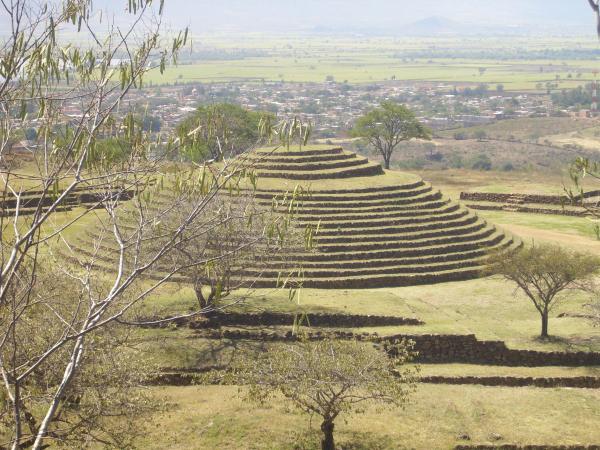
An hour’s drive from the city of Guadalajara, the 2,000-year-old Guachimontones ruins found beside the town of Teuchitlan, Jalisco, are home to some of the world’s only circular pyramids. Only discovered in 1970, Guachimontones was built by a civilization that has come to be known as the Tradicion Teuchitlan, a society dating from around 300 BC to 900 AD. It is thought the city was home to some 40,000 people at its peak, between 200 and 400 AD.
8. Cholula
Situated in the central state of Puebla, Cholula is home to the biggest pyramid in the world by volume. Built in four stages from 300 BC to 900 AD, the Great Pyramid, also known as Tlachihualtepetl (“artificial mountain” in the indigenous Nahuatl language), has a base of 450 meters by 450 meters and a height of 66 meters, making it greater in volume than Giza’s Great Pyramid, although it stands at only half the height. However, it presently resembles a natural hill and has not been fully excavated because in 1594 the Spanish built a church on top as part of their campaign to evangelize Mexico.
7. Templo Mayor
The focal point of the ancient Aztec capital of Tenochtitlan, the Templo Mayor would have been an amazing site when the Spanish conquistadores first cast eyes on it from the mountains overlooking the Valley of Mexico. Painted blood red, the temple rose from the center of a floating city built in the vast Lake Texcoco. Sadly, the Spaniards razed the city and drained the lake, depriving the world of what must have been one of the most spectacular cities ever built. Mexico City now stands in its place stands and at the heart of the metropolis are the ruins of Templo Mayor. The nearby ruins of Tlatelolco, where the Aztecs made their last stand, are also worth visiting.
6. Monte Alban
Founded by the Zapotecs at around 500 BC in what is now the southern state of Oaxaca, Monte Alban is one of the oldest cities in Mesoamerica. Built on a mountain that now overlooks the city of Oaxaca, Monte Alban would become the social, economic and political capital of the Zapotec civilization for close to a thousand years. The site consists of a series of temples and elite residences spread across two main platforms at the summit of the mountain. There is also a small museum with a range of stone carvings on display.

5. Chichen Itza
The most visited and probably the most famous of Mexico’s archeological sites, Chichen Itza is a Mayan city in the state of Yucatan, roughly half-way between Merida and Cancun. The impressive main temple, El Castillo, is revered as one of the New Seven Wonders of the World and draws an estimated 1.2 million tourists every year. In the late afternoon on the Spring and Autumn equinoxes, the northwest corner of El Castillo casts a series of triangular shadows along the north side of the pyramid, giving the appearance of a serpent wriggling down the staircase, in homage to the Mayan feathered serpent god of Kulkulkan (or Quetzalcoatl, as he was known to the Aztecs). The effect is recreated during nightly shows with artificial lighting. Other notable features of Chichen Itza include an observatory and the Great Ball Court, the largest and best preserved Pelota court in ancient Mesoamerica.
4. Coba
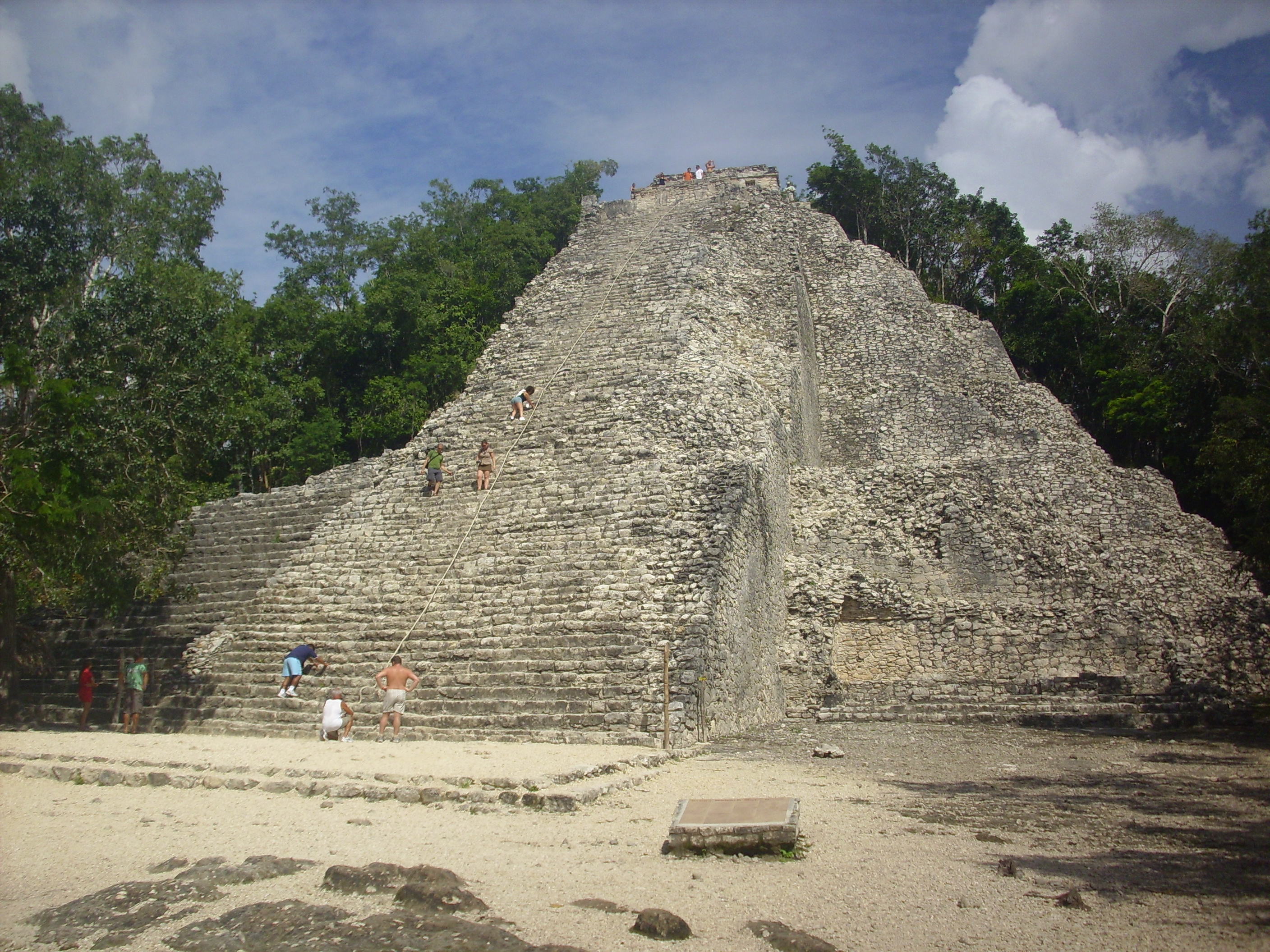
Another Mayan city situated half-way between Chitchen Itza and Tulum, but with fewer tourists than either of them, Coba is like something out of an Indiana Jones movie. The ruins are scattered across the jungle, between two crocodile-infested lakes. The site is home to several large pyramids, including Nohoch Mul, which, at 42 meters, is the tallest pyramid in the Yucatan peninsula. Visitors are free to climb its 120 steps to gain a panoramic view of the tropical surroundings. Bikes are available for hire in order to get around the site with ease.

3. Tulum
Perched atop a rugged cliff, overlooking pure white sands and crystal-clear turquoise water, Tulum definitely has the most attractive setting of all Mexico’s archeological sites. Now guarded by hoards of iguanas instead of fierce Mayan warriors, Tulum’s 700-year-old El Castillo temple was the first sign of civilization that the Spanish explorers encountered in Mexico. Visitors should arrive first thing in the morning or late in the afternoon in order to beat the crowds bused in from Cancun.
2. Teotihuacan
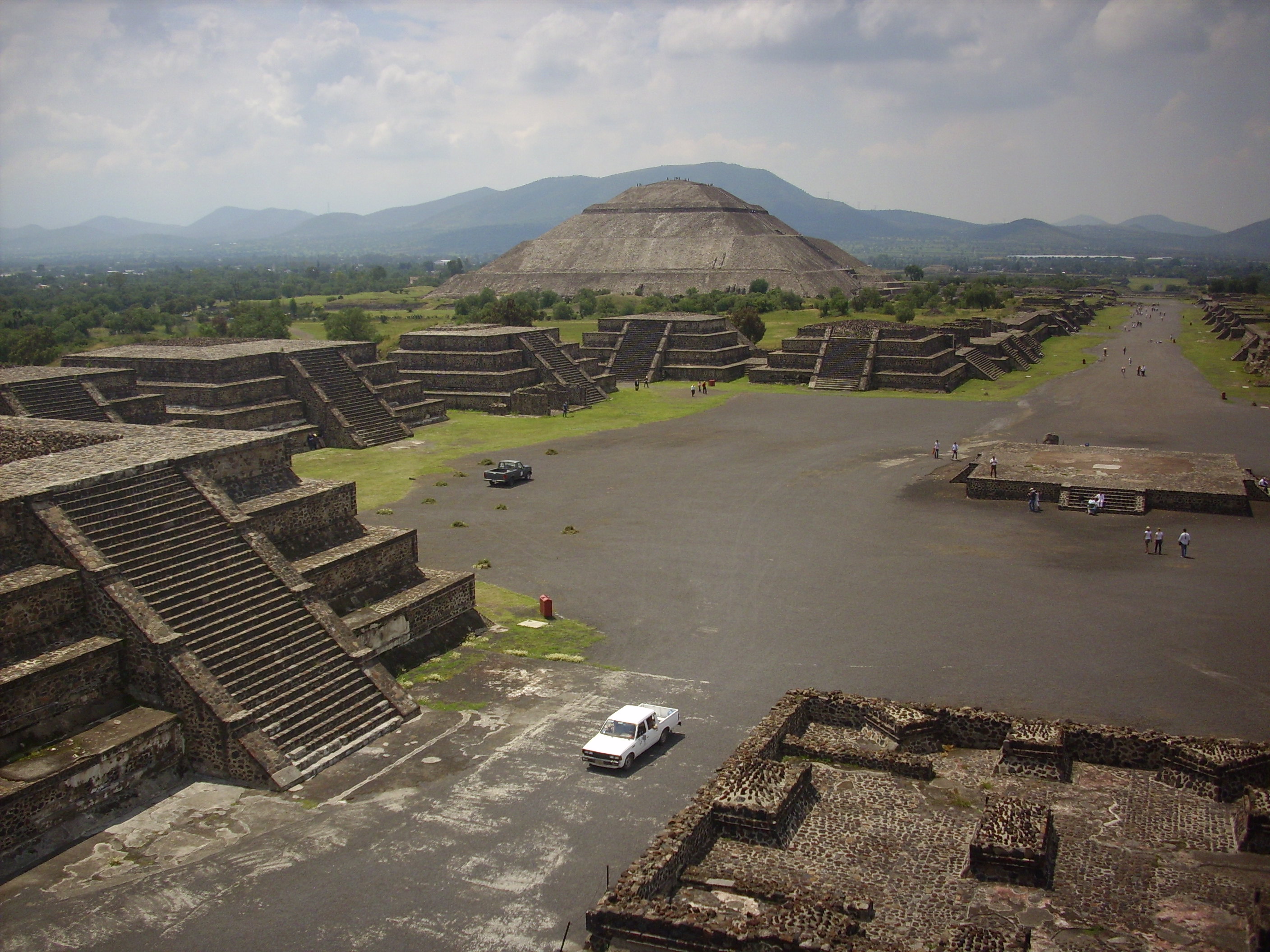
The vast, otherworldly ruins of Teotihuacan are located just 30 miles northeast of Mexico City. Once one of the biggest cities in the world, Teotihuacan was founded around 100 BC, reached its peak at around 450 AD, and had already been abandoned by the time the Aztecs settled in the region. Its name means “Birthplace of the gods” in Nahuatal, although historians remain unsure whether it was built by the Toltec or the Totonec people. The centerpiece of the site is the immense Pyramid of the Sun, the third largest pyramid in the world after those at Cholula and Giza, Egypt. Visitors can climb to the top, making this the world’s biggest scalable and excavated pyramid. Visitors can also climb part way up the Pyramid of the Moon. The view it offers of the Avenue of the Dead is worth the modest price of admission alone.

1. Palenque
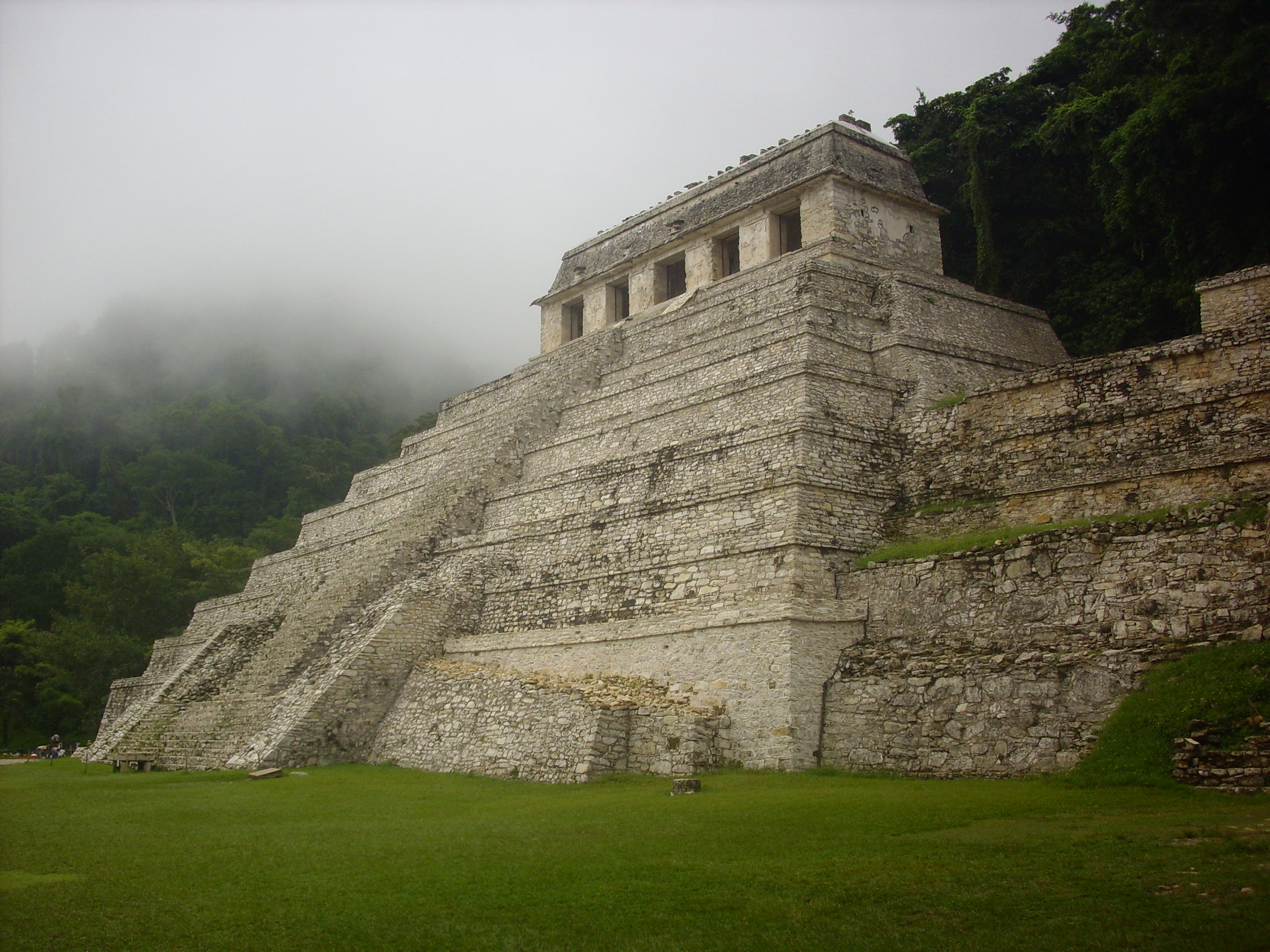
Surrounded by dense rainforest, Palenque is a Mayan city in the southern state of Chiapas that flourished in the seventh century AD. Archaeologists estimate that only around five percent of the entire site has been excavated, leaving more than one thousand structures still covered by the jungle. Visit early in the morning and the ruins will magically appear from out of the mist, while the din of howler monkeys in the trees above enhances the incredible atmosphere. Visitors are free to explore and climb many of the buildings, which have wonderful names such as the Temples of the Sun, the Skull and the Jaguar. You can even go inside some of the ruins, if you are brave enough to enter small, pitch-black rooms with bats hanging from the ceiling and giant spiders climbing the walls.
 The Tequila Files