Young man killed by Zapopan police officer
Despite not having committed any infraction, Erick Fernando Chavez Trejo was stopped in his Jeep Grand Cherokee on the Periferico beltway near the intersection with Rinconada Peñaranda at around 12.30 a.m.
Frustrated at being pulled over, Chavez reportedly remonstrated with officer David Ramirez Santiago, who hit him over the head with his pistol. In doing so he inadvertently pulled the trigger and shot the young man in the head from point-blank range. The officers on duty called for an ambulance but Chavez died while receiving medical attention.
Zapopan Mayor Hector Robles Peiro slammed the incident as “outrageous” and “intolerable,” and vowed to improve the municipal police force’s training programs and protocols. He also said that his administration would compensate the victim’s family, with the amount likely to be determined by a local judge.
Hernan Guizar Maldonado, the head of the Zapopan police force, defended the current protocol, under which officers can carry out “precautionary revisions” of vehicles if they suspect there may be armed men onboard.
Ramirez, who joined the force in August 2001, has been suspended without pay while the Prosecutor General’s Office investigates the case. The fact that an officer with 12 years of experience could act so recklessly raises serious questions about the caliber of officers on duty in Zapopan – and across Mexico in general.
Such incidents are not uncommon. The day after Chavez was killed, members of the Huehuetoca municipal police force in the State of Mexico shot and killed a 14-year-old boy in an apparent attempt to break up a fight.
In a bid to root out corruption and unprofessionalism, all of Mexico’s federal, state and municipal police officers have been undergoing thorough background checks in recent years, but the process has been slow and over one thousand officers in the municipality of Guadalajara alone had not been tested prior to the October 31 deadline. Under the rules of the examinations, the 242 officers who failed and the 1,062 who never submitted to the tests should all now be dismissed from the Guadalajara police force.
Zapopan was the first municipality in the metropolitan area to test its entire police force, but only last week Mayor Robles controversially suggested that the 389 officers that failed should be allowed to take the tests again, because the results had not been conclusive.
Ventura puts the art in ‘artisan beer’

After two years of preparation and experimentation, Cerveza Ventura was introduced to select local bars and restaurants in January. Only available on tap, it is served in English-style pint glasses marked with an iconic white rabbit that looks ready to lead each drinker down the wormhole into a magical world of distinctive, flavorsome ales.
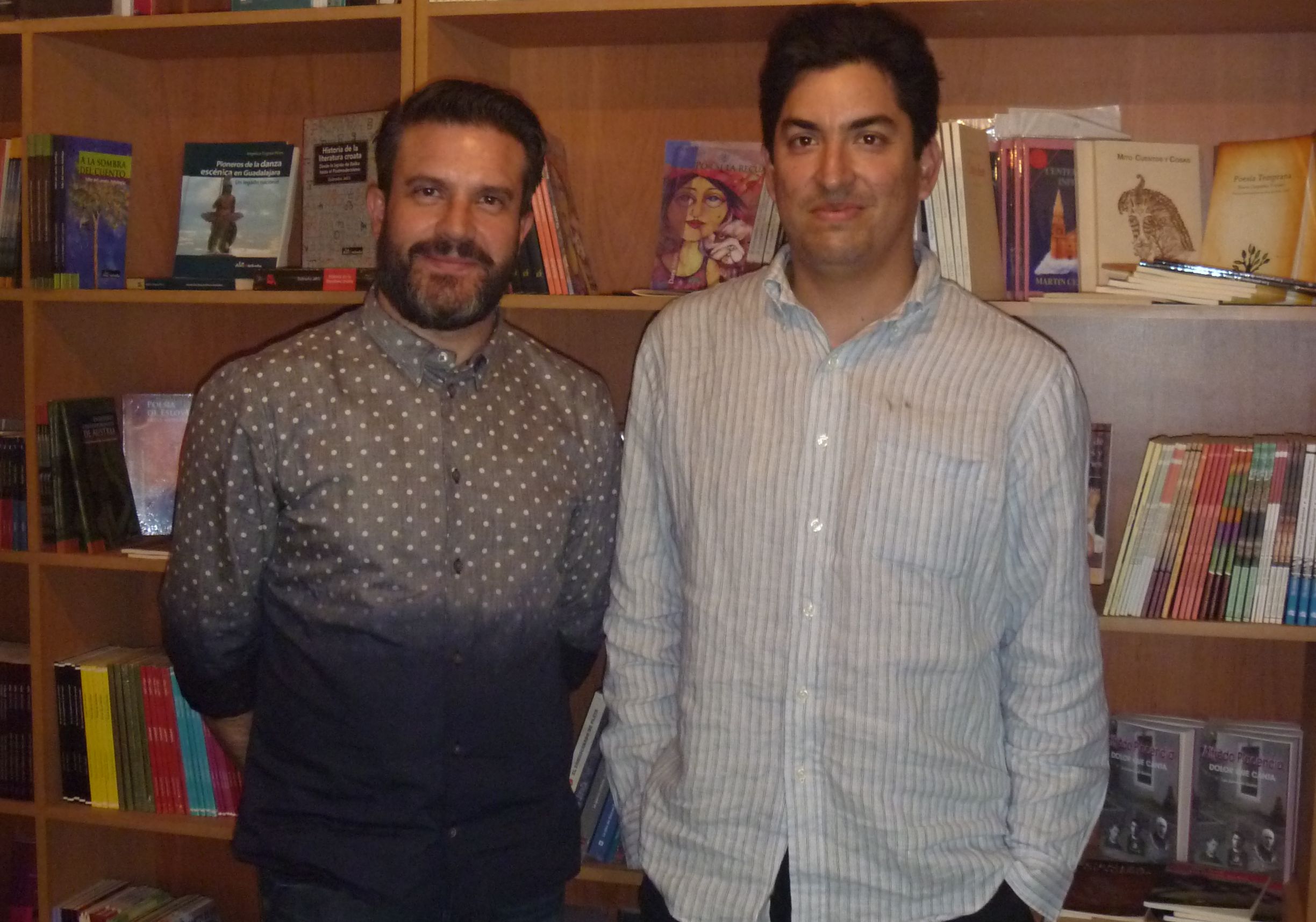
“‘Ventura’ is Spanish for ‘fortune,’ and the rabbit is traditionally associated with good luck,” Saiso explains to the Reporter over a pint of blonde ale at a café-turned-art studio in Guadalajara’s leafy Arcos de Vallarta neighborhood.
“We wanted to have a good product and a good image,” adds Sarabia, the designer of the distinctive logo. The artistic touch is one of many that set Ventura apart from its rivals. Another is the fact that the beer is made for consumption in Guadalajara alone.
“We wanted the city to identify with our beer, for it to be made in Guadalajara, for Guadalajara,” Saiso says. Ironically, neither creator is from Guadalajara (but having lived here for over a decade, both consider themselves adopted Tapatios) and for logistical reasons the beer is currently produced in a factory in Queretaro, although the long-term aim is to open a brewery in Guadalajara.
On face value, Saiso and Sarabia make an unlikely brewing team. For one thing, they have no previous experience making beer – although the latter did once produce 3,000 liters of his own tequila brand, which he sold in the Berlin art scene during a brief stint living in Germany.
Saiso is an art collector and businessman from Mexico City. He moved to Guadalajara 15 years ago to manage the introduction of Jalisco’s transvales (subsidized bus tickets) and is currently handling another contract from the state government to provide free transport for students in accordance with a campaign pledge by Governor Aristoteles Sandoval. He describes this as his “day job” and Ventura as his “passion.”
Sarabia,meanwhile, is an artist who spent the first 24 years of his life in Los Angeles. He produces paintings, sculptures and sketches, and first came to Guadalajara to study at a renowned ceramics workshop. He eventually ended up staying, like so many of the expats in these parts, after falling in love with a Tapatia.
A Mexican brew with international influences
“The Mexican beers like Corona are not really Mexican anymore, they’ve all been sold to very large multinational businesses, but we thought Mexican beer has always had a good reputation so we wanted to bring it back to its roots,” Saiso says of the concept behind Ventura.
Yet he and Sarabia were also determined to create a beer that stands out from the Pilsner or lager-style beers that Mexican has traditionally produced. They set out to emulate the richer, more complex taste of a classic English ale, while embracing the experimentalism found in contemporary American microbreweries.
“For us the fathers of beer are England and Germany, but an enormous craft beer culture has developed in the United States and this is what we’re really following. There are so many local beers and different styles in the United States,” Saiso explains. “The Germans have very clear rules on how to make beer and you can’t diverge from those parameters, but in the United States they’re moving beyond those limits and experimenting more.”
Ventura is still at a very young stage but the results so far have been excellent. Their first beer is a delicious blonde ale with a light but distinctive malty taste. They have also just started selling a batch of Porter, which is much darker in color but still light in weight, that can be found in Guadalajara’s highly rated I Latina and Anita Li restaurants, and will soon become more widely available.
Mexico’s uneven playing field
The plan is to bring out more varieties and seasonal beers as Ventura begins to grow. But growth is not easy to achieve in Mexico’s duopolized beer market. Neither Saiso nor Sarabia are convinced that a recent ruling limiting the use of the exclusivity agreements long favored by Grupo Modelo and Cuauhtemoc-Moctezuma will really help microbreweries to gain a level playing field when it comes to distribution.
“In theory,” bars, stores and restaurants should be freer to stock beers of all different brands, Sarabia acknowledges, but he remains skeptical that Mexico’s beer giants will allow this, simply because “there’s so much money involved.”
“The ruling was really very limited,” Saiso adds. “We’ve realized that they’re still blocking the market. The restaurants are still afraid that they’re not going to give them money if they start selling other beer brands.
“The most important thing in brewing is the prime materials and these are still being blocked. There are only two malt producers in Mexico and they’re owned by the big companies and in January they decided not to sell malt to small breweries,” Saiso explains. “So we have to import all the malt and that’s where the problem is. That’s why craft beers are more expensive in Mexico. We can’t compete with Tecate or Corona because we have to buy American malt. And there are limits to how much you can import. If you exceed the limit you have to pay higher taxes, so it’s all very complicated for us.”
Complementing quality cuisine
Despite Modelo and Cuauhtemoc’s best efforts to keep the market closed, Mexico’s bigger cities have experienced a major craft beer boom in recent years. Microbreweries have begun popping up all over the place, all vying to quench the thirst of an emergent middle class willing to spend a few pesos more to enjoy a tastier, more refined cerveza.
This has spurred the emergence of many specialist bars, such as El Deposito, The Beer Box, The Tap Room and Guadalajara’s latest such establishment, the Beer Bank, which stock hundreds of premium international beers as well as those offered by Mexico’s many microbreweries.
But in a bid to differentiate Ventura from the competition, Saiso and Sarabia have opted to target Guadalajara’s finer eateries rather than its bars.
“Craft beer has normally been sold in Guadalajara in these bars around Avenida Chapultepec, but we’re focused more on restaurants. We want our beer to be identified with fine food, not just getting drunk. It’s a good drink designed to accompany good food,” Saiso explains. He and Sarabia kept this in mind when brewing Ventura’s blonde ale, which has a light, fresh taste that perfectly complements the spicy, elaborate flavors inherent in the national cuisine.
“We sell it in a dozen restaurants across Guadalajara. We even provided the beer pumps because the restaurants here do not have the equipment to serve beer from the barrel,” Saiso says. He and Sarabia are selective and only seek to sell their product in quality establishments, he adds, because “the restaurant has to really know about beer and be able to recommend it to their customers.”
Open Studio Art Program
While craft beer is their latest flame, Saiso and Sarabia have not forgotten their love for art and the latter is responsible for the Programa Anual de Open Studios (PAOS), which began Saturday, November 2. PAOS involves around a dozen local artists opening their studios to the public in order to engage with the local community and provide an insight into how they produce their work.
“It’s a means of promoting art in the city and enabling the artists to have a connection with the public, who can chat with them and look at their work,” says Sarabia, the founder and director of PAOS.
“There are so many great artists here,” he adds, imploring readers to take part in the program, which continues Saturday, November 9, with four promising young artists opening their studios in the morning and three more established names following suite in the afternoon.
First up are the studios of Adrian S. Bara (Colonias 467, Colonia Americana), Mario Navarro (España 2049, Colonia Moderna) and Maria Fernanda Camarena and Guillermo Guarino (Pedro Moreno 1320, Colonia Americana), which will be open from 11 a.m. until 2 p.m., and then those of Gonazalo Lebrija (Fermin Riestra 122, Colonia Santa Fe), Roberto Rebora and Jorge Mendez Blake (Avenida B 620-A, Colonia Seattle) will be open from 5 p.m. until 8 p.m.
For a free beer sample, coincide your visit with the Ruta Ventura, which takes in Bara’s studio from 11 to 11:40 a.m., Navarro’s from midday to 12:40 p.m., Camarena and Guarino’s from 1 to 1:40 p.m., Lebrija’s from 5 to 5:40 p.m. and Rebora and Mendez’s from 6:10 to 7:40 p.m.
Ventura can also be found in Anita Li (Inglaterra 3100), California Wings and Beer (Manuel Acuña 3184), the Cerveceria Union (Americas 1491), Casa Tomas (Calderon de la Barca 95), La Estancia Gaucha (Niños Heroes 2860A), the Guadalajara Country Club (Mar Caribe 260), I Latina (Inglaterra 3128), La Panga del Impostor (La Paz 1927A), Rooster Bar (Juan Palomar y Arias 5487), The Rusty Trombone (Lerdo de Tejada 2166) and Savora (Lopez Cotilla 1866 and Libertad 1872).
For more information visit Cerveza Ventura’s Facebook page or go to www.openstudiosguadalajara.org.
Mexican soccer legend witnessed clown murder Tijuana kingpin

Mexico’s all-time leading goalscorer, Jared Borgetti, was present at the private party in Los Cabos when an assassin dressed as a clown murdered Francisco Rafael Arellano Felix, the former head of the Tijuana Cartel.
Professional boxer Omar Chavez, son of the legendary Julio Cesar Chavez, was also present at the luxury Ocean House suite in the Marbella hotel. The pair both submitted statements to the Baja California Attorney General’s Office confirming that they were at the party hosted by Arrelano when he was killed on Friday, October 18.
Over 40 witnesses have testified that a man dressed as a clown shot the host three times from point-blank range. Some witnesses said that the clown fled the crime scene in an automobile and headed toward the beach in order to escape via speed boat. No arrests have been made to date.
Francisco Arellano was the eldest of seven brothers who ran the Tijuana Cartel in the early 1990s when it was one of Mexico’s most powerful gangs. He was imprisoned in Mexico and then the United States from 1993 until 2008.
Borgetti, who is now a pundit for ESPN Deportes, represented Mexico in the 2002 and 2006 World Cups and scored a record 46 goals in 89 appearances for Mexico. He played for a host of Mexican clubs and spent a year at Bolton Wanderers in the English Premier League. Chavez is the current WBC Youth Intercontinental Welterweight Champion.
While it is not unheard of for gangsters to befriend celebrity stars (Frank Sinatra was famously close with mafia boss Sam Giancana), the news that such high-profile sportsmen were fraternizing with Arellano on the day of his death adds another level of absurdity to what was already one of the most bizarre stories to have emerged from Mexico’s drug wars.
 The Tequila Files