Indigenous run the length of the Americas for water, way of life
First held in 1992, the “Carrera de Jornadas de Paz y Dignidad” is a marathon run every four years by indigenous people from across the continent, as a means of promoting their ways of life and drawing attention to problems facing their communities. The lengthy route will take the runners through Guadalajara and along (and across) Lake Chapala next week.
“We run from sunrise until the end of the day, when we’re received by local communities,” says Cecilia Mejia, a Jalisco native whose journey began in Canada in May and will finally end in Guatemala in November.
“We’ve slept in public places, community centers, schools, gyms, auditoriums, soccer and basketball pitches,” she adds. “It’s difficult. It’s a challenge because you’re running all day and you do get tired … but each night when you sleep you wake up reinvigorated.”
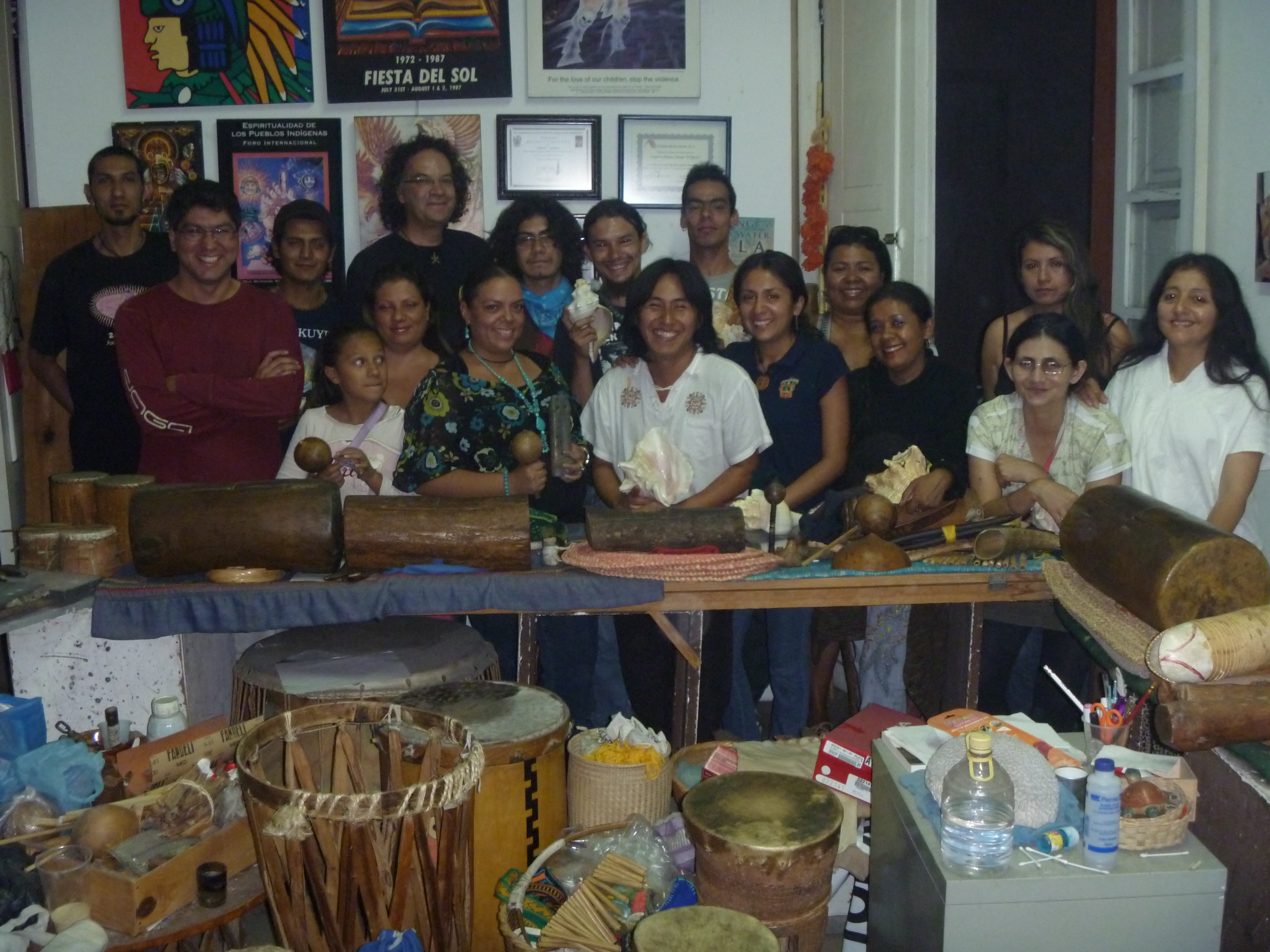
Since its inception, the race has received the support of Tunkul, a 27-year-old pre-Hispanic music and dance group based in Guadalajara. Last year several members went to Canada for National Aboriginal Day. Paying their own fares out of pocket, they played a gala concert there to raise funds for this year’s race.
The collective always provides around six or seven runners, with this year’s participants including Marco Tulio Gomez. A Guadalajara native, Gomez is one of just three Mexicans to run the entire route from the outset on May 1.
“The race is being led by many young people, and this makes us really happy,” says Tunkul coordinator Maria Patricia Aguirre, noting that it is difficult to maintain the traditions and ideology of different indigenous groups in new generations.
From Canada and the United States, two groups of runners, normally numbering around 20 at any given time, have traveled down through northern Mexico in separate routes, while a third group of cyclists has come down through Baja California. All will all meet up at the Teotihuacan pyramids outside Mexico City before continuing on to Peten, Guatemala, where they will unite with some who have come from as far as Patagonia’s southern tip.
“Most indigenous peoples in North America are represented by the eagle and those in South America by the condor, so the batons they’re carrying have feathers from both birds,” says Alejandro Mendo, a Tunkul member and a professor at the ITESO university in Guadalajara.
“According to Mayan prophecy, when the southern condor and the northern eagle meet we will go back to being one united people,” explains Mejia.
Mayan prophecy also influenced the decision to end the pilgrimage at a Mayan site in Guatemala. “We wanted to take advantage of the fact that all of the world will be watching” this region at the end of the year, Mendo says, in reference to the end of a cycle in the Mayan calendar, interpreted by some as a doomsday prediction.
Publicity is important because the indigenous groups want to raise awareness of the theme of this year’s race: water.
Water should be a “universal right,” says Mendo, but instead “it is being commercialized by large corporations.” Not only is access to drinking water a concern, but also the treatment of natural water sources, especially here in Jalisco.
On Sunday several runners will take part in an alternate route to El Salto, to protest the construction of a dam and draw public attention to the “very grave pollution” in the Rio Santiagio which passes through there.
“Thirty or 40 years ago, the river was clean, but then these trans-national businesses arrived and polluted the water,” says Gabriel Mariscal, before another member of the collective declares “this is our land. It used to be a paradise, our grandparents used to fish and bathe in the river.”
Arriving in Jalisco on Friday, most runners will follow the principal route through sites of interest to the indigenous community, including Ixtlan del Rio, La Quemada, Magdalena, Teuchitlan, Teopantli Kalpulli, Ojo de Agua and Santa Ana Tepetitlan.
On Monday they will move through Guadalajara, arriving at Bosque Colomos around 2 p.m. and then running along Patria, Avila Camacho, Alcalde/16 de Septiembre, Revolucion, 20 de Noviembre and Cuauhtemoc to Analco, where they will arrive around 6 p.m. On Tuesday, October 2 they will pass through Tonala, Junacatlan and Atequiza, before arriving in Mezcala on the shores of Lake Chapala on Wednesday at around 3 p.m. and then in Ajijic at 6 p.m.
On the morning of Thursday, October 4 the runners will take to the water in boats provided by local fishermen and tour guides. Setting sail from Ajijic, the plan is to leave offerings at the sacred Isla de las Alacranes before sailing to the far shore of Lake Chapala and continuing their journey in the state of Michoacan.
“The island is sacred for the indigenous Huicholes because there’s a tree there which they believe is responsible for all of the rain in the whole region,” Mendo explains.
The island is also one of five Huichol ceremonial centers, each of which corresponds to a cardinal point and reflects important aspects of the tribe’s mythology. Each year Huichol pilgrims travel from the Sierra Madre to this, the southernmost of their sacred points, to conduct rituals and leave offerings including candles, chocolate, corn, gourds arrows and feathers.
The runners invite the Lakeside community to watch them and have welcomed their continual support. “Many people from the American and Canadian community have helped us ever since 1992,” Aguirre notes.
For exact locations, times and all the latest information, search “Jornadas de Paz y Dignidad 2012 Honrando el agua” on Facebook.
Huffington Post: ‘Over The Wall’ shows football tear down borders
It is about time then, for the emergence of a film that restores some faith in the human side of the beautiful game.
Directed by Jasper Kain and Matthew Kay, Over The Wall is an unlikely and ambitious hour-long documentary that touches on the Israeli occupation of Palestine, the Arab Spring and the role football can play in overcoming prejudice and discrimination.
It documents a 2011 tour of the Middle East by London’s SOAS University football team, organized with the help of Football Beyond Borders, an organization that uses the universal power of the sport to tackle political, social and cultural issues.
The tour takes in some unusual venues, with games played in Egypt’s largest slum, a Palestinian refugee camp and the national stadium overlooked by the giant Israeli-built wall that cuts illegally into Palestinian territory.
Along the way there are moments of real drama, as the team are caught up in demonstrations for freedom and democracy on the streets of Cairo and the siege of the Israeli embassy.
With Gaza inaccessible due to a series of bombings, the team seek entrance to the West Bank, where they must lie to Israeli immigration officials and smuggle their cameras across the border.
After one game, an opponent from the Balata refugee camp tells how his house was bombed and his brother was gunned down along with four friends by the Israeli military. Inevitably, the severity of the situation that these people experience on a daily basis begins to sink in.
“The mainstream media in our country doesn’t do the situation any justice, politicians in our country don’t do it any justice,” remarks one of the players as their tour is coming to an end. Another observes that the Israeli settlements on Palestinian land are “irreversible … a constant reminder of the occupation.”
Politically awakened, the players also come to appreciate the immense complexity of the conflict, expressing unease at the indoctrination of young Palestinians and noting how hard it is for young Israelis to resist a highly militarized society.
Despite its serious nature, the film also has its moments of humour, such as when a member of the team adopts a false cockney accent in order to get past Israeli border control with minimal fuss.
Throughout the tour, the players engage with local communities, running workshops for kids and raising money to help poor slums build football pitches. The idea that football can transcend borders is at the centre of this film and the narrator Kay notes that as their journey progresses, the players begin to see the sport in a different light.
“Football is a foot in the door that allows us to then explore these other things,” says one of the team. “It’s led to a level of interaction and bonding and discussion that wouldn’t have happened otherwise.”
After heart-warming scenes of the team interacting with Palestinian kids, the film ends with a sobering shot of the “apartheid wall” and the news that Palestine has failed in its bid for statehood at the United Nations.
A refreshing, inspiring and humanitarian antidote to the corrupt, corporate nature of modern football, Over The Wall is a unique and rewarding piece of cinema.
Rating: ★★★★★
There will also be a cast-and-crew screenings of Over The Wall, followed by question and answer sessions, at the Rich Mix cinema on 4 October at 8 p.m. and the Qattan Foundation on 9 October at 7.30 p.m.
The film will also be screened at the London Middle East and North Africa Film Festival on 30 October at 7 p.m.
For more info, visit www.walksoflifefilms.com or follow @walksoflifefilm on Twitter.
Bishops call for religion in public education
Outlined in a 155-page document, the “Education for a New Society” program would overturn the historic and constitutional separation of religion and education in Mexico, as well as limiting the power of teachers’ unions to determine the national curriculum.
The bishops’ proposals will undoubtedly encounter strong resistance not only from the unions, but also those concerned that the Catholic Church would take advantage of new laws to indoctrinate children. However, if pupils were taught – as the bishops have suggested – the ideals of many different faiths, including Judaism and Islam, then the classes could arguably be of some value to Mexican society.
The bishops insist they do not seek to undermine the secular state, but simply to instill some much needed ethics in education. They hope the classes would help kids to ignore the temptations of drug abuse or a life of crime, which may appear glamorous to those who are poorly educated or economically deprived.

