Jalisco Cartel weakened after another raid in Guadalajara
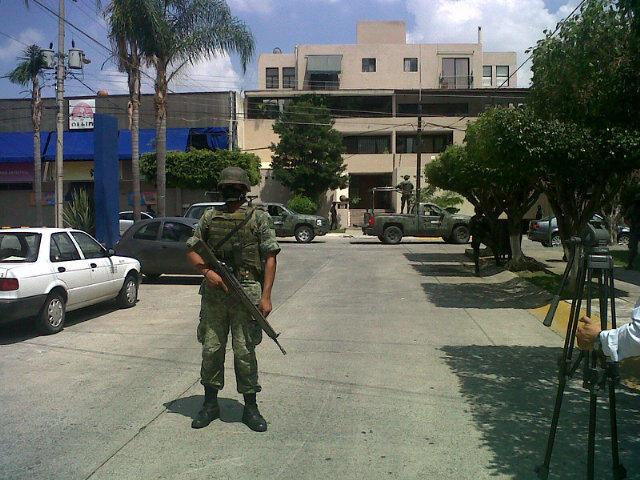
Local authorities and federal security forces demonstrated improved coordination and cooperation in preventing any disturbances after a raid in Guadalajara’s Providencia neighborhood on Thursday.
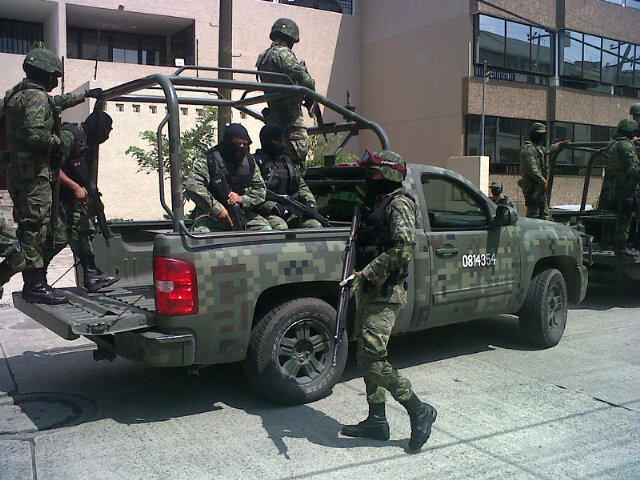
Just after midday Marines arrested at least four suspected members of the Cartel Jalisco Nueva Generacion (CJNG) at a four-story apartment building, number 450 on calle Nelson, just a few blocks from Avenida Terranova.
In previous raids against the CJNG, federal forces have declined to keep state or municipal authorities informed, leaving Jalisco vulnerable to the retaliatory blockades of March and August this year. But on this occasion, the Public Security Agency (SSP) in Jalisco issued a “code red” heightened security warning early Thursday afternoon.
The U.S. Consulate in Guadalajara quickly passed on the message, advising that “all American citizens should take precautions and be vigilant to news reports regarding events in the state of Jalisco.”

As a precaution against blockades, additional police units were deployed at strategic points in Tlajomulco, El Salto and Tonala. No disturbances were reported across Guadalajara or Jalisco following the operation.
Around 50 masked marines took part in the raid, backed by jeeps, trucks and two helicopters. Having made arrests and left the property around 2.15 p.m., they returned to reenter the building shortly before 3 p.m. and left just over 30 minutes later.
Alleged CJNG leader Nemesio Oseguera Cervantes, alias “El Mencho,” was rumored to be among those detained but this has yet to be confirmed.
The CJNG has been severely weakened by a string of recent arrests and last week State Police Chief Luis Carlos Najera said “narcomantras” (messages left by drug gangs) in Guadalajara suggested a split between the CJNG and the powerful Sinaloa Federation headed by Joaquin “El Chapo” Guzman.
Report sheds light on Guadalajara’s criminal underworld
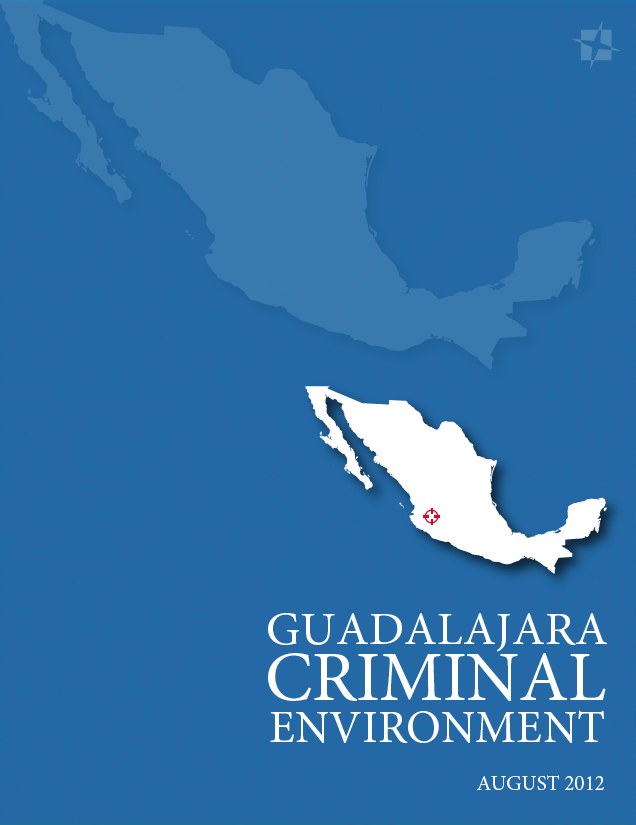
“Guadalajara Criminal Environment August 2012” is a 22-page study by Southern Pulse, an investigative organization founded in 2004 by journalist and author Samuel Logan, with a focus on security, politics, energy, and business in Latin America.
The report identifies Mexico’s two most powerful cartels, the Sinaloa Federation and Los Zetas, as the only “tier-one” trans-national criminal organizations operating in Guadalajara and Jalisco. Although fierce rivals, both “are content with a non-confrontational coexistence in the GMA (Guadalajara metropolitan area),” the report posits.
The Sinaloa Federation and Los Zetas are respectively allied with “tier-two” regional drug-trafficking organizations, the Cartel Jalisco Nueva Generacion and the Milenio Cartel. These cartels often work as intermediaries, carrying out contracted work for their larger partners.
Below them in the narco food chain are a number of small “tier-three” gangs which deal in petty crimes such as theft, extortion, prostitution and street-level drug deals. Of these, the report identifies Wathside, Florencia 13 and Los Once/La Bajada Loca as the city’s three most notable gangs, operating respectively in the Libertad, Santa Cecilia and El Suaz neighborhooods.
 The report suggests that the Milenio Cartel, acting at the behest of Los Zetas, was responsible for the 26 bodies dumped beside the Millennium Arches last November, as well as the 18 dismembered corpses left just off the Chapala highway in May.
The massacres were a sign of the westward expansion that has brought Los Zetas into the Sinaloa Federation’s territory. Over the past year or so, Los Zetas have been moving from Zacatecas through Jalisco and toward Colima and the port of Manzanillo, a major entry-point for narcotics.
Allying themselves with the Milenio Cartel has enabled Los Zetas to establish “a comfortable beachhead in Guadalajara, and through control of routes in the state of Jalisco, east of the city, the criminal organization has patched together a logistics strategy to operate in the state.”
The report suggests that Los Zetas are weaker than the Sinaloa Federation; and the alliance with Milenio allows the former to operate in Jalisco without being drawn into an open conflict that it would likely lose and would “most certainly draw resources from its current concerns in Nuevo Leon and Tamaulipas.”
Virtually all of the Sinaloa Federation’s work in Guadalajara has been carried out by the CJNG in recent years, yet shortly after the report’s publication, the Mexican military announced a split between the two, with the latter organization having been severely weakened by a string of recent arrests.
Southern Pulse investigators believe the Sinaloa Federation is open to an alliance with the Knights Templar, another tier-two organization which until now has operated primarily in Michoacan and Guanajuato. If there has been a split, the Knights Templar could soon move into Jalisco to take over the work the CJNG was doing.
The Sinaloa Federation is apparently willing to tolerate low-profile Zetas activity in Guadalajara due to the relatively low value of the plaza. While Jalisco is considered strategically important, key smuggling routes bypass Guadalajara, meaning control of the city is not overly important. For this reason, the state capital has not experienced the same level of violence as other major cities such as Monterrey and Acapulco.
Both the Sinaloa Federation and Los Zetas prefer to operate in smaller rural towns that form the smuggling route along Jalisco’s eastern borders. They also enjoy greater impunity in these areas where there is a weaker police and military presence than in Guadalajara.
As a result, Guadalajara enjoys relative calm, which in turn, limits the growth of tier-three and tier-two street gangs, the report notes. However, the city is by no means free of organized crime.
Tier-one and two organizations operate mostly in Tlajomulco and the areas around the Chapala highway and the Guadalajara airport, while tier-three gangs are mostly responsible for petty crime in downtown Guadalajara and high crime rates in Tonala and the Cerro de Santa Maria and Cerro del Cuatro hills of Tlaquepaque.
Most of the neighborhoods listed in the report as “current or potential hotspots” are in peripheral areas of the city far from where tourists or expat residents would venture. Yet downtown Guadalajara and San Juan de Dios also make the list, as well as Comercial Abastos, which is home to a major wholesale market.
“Although central Zapopan itself offers some of the safest areas in the GMA, the area along the Northern Periférico, including the colonias of El Vigia, Tabachines, Constitucion, and Villa de Guadalupe have seen some of the clearest confrontations between the Sinaloa Cartel and Los Zetas,” the report states.
Even some of the more central areas of Zapopan are considered “a special case because cartel leaders and their lawyers, accountants, and other associates reside there, making it a special target for both rivals and police action.”
When Guadalajara is hit by large-scale disturbances, such as the narco-blockades in August and March, it is generally a reaction to such police action and a preventative measure against further arrests.
To download the Southern Pulse report visit www.southernpulse.worldsecuresystems.com/guadalajara-criminal-environment
Update on CIA shooting in Mexico
Twelve policemen allegedly responsible for the attack on Friday, August 24 have been arrested and can be held for up to 40 days of questioning under Mexican law, while the two American victims – identified as CIA operatives by the New York Times and several Mexican media outlets – have returned to the United States.
According to Mexican daily Milenio, a preliminary report from the ongoing investigation indicates that there were at least 15 plainclothes policemen involved in the ambush. The report reveals the Toyota was hit by at least 136 bullets from AR-15 and AK-47 assault rifles. The latter is not a standard-issue police weapon in Mexico and is more commonly used by drug gangs.
The federal police officers involved were investigating a kidnapping that occurred in the area just hours before the shooting, according to Luis Cardenas Palomino, regional security chief of the federal police. But this does not explain why they would choose to open fire on a vehicle with diplomatic plates, especially if there was a possibility that the victim of a kidnapping were inside.
The two Americans were named last week by Noticias MVS as Jess Hoods Garner and Stan Dove Boss, retired military officials who now work as private contractors providing training in countries with high levels of violence, such as Iraq and Afghanistan.
The U.S. government has not confirmed their identities, nor whether they were indeed working for the CIA. On the night of the attack the U.S. embassy in Mexico issued a short statement acknowledging the day’s events, but there has been no official comment from Washington on the case.

