New Mexican left begins to take shape
The Party of the Democratic Revolution (PRD) has quietly edged away from its two-time candidate, making considerably less noise over the alleged voting fraud than it did after the 2006 election, when disruptive and ultimately counter-productive protests dragged on for months.
Lopez Obrador continues to gather evidence and last week argued that an interim president should be appointed instead of Enrique Peña Nieto. A decision by the Federal Electoral Tribunal (TEPJF) is due by September 6, although it seems unlikely that the election of Peña Nieto will be overturned.
Keen to avoid alienating supporters as it did in 2006, the PRD is already looking to learn from its mistakes and build for the future. Analyzing the electoral defeat, the PRD’s National Council identified “the lack of unity around the common goal of winning elections – not just the presidential election — by the allied parties and Morena [Lopez Obrador’s National Regeneration Movement].” So with the aim of uniting the left in preparation for the 2018 presidential election, representatives of the PRD, Labor Party (PT) and Citizen’s Movement met in Acapulco last week to create a new alliance, the Broad Front of the Mexican Left.
Former Mayor of Mexico City Marcelo Ebrard gave a speech announcing the new front, while Lopez Obrador was conspicuous by his absence. A less controversial figure than his predecessor, Ebrard will need to quickly smooth over any potential rift with Lopez Obrador while reaching out to the millions of Mexicans fed up with decades of corruption and violence under PRI and PAN rule.
If the left could create a broader alliance with existing social movements like Javier Sicilia’s Movement for Peace with Justice and Dignity and the #YoSoy132 student movement it could become a force with strong grassroots support.
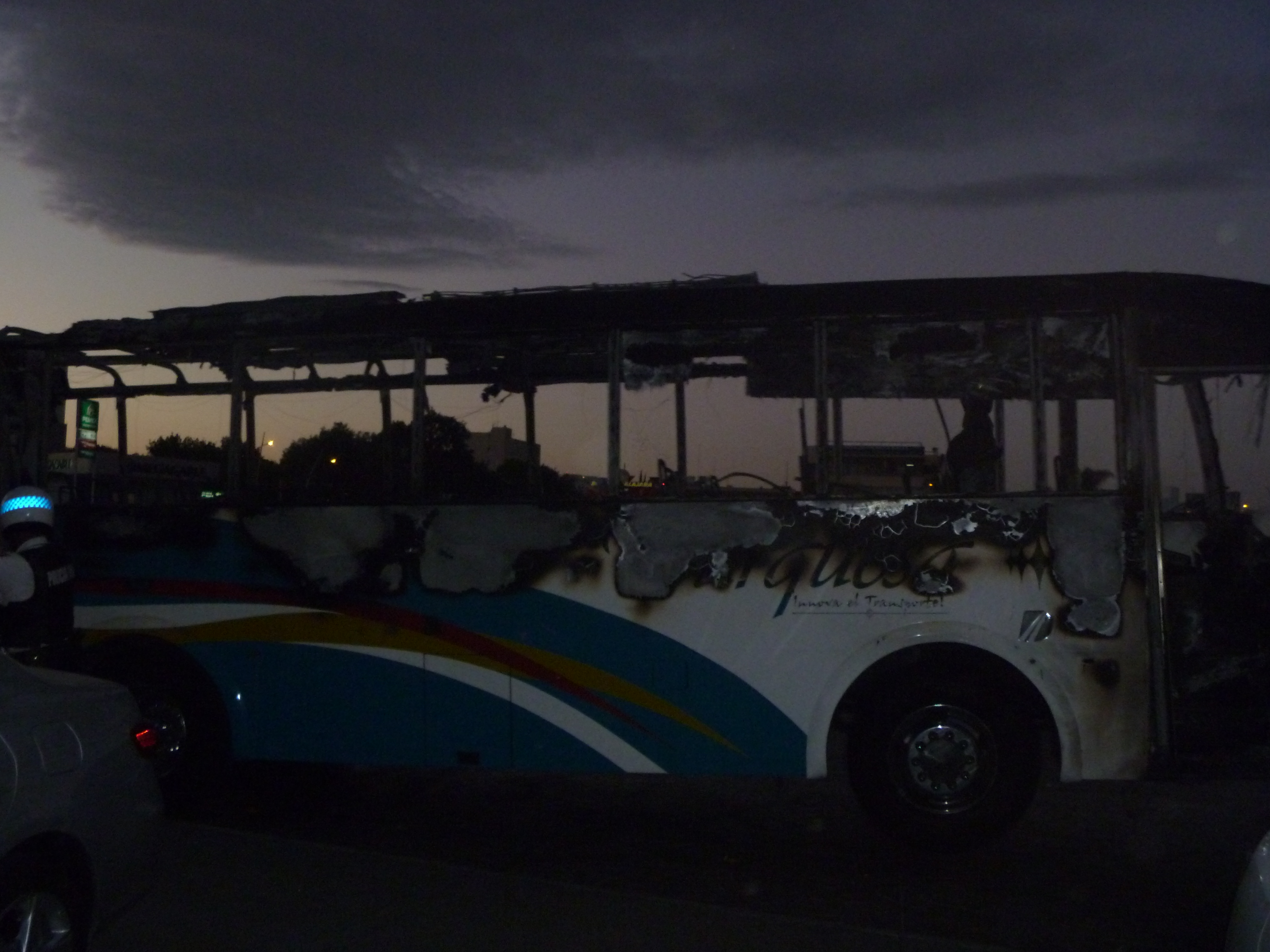
The violence was provoked by a federal police raid on a Cartel Jalisco Nueva Generacion (CJNG) hideout in the municipality of Tonaya, about 100 kilometers south-west of Guadalajara, early Saturday afternoon.
Federal agents shot dead six suspected gang members and the CJNG responded by setting up 28 “narcobloqueos” across the state. Media reports suggested that the cartel’s leader Nemesio Oseguera Cervantes, alias “El Mencho,” had been arrested but federal police later denied this was the case.
Immediately after the shootout, the CJNG seized at least 35 vehicles, setting most of them alight to block seven roads in the metropolitan area and another 15 roads in other parts of Jalisco. One innocent bystander was killed in the process.
Another five “narco-blockades” were reported in the neighboring state of Colima, while there were six more blockades in Jalisco in the early hours of Sunday morning. Marines then arrested four suspected CJNG members in Ciudad Guzman later on Sunday.
After much confusion, the federal Public Security Agency (SSP) revealed on Sunday that the raid in Tonaya had been the catalyst for the weekend of chaos. The operation involved five Black Hawk helicopters and one Mi-17, in which federal agents were transported to the town of Amacuautitlan.
There they exchanged fire with six gunmen, killing all of them. Three agents were wounded and taken to a hospital in Guadalajara, none of whom are in a serious condition.
In the operation the police seized four rocket launchers, four AK-47 assault rifles, two M-60 machine guns, a shotgun, an R-15 rifle, two 9mm pistols, 15 fragmentation grenades, 113 magazines and 900 rounds of ammunition. The SSP said the ensuing blockades were aimed at preventing further action from the authorities.
It was a heavy, humid afternoon in Guadalajara and as news of disturbances filtered in the streets became eerily quiet, aside from an array of police vehicles rumbling across the city and the occasional helicopter circling overhead.
From around 2 p.m. to 4.30 p.m. seven blockades were reported across the metropolitan zone: two on the Periferico beltway at the Lopez Mateos and Mariano Otero intersections, two in Tlajomulco on the highway to Chapala, two on the highway to Zapotlanejo and one in Buenavista on the highway to Morelia.
The State Attorney General’s Office (PGJEJ) confirmed one death: that of 22-year-old Eugenio Gonzalez Paz, who was hit by a stray bullet when gunmen seized three vehicles in the latter blockade.
Another 15 blockades took place across Jalisco, with incidents confirmed in Puerto Vallarta, Ciudad Guzman, Poncitlan, Jamay, Tuxcueca, Tizapan el Alto and Union de Tula. Different media reports also placed blockades in Tepatitlan de Morelos, San Ignacio Cerro Gordo, El Grullo, Tonila, Capilla de Guadalupe, La Barca and Zapotlan del Rey. Meanwhile in Colima, three more blockades were reported in Ameria and two in Tecoman.
Six more blockades were reported early Sunday morning in Jalisco. Between 3.10 and 5.10 a.m., burning vehicles were left on the Chapala highway, near the junction with the road from Santa Rosa to La Barca; in Ayotlan, on the road to Atotonilco El Alto; in Zapotlan del Rey on the highway to Morelia; on the road from Tototlan to Atotonilco El Alto; and in Ocotlan and Jamay on the Santa Rosa-La Barca highway.
Later on Sunday Marines arrested four suspected CJNG members in Ciudad Guzman. They were identified as Raul Sosa Jimenez, alias “El Bufalo,” the suspected head of a cell of assassins; Guillermo Alberto Ramirez Mundo, alias “El Wily;” Jose Antonio Reyes Mundo, alias “El Tres P;” and Maria Nelida Flores Reyes, alias “La Gorda.”
A Marine spokesperson revealed they seized five assault rifles, five handguns, magazines and cartridges, police clothing and badges, military insignia, two vehicles, communications equipment and about 1.2 kilos of a substance believed to be crystal meth.
The CJNG carried out a similar wave of blockades in and around Guadalajara in March, following the arrest of leader Erick Valencia Salazar at his home in Zapopan. Allied with the powerful Sinaloa Cartel, the CJNG is believed to be locked in a turf war with La Resistencia and its notorious allies Los Zetas, for control of Jalisco.
Jalisco Governor Emilio Gonzalez was receiving a prize in Italy when the blockades took place on Saturday, having apparently left the state without prior notice. Upon returning to Mexico, he held a cabinet meeting on security at the Casa Jalisco on Sunday.
The Party of the Democratic Revolution (PRD) state President Juan Carlos Guerrero Fausto criticized Gonzalez for his unexplained absence, noting that “if it were not for these unfortunate incidents, neither the citizens, nor the media, nor local government entities would have even realized that the governor had left the country.”
Leaked emails reveal US soldiers are operating in Mexico
Since February the controversial whistle-blowing organization has been publishing “The Global Intelligence Files” – over five million emails leaked from Stratfor, a Texas-based global intelligence company, which date from July 2004 to December 2011.
“U.S. special operations forces are currently in Mexico. Small-scale joint ops with Mexico’s [special forces],” wrote “US714,” a U.S. law enforcement officer in charge of border investigations, to Stratfor staff in an email from June 2011 released on Sunday.
This was corroborated by a Mexican diplomat referred to as “MX1,” who told Stratfor “I can confirm that there is Marine presence, but I don’t know if it is MFR [Marine Force Recon – the U.S. Marine Corps’ special operations unit].”
“Operational coordination and indeed joint exercises have been conducted, and there are more in the planning stages,” said MX1. “We do indeed have US military presence in Mexico as part of the MI [Merida Initiative] coordination office (even though they are sometimes under official cover as DOS [Department of State], etc…) There are advisors and intelligence operatives that work on the tactical level with their Mexican counterparts.”
Under the Merida Initiative, the United States has been providing Mexico with funds, equipment, training and intelligence in order to help fight drug trafficking. But there are officially no U.S. troops operating south of the border, for this would represent a violation of Mexico’s sovereignty.
“Mexican public opinion would be outraged if there were U.S. soldiers engaged in a direct operational role in Mexico,” said MX1.
“I can’t confirm that there are independent U.S. operations in Mexico of any sort,” he added, but “the repercussions on cooperation from a black op that we are not aware of would be immense, even if the [Mexican] government didn’t care.”
Breaking the story on Monday, NarcoNews.com revealed that another of the leaked emails identifies MX1 as Fernando de la Mora Salcedo, a former member of the Mexican Consulate staff in El Paso, Texas and now a consul in Phoenix, Arizona.
The Stratfor emails were passed on to WikiLeaks by the hacking group Anonymous. Stratfor condemned this “deplorable breach of privacy” in a statement earlier this year.
“Some of the emails may be forged or altered to include inaccuracies; some may be authentic,” stated the Stratfor press release. “We will not validate either. Nor will we explain the thinking that went into them. Having had our property stolen, we will not be victimized twice by submitting to questioning about them.”
In another email from June 2010, MX1 suggested that the U.S. and Mexican “governments will allow controlled drug trades,” alleging that the “the major routes and methods for bulk shipping into the US have already been negotiated with U.S. authorities,” and that large shipments of drugs belonging to the Sinaloa Cartel “are OK with the Americans.”
Run by billionaire drug lord Joaquin “El Chapo” Guzman, the Sinaloa Cartel is one of Mexico’s most powerful drug-trafficking organizations.
De la Mora’s comments appear to back up the legal defense of a high-ranking member of the Sinaloa Cartel soon to go on trial in Chicago for drug trafficking.
Vicente Jesus Zambada Niebla was arrested in March 2009, just hours after meeting with U.S. Drug Enforcement Administration (DEA) agents in a Mexico City hotel. In pre-trial proceedings earlier this year he claimed immunity under a deal allegedly struck between the U.S. government and the Sinaloa Cartel.
In exchange for information on rival organizations, Zambada said he and the cartel leadership were given “carte blanche to continue to smuggle tons of illicit drugs into Chicago and the rest of the United States” between 2004 and 2009.
As part of the arrangement, he also claimed the Sinaloa Cartel received weapons through the “Fast and Furious,” a botched operation in which the Bureau of Alcohol, Tobacco, Firearms and Explosives (ATF) illegally sold 2,000 firearms to Mexican gangs, with the purported aim of tracing the weapons and then prosecuting the criminals.
One of the highest ranking Mexican drug traffickers to ever go on trial in the United States, Zambada’s case is due to begin in October.
WikiLeaks made headlines worldwide this week due to the ongoing controversy surrounding the organization’s founder Julian Assange.
Wanted in Sweden for questioning over two allegations of sexual assault, Assange has taken refuge in the Ecuadorian embassy in London. Assange has offered to be questioned within the embassy but refuses to return to Sweden for fear he will be extradited to the United States.
Ecuador offered Assange political asylum, but last week the British government provoked a major diplomatic row by threatening to enter the embassy and arrest Assange, an action that would represent a clear violation of international law.
If extradited, Assange fears he would face similar treatment to Bradley Manning, a U.S. Army whistleblower who passed thousands of documents to WikiLeaks. Bradley has been imprisoned by the U.S. government for over two years (mostly in solitary confinement) without trial.
Earlier this year the Stratfor leaks revealed a grand jury in Virginia has already issued a secret sealed indictment against Assange for espionage, while prominent U.S. politicians have even called for him to be executed.
Click here to read the WikiLeaks files cited in this story.

