Why Tottenham should keep Giovani Dos Santos

Despite having warmed the bench for what feels like forever, the Olympic gold medalist is still only 23 and has a promising future ahead of him, if managed properly.
Juande Ramos failed to get the best out of anyone during his brief tenure as Tottenham coach, while the famed man-manager Harry Redknapp would barely speak to him, Giovani has admitted.
This was at least partially self-inflicted, as Giovani earned a reputation for partying and arriving late to training. Legend has it that at weekends he would fly out to Barcelona to go on the lash with his former teammate Ronaldinho.
Mexicans had long held the hope Giovani could become the “new Ronaldinho,” but this was not exactly what they meant. Such was Giovani’s penchant for fiestas that Redknapp once joked he couldn’t walk past a nightclub without entering.
Loan spells at Ipswich, Galatasaray and Racing Santander did nothing to improve Giovani’s standing within the Spurs ranks and he was only called upon last season in the Europa League or as a last resort when chasing a late equaliser.
But for Mexico, Giovani always seems to shine. He assisted half of Mexico’s goals as they won the 2005 Under-17 World Cup, in which he was named second best player of the tournament. With the senior team he was also voted runner-up for young player of the 2010 World Cup.
Giovani scored a truly stunning goal in the 2011 Gold Cup final as Mexico came from behind to beat its fierce local rival the U.S.A. and most recently he netted three times to help Mexico to its only gold medal in the London 2012 Olympic Games, missing the final against Brazil only through injury.
Now, with just one year left on his contract he seems destined to finally leave Spurs, as chairman Daniel Levy will surely not allow him to go for free next summer. The cruel irony is that now more than ever, Giovani has a realistic chance of first-team football at White Hart Lane.
Having grown up in Barcelona’s fabled La Masia academy, he is much better suited to new manager Andre Villas-Boas’ tactical approach than he was to Redknapp’s “just fackin’ round around a bit” style.
Redknapp rarely played Giovani in his favored position, coming in from the wing or in the “Van der Vaart role” just behind the main striker. Yet he would be perfectly suited – arguably more so than the conventional winger Aaron Lennon – to the right-forward position in AVB’s favoured 4-3-3 formation.
Furthermore, the departures of Niko Kranjcar and Steven Pienaar mean there are fewer players than ever in between him and a place in the starting eleven.
As Spurs look to sign Shakhtar Donetsk’s Willian, they might be better off investing in a center forward, a young goalkeeper and a replacement for the Madrid-bound Luka Modric, while finally giving Giovani a chance in an attacking role.
He has never been given a run in the team, yet Giovani, arguably Mexico’s most gifted player, could be a revelation at Tottenham under AVB.
He is currently struggling with minor injuries which might complicate any move from Spurs, so Levy would be wise to give him until January to make an impression and only then sanction a sale if things still don’t work out.
Why Manchester United should sign Hector Herrera
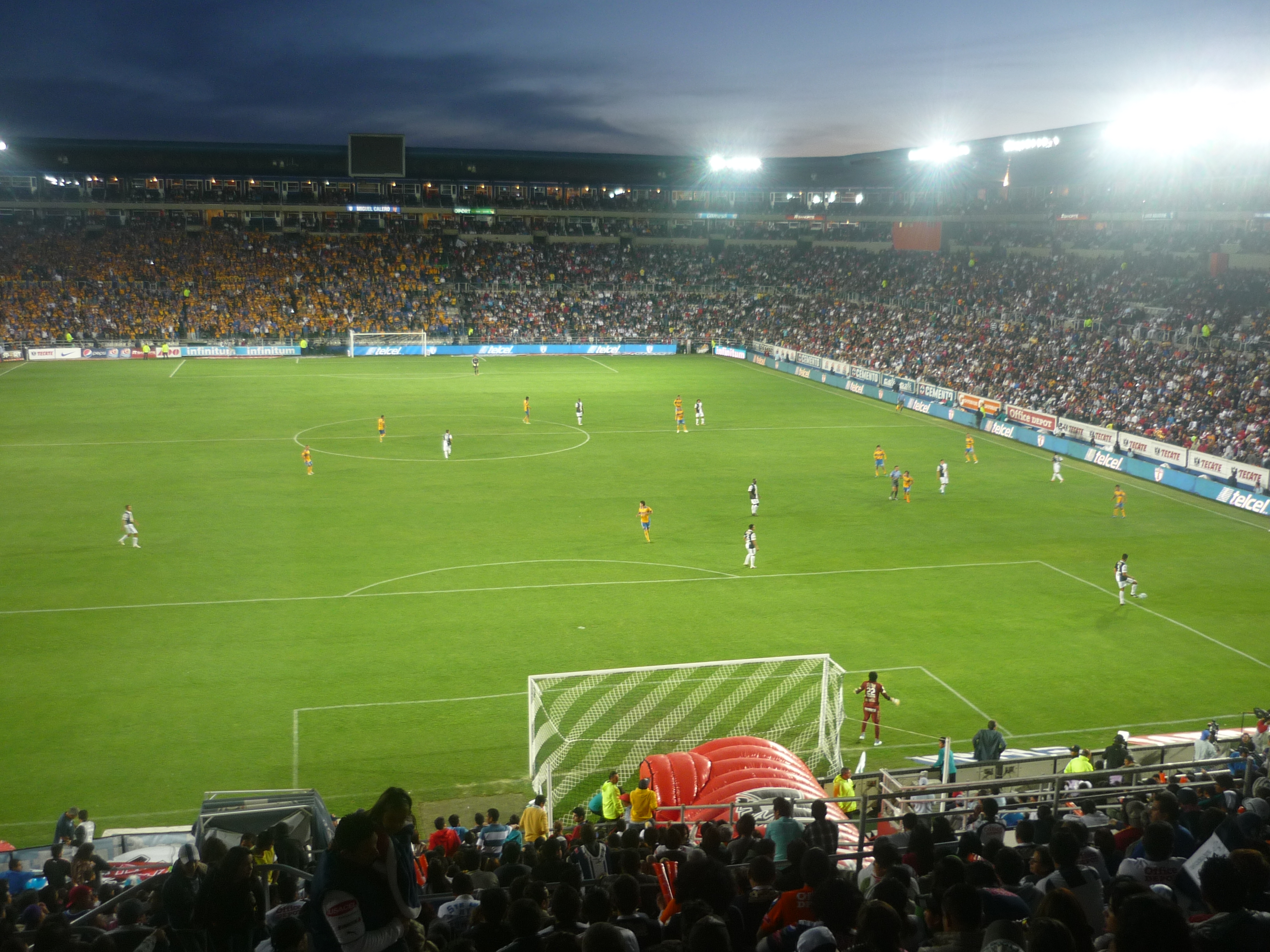
Mexico’s Olympic gold medalist Hector Herrera is just what Manchester United’s midfield is lacking.
The 22-year-old midfielder played a key role in the Olympic triumph, bossing the park with combative performances and composed passing.
Born in Tijuana, Herrera plays for Pachuca, a mid-level Mexican club which regularly makes the championship playoffs.
He is one of many talented youngsters currently emerging from Mexico, a sleeping giant of world football and the winner of the Under-17 World Cup in both 2005 and 2011.
Although full of potential, Herrera notably lacks experience. He has played just 2,000 minutes in 27 appearances in Mexico’s premier division, with no goals but eight yellow cards and two reds to his name.
Almost unknown a year ago, he made his name in recent months with Mexico’s under-23 side, with whom he has 20 caps and two goals, each coming in 4-2 victories over Holland and Senegal this summer.
Herrera was the standout player in the friendly Toulon Tournament in France, which served as a warm up for the London 2012 Olympic Games. Mexico duly won the competition and Herrera was awarded the “Meilleur Joueur” prize for player of the tournament.
Seemingly indefatigable, Herrera looked equally comfortable shielding the back four or driving forward and creating chances with incisive passes. He carried this form into the Olympics, proving himself in midfield battles against some lauded opponents, including Brazil’s Oscar and Sandro in the final.
Amusingly, Herrera has already picked up some unfortunate nicknames throughout his fledgling career. British media outlets have mistakenly reported that Herrera’s nickname is “Zorro” (Spanish for fox), but he is actually known as “El Zorillo” (the skunk). He has also been dubbed “the Mexican Ribery” due to his somewhat unsightly visage.
Liverpool are reportedly interested in his signature, but Pachuca president Andres Fassi has said “his future is with Manchester United.” An unconfirmed fee of €13.5 million is being bandied about in the Mexican press and it is thought Herrera will be loaned back to Pachuca until Mexico’s Apertura 2012 league ends in December.
If true, this would be the most expensive deal in Mexican football history. Given his inexperience, Herrera may represent something of a risk for United, but the Mexican market still offers good value for money in comparison to the inflated world of English football.
Mexican players have typically struggled to adapt to English football, with the likes of Carlos Vela, Giovani Dos Santos and Pablo Barrera having failed to break through at Arsenal, Tottenham and West Ham respectively.
But Herrera would benefit from the presence of compatriot Javier “Chicharito” Hernandez at Old Trafford. After an impressive debut season and a solid but injury-blighted second year, Hernandez is somewhat unfortunate to find himself behind Danny Welbeck, Wayne Rooney and high-profile signing Robin Van Persie in the pecking order. Even so, Hernandez remains the most successful Mexican currently playing in Europe, and an example of how best to make the transition across the Atlantic.
Herrera will need playing time to develop his game and with Liverpool already well stacked in his prefered position, United seems a more sensible and attractive option from his perspective.
Having never properly replaced Roy Keane, United have long been crying out for an imposing presence in central midfield. With Darren Fletcher’s future in doubt due to health problems and both Ryan Giggs and Paul Scholes surely in their final seasons at the club, United only have Michael Carrick, Tom Cleverley and Nick Powell to rely upon in central midfield in the future.
The brilliant Ya Ya Toure was arguably the difference between the two Manchester clubs last season, and while Herrera is currently nowhere near his level, it is this position that Sir Alex Ferguson needs to address most.
By moving to Old Trafford, Herrera would benefit from the coaching of Ferguson, who – the Van Persie signing aside – generally prefers buying young, raw talent that he can mold; and from playing and training with consummate professionals such as Giggs and Scholes.
With half a season to develop and ease himself into English football, Herrera could well earn himself a place in United’s starting 11 by the beginning of the 2013-14 season.
Overturn election result, AMLO tells tribunal (again)
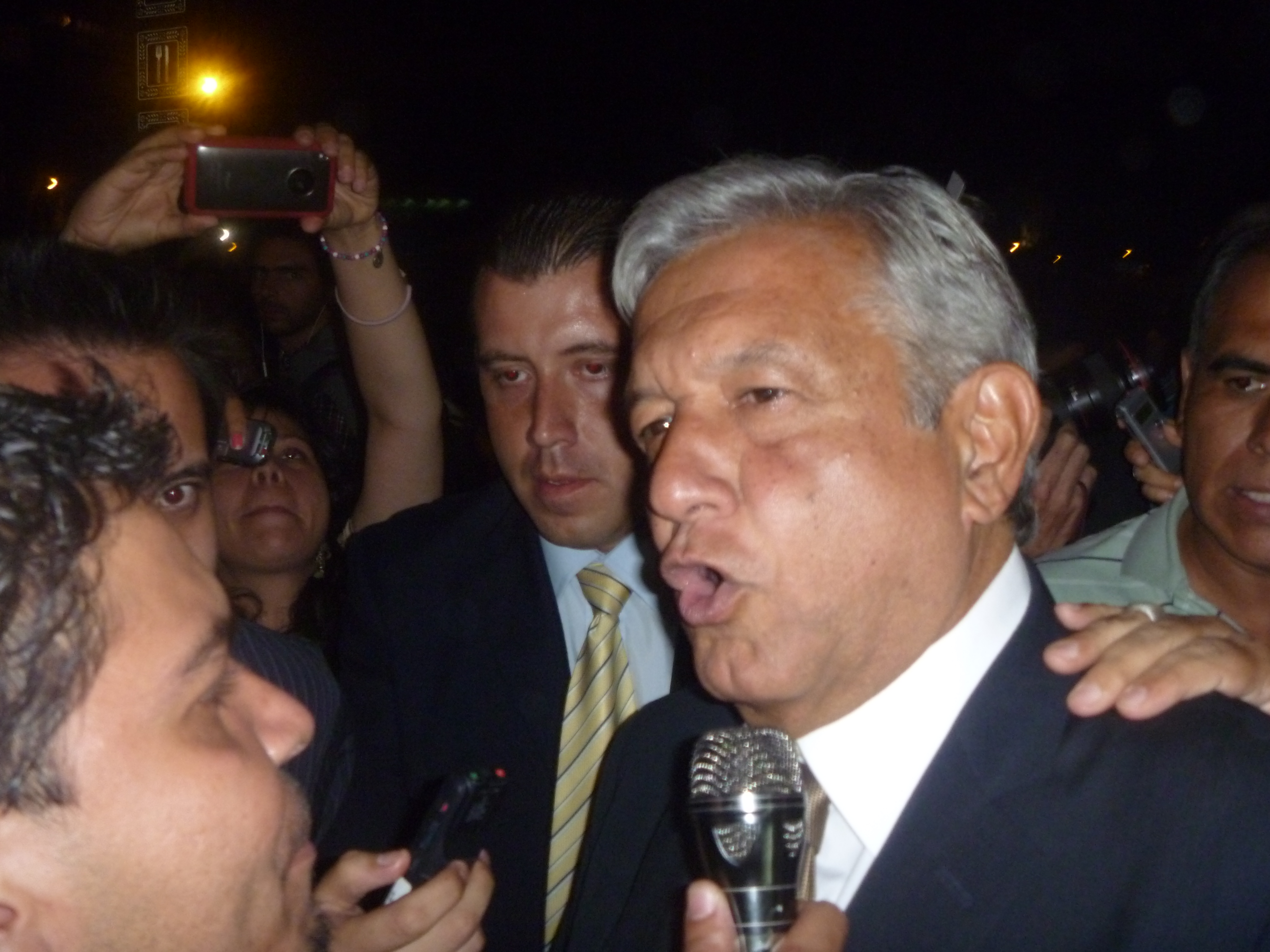
“We must continue stubbornly insisting that the Constitution be respected, that the electoral tribunal invalidates the presidential election due to all the evidence we have presented,” Lopez Obrador told supporters at the Expo Fraude 2012 meeting, the last of a tour organized by his National Regeneration Movement (MORENA) in which the public was invited to hand in evidence of electoral fraud committed by the Institutional Revolutionary Party (PRI).
The evidence brought forward included a wide rage of gifts for voters, such as Soriana and Monex debit cards, cell phones and phone cards, electric stoves, lamps, toys, clothing, bags of flour and frijoles, and even a goat and several chickens.
On July 12, Lopez Obrador lodged an official complaint with the Electoral Tribunal of the Federal Judiciary (TEPJF), alleging media bias in favor of Enrique Peña Nieto and accusing the PRI of violating electoral law by vote-buying, pre-marking ballots and exceeding the 336-million-peso campaign budget by 1,000 percent. On July 18, he also accused Peña Nieto of using illicit funds and money laundering to finance his campaign.
Lopez Obrador also declared himself the victim of voting fraud and Mexico’s legitimate president after losing the 2006 election by just 243,934 votes to Felipe Calderon of the National Action Party (PAN). In the ensuing months he led enormous marches, protests and acts of civil resistance in the capital, disrupting business by blocking the Paseo de la Reforma.
Those actions alienated moderate voters, ultimately damaging Lopez Obrador’s chances of winning the 2012 election, which he lost by the significantly larger margin of 3.2 million votes to the slick PRI candidate Peña Nieto.
This time around, Lopez Obrador has held off from endorsing such large-scale civil disobedience. Suggesting his opponents were behind media reports that he would take to the streets again, Lopez Obrador said on Sunday that they were “wrong” because “we are not going to commit political suicide.”
Instead, while insisting that “I will not betray the people,” and “we will continue to fight for principles and ideals,” he called on supporters to await for the decision of the TEPJF, due within the next three weeks. The tribunal must “enforce democracy in our country,” he affirmed.
It is unclear what Lopez Obrador would do if the decision does not go his way. Having been a candidate in two presidential elections, he is unlikely to get a third opportunity. His successor as Mayor of Mexico City, Marcelo Ebrard, is most likely to lead the left in the 2018 election.

