Vice President Biden to meet with Calderon, candidates
Arriving in Mexico City on the evening of Sunday, March 4, Biden will meet with President Felipe Calderon and will “underscore the United States’ commitment to deepening our close dialogue and cooperation with Mexico on a broad range of issues,” said a statement from the White House.
The following day Biden will convene with the three candidates vying to succeed Calderon as president: Enrique Peña Nieto, Josefina Vazquez Mota and Andres Manuel Lopez Obrador. He will discuss with them their respective visions of bilateral relations between the neighboring countries.
Of great interest in Washington will be how each candidate intends to tackle drug-trafficking and organized crime should they win the July 1 election.
Biden will end his trip in the Honduran capital of Tegucigalpa, in a meeting with President Porfirio Lobo.
“In both countries, the Vice President will also consult with our partners about the Summit of the Americas, scheduled to be held in Colombia in mid-April, which will focus on leveraging Hemispheric connections and partnerships to improve the lives of people throughout the region,” said the White House.
Chivas turn to Dutch legend for inspiration
A more in-depth follow-up to this piece on the arrival of Johan Cruyff in Guadalajara:

The club owner hailed him as the “Pope” of football, and sure enough the mere presence of Dutch legend Johan Cruyff inspired an immediate improvement last weekend, with Guadalajara Chivas finally recording their first win of 2012 against in-form Santos Laguna.
But is Cruyff’s appointment a footballing masterstroke or a pricey and elaborate rebranding act by chairman Jorge Vergara?
Cruyff, 64, was officially unveiled as a part-time advisor to the club before 400 fans at the Omnilife Stadium on Saturday. He is the latest link in the Dutch connection, with Chivas having previously employed his compatriots Leo Beenhakker and Hans Westerhof to coach the club.
Widely considered one of the greatest soccer players of all time, Cruyff is one of only four players to have won the Ballon d’Or prize for world player of the year on three separate occasions. He was the star of the Dutch national team in the 1970s and won a host of trophies at Barcelona and Dutch club Ajax, before returning to both sides during an equally successful career as manager.
Cruyff’s arrival is a major coup for Vergara. Nothing if not ambitious, the millionaire businessman says he hopes “to make Chivas the best team in the world.” On the surface, the appointment of such a big name should go some way to placating fans who are angry at Vergara’s stewardship of the club.
Chivas have lacked stability under his tenure, naming seven coaches since 2009; their shiny but expensive new stadium is rarely full and Vergara remains reluctant to fund big-name signings.
Instead, he has put great faith in the club’s youth development system that has produced international stars such as Manchester United striker Javier “Chicharito” Hernandez. Uniquely, Vergara maintains the time-honored Chivas tradition of only fielding Mexican-born players (the only team in the league to do this).
“Chivas is different from other clubs because they also preach values, that are based on other things,” said Cruyff. “We showed in Holland and in Barcelona that when you start with values, these always come back.”
By hiring Cruyff, Vergara aims to emulate the success of Barcelona’s famed La Masia academy, which has produced many of the best players in the world, including Argentine superstar Lionel Messi.
Cruyff was an architect of the Barcelona youth system that takes on players from a young age and emphasizes an attractive, possession-based style of soccer. Known as “tika-taka” in Spain, this style developed from the “total football” philosophy that Cruyff first pioneered with Ajax, Barcelona and the Dutch national team.
While Cruyff’s appointment will have raised morale and diverted attention from events on the field, some critics consider his appointment an expensive piece of propaganda and there are already doubts over the level of his involvement with the team.
Cruyff will travel to Guadalajara just three times a year, to give ten advisory sessions over a period of three years. His part-time contract is reported to be worth between three and five million dollars.
In his absence, Cruyff will be assisted by graduates from the Mexican branch of his school, the Johan Cruyff Institute for Sport Studies. Armed with master’s degrees in football leadership and business administration, they will be stationed permanently in Guadalajara.
Looking to play down expectations, Cruyff warned, “It’s impossible to think that Chivas will win [on Sunday] because now I’m here. They are not going to start to play like Holland now.”
But win they did. With their new mentor watching on from the stands, Chivas triumphed 2-1, at last ending their run of six months without a home victory. The goals came from two of the most promising products from Chivas’ youth academy: 22-year-old Marco Fabian and 19-year-old Erick “Cubo” Torres.
Chivas’ ranks are bursting with young potential, but if Vergara is sincere in his aim of owning the best team in the world, one senses he will need to call for greater first-hand involvement from Cruyff and resist the urge to sell his biggest stars for a tidy profit at the first opportunity.
The sheer scale of the operation was staggering. This record haul of 15 tons of pure methamphetamine was equivalent to half the total of crystal meth seized worldwide in 2009. No isolated incident, this was the latest evidence of Guadalajara’s status as a “chemical city” at the heart of Mexico’s synthetic drug trade.
“Jalisco is a major hub of methamphetamine production in Mexico,” reads a revealing report leaked from the U.S. Consulate in Guadalajara. The document sheds light on the machinations of the local drug industry and affirms that “ending Guadalajara’s status as Mexico’s drug chemical capital will require a sustained long-term effort.”
What is crystal meth?
In comparison to cocaine or marijuana, most people know relatively little about methamphetamine. But with Mexican cartels branching out into synthetic drug production, it has become one of the most lucrative local exports.
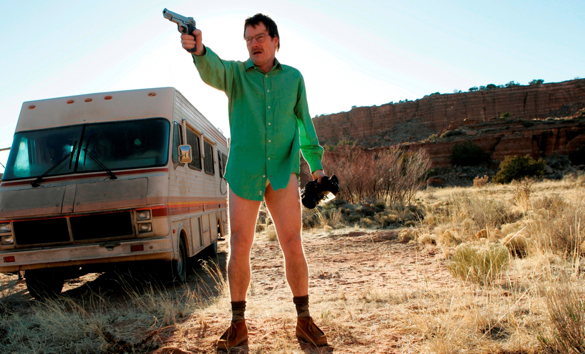
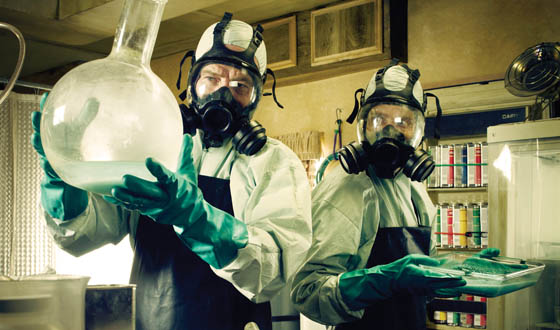
In the United States, methamphetamine has long been considered something of a “redneck drug,” brewed in rural areas of the South. In recent popular culture it is perhaps best known from the TV series Breaking Bad, which details the exploits of a former-chemistry professor who turns his hand at illicit methamphetamine production.
More commonly known as “crystal meth,” “ice,” or simply “meth,” methamphetamine is a highly addictive pyschoactive stimulant that can be injected, smoked or snorted. It increases alertness, energy and concentration, and in high doses can induce euphoria, enhance self-esteem and increase libido.
Produced mainly in Mexico and California, it is a synthetic drug “cooked up” in laboratories. The principal ingredient is pseudoephedrine, a pharmaceutical drug available over-the-counter in many countries. In November 2007, the sale of pseudoephedrine was banned in Mexico, due to its use as a precursor in the illegal manufacture of methamphetamine.
Outlaw motorcycle gangs used to control production and trafficking in southwestern states such as California, Arizona, Utah, and Texas, but in recent years Mexican drug cartels have taken over the industry. According to a Drug Enforcement Administration (DEA) report from 2007, “approximately 80 percent of the methamphetamine used in the United States originates from larger laboratories operated by Mexican-based syndicates on both sides of the border.”
Why the sudden boom?
There are several factors behind the shift toward producing synthetic drugs in Mexico. Above all, from the cartels’ perspective, it is a more efficient and potentially more lucrative business than trafficking other drugs.
Specialists from Colombia’s Drug Enforcement Agency (DNE) say that while it requires 300 kilos of precursors to produce one kilo of cocaine, the same quantity of chemical precursors will produce 60 kilos of synthetic drugs worth millions of dollars. A kilo of methamphetamine can sell for 20,000 to 35,000 dollars in the United States and some labs can produce up to 30 kilos a day.
Another major factor is that methamphetamine can be easily produced in large quantities here in Mexico, a fact that sets it apart from heroin or cocaine. While gangs in Mexican can grow opium poppies to make impure “black-tar” heroin, they cannot compete with producers in Afghanistan, who control 90 percent of the world’s pure “white” heroin market.
Cocaine, meanwhile, is derived from the coca plant, which only grows in large quantities in South America’s Andean region. Homegrown methamphetamine production cuts out the costs of negotiating with the Colombian cartels that control the production of cocaine, as well as the risks of smuggling it through South and Central America.
Thus by branching out into methamphetamine, Mexican cartels can control an independent and profitable market by acting as producers, rather than trafficking intermediaries.
The Guadalajara factor
What is it that makes Guadalajara in particular such a perfect location for methamphetamine production?
Last year, WikiLeaks published a confidential diplomatic cable sent in December 2008 from the U.S. Consulate in Guadalajara to the Secretary of State in Washington, entitled “Chemical city: Guadalajara, Jalisco and the meth trade.” It notes that methamphetamine “production is especially high in and around the city of Guadalajara due to the confluence of geography, availability of materials, adequate infrastructure, and scientific expertise.”
The city’s proximity to the major port of Manzanillo in Colima is crucial in terms of obtaining the ingredients for methamphetamine production. Linked to Guadalajara via a major highway, Manzanillo is the principal point of entry for chemical precursors in Mexico.
“The large volume of containers passing through the port makes intensive screening difficult for the authorities and creates a higher success rate for illicit shipments of pseudoephedrine and other chemicals,” reads the leaked consulate report.
Moreover, “Jalisco has large swaths of isolated rural land where drug syndicates can set up labs and act with relative impunity. The sprawling Guadalajara metro area also offers many possibilities for concealing a lab in warehouses or older industrial buildings.”
The number of labs discovered in Jalisco rose from 28 in 2010 to 58 in 2011, while seven have already been discovered this year. Most were found in the metropolitan zone or Los Altos de Jalisco.
The Attorney General’s Office (PGR) says the majority belong to the region’s rival cartels, Jalisco Nueva Generacion and La Resistencia, although 15 labs run by the Gulf Cartel have also been found near the border with Zacatecas. The latter group “kidnaps Central American migrants traveling to the United States on the train from Veracruz, and they make them work in the production of this drug,” said PGR spokesman Ulises Enrique Camacho.
The local availability of ingredients and expertise also makes Guadalajara a prime location for methamphetamine production. Besides psuedoephedrine, the other chemicals needed to produce methamphetamine are readily available thanks to Guadalajara’s thriving (and relatively unregulated) pharmaceutical industry.
The production process, which can be extremely dangerous if performed by amateurs, requires workers with knowledge of chemistry and industrial processes – something Guadalajara has in no short supply.
“The usual cartel enforcers with gold chains and Kalashnikovs are not up to the task,” notes the consulate cable, “but Guadalajara has a wealth of young chemists and engineers that can be recruited by drug syndicates to staff methamphetamine labs.” The cartels can afford to pay these people significantly more than legitimate businesses would.
The consulate report even cites examples of seemingly respectable local businesses working directly with the cartels. In October 2008, Zapopan-based drugs company Farmaceuticos Collins was cited by the U.S. Treasury Department’s Office of Foreign Assets Control (OFAC) under the 1999 Foreign Narcotics Kingpin Designation Act for diverting substantial quantities of methamphetamine precursors to the Amezcua Contreras cartel.
The consulate staff noted that not all the chemists involved are Mexican. In one case (which sounds remarkably similar to the plot of Breaking Bad) a former U.S. chemistry professor was arrested in 2006 for running a meth lab only six blocks from the consulate.
The report states that while professional chemists are hired to set up the labs, daily operations are usually run by less skilled “cooks,” who are told to follow the “recipe” written by the chemist. Their lack of expertise results in a poor safety record. As a result, “many of the largest lab discoveries in recent years have resulted not from police intelligence work, but from fires and explosions in the aftermath of industrial accidents.”
Shifting production methods
The enormous quantity of meth discovered at the Tlajomulco ranch was surprising, as it goes against the recent trend toward smaller scale labs. “In the current atmosphere of increased vigilance by the authorities, the cartels have begun shifting to a decentralized network of smaller labs for production,” states the consulate report. “Although profits won’t be as high due to increased overhead costs, there is also less chance of devastating financial risk caused by shutting down a major lab … if such a lab goes out of business it takes out a large chunk of the syndicate’s profit margin.”
This is exactly what happened in Tlajomulco, where authorities discovered the biggest lab in Mexican history (and possibly the largest ever anywhere). The 15-ton haul was said to be worth over 58 billion pesos, or up to 4.5 billion dollars at street level in the United States. DEA spokesman Rusty Payne said such a loss “could potentially put a huge dent in the supply chain in the U.S.”
Due to “recent success by Mexican authorities in raiding large labs” – and the ban on pseudoephedrine – the consulate believes some progress has been made in disrupting methamphetamine production. Aside from downscaling their production labs, Mexican cartels have been forced to adopt the alternative “dirty” or “P2P” method used by Californian biker gangs in the 1970s and 1980s. This involves using the more readily available precursors, phenylacetone and methylamine, yet the process is harder to control and conceal and yields a smaller quantity of less potent product.
What happens next?
The sheer scale of the operation discovered on the outskirts of Guadalajara this month shows that methamphetamine still plays a major part in the plans of cartels across Mexico, and especially in Jalisco.
Last week, Stratfor Global Intelligence released a report entitled “Meth in Mexico: A Turning Point in the Drug War?” Statfor believe whichever cartel comes to dominate the lucrative synthetic drug market could assume an unassailable position of power, marking “a breakthrough in the violent stalemate that has existed between the Sinaloa Federation, Los Zetas and the government for the past five years.
“Expect fighting over the methamphetamine market to maintain violence at its current levels, but once a group comes out on top it will have far more resources to expel or absorb rival(s),” concludes the Stratfor report. “This process may not sound ideal, but methamphetamine could pick the winner in the Mexican drug war.”
With production centered in and around Guadalajara, the city could be at the center of a decisive phase in the ongoing conflict. The 2008 consulate cable predicted that “Guadalajara’s prominent position in the methamphetamine trade is unlikely to change soon.” Over three years later, those words still ring true.

