All aboard the express train to Tequila
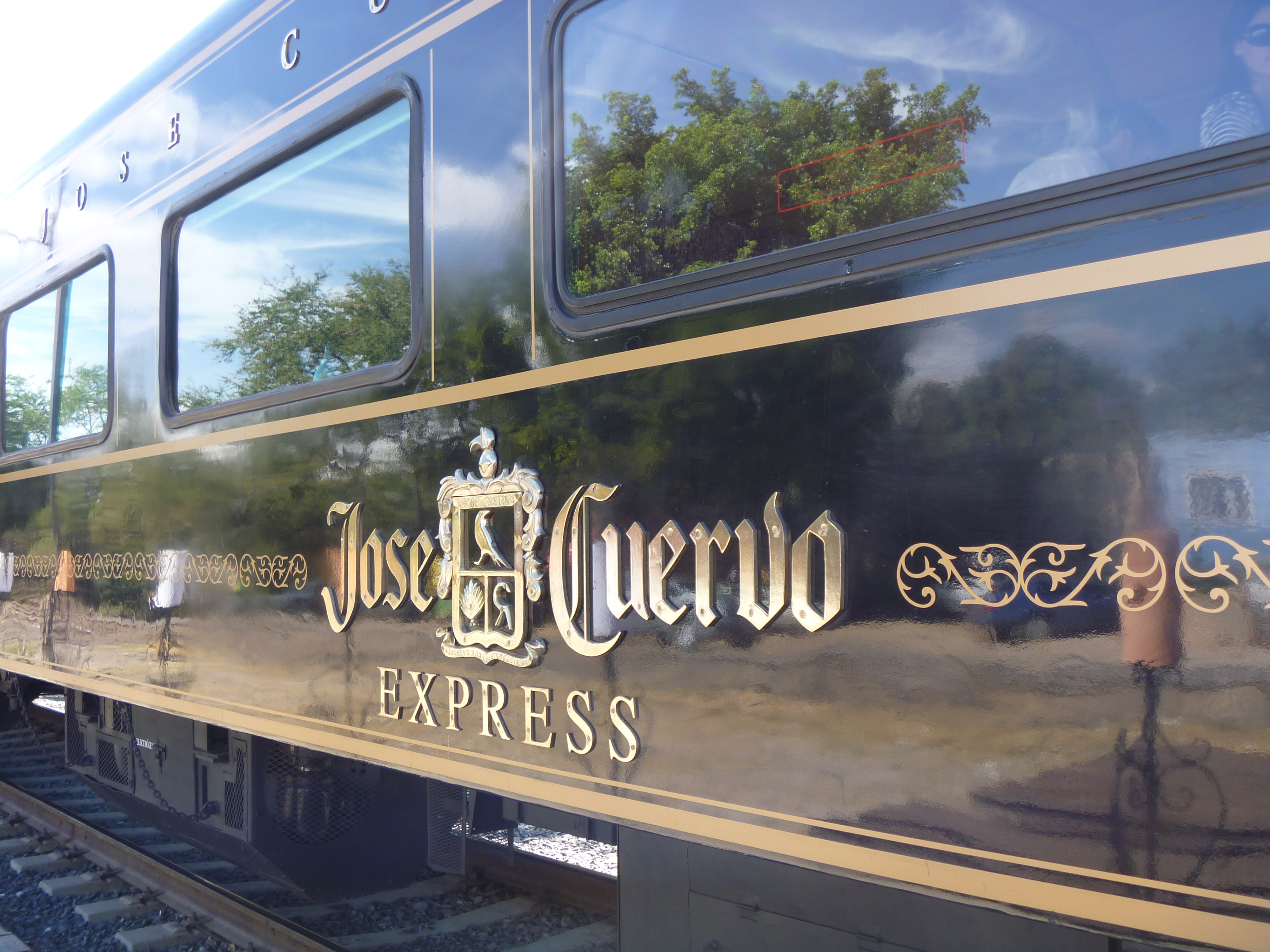
It sounds like an imbiber’s dream: a tequila-drenched, high-speed ride to a hangover. Could the reality live up to such hedonistic promise? As altruistic as ever in its dedication to investigative journalism, the Reporter set off to find out.
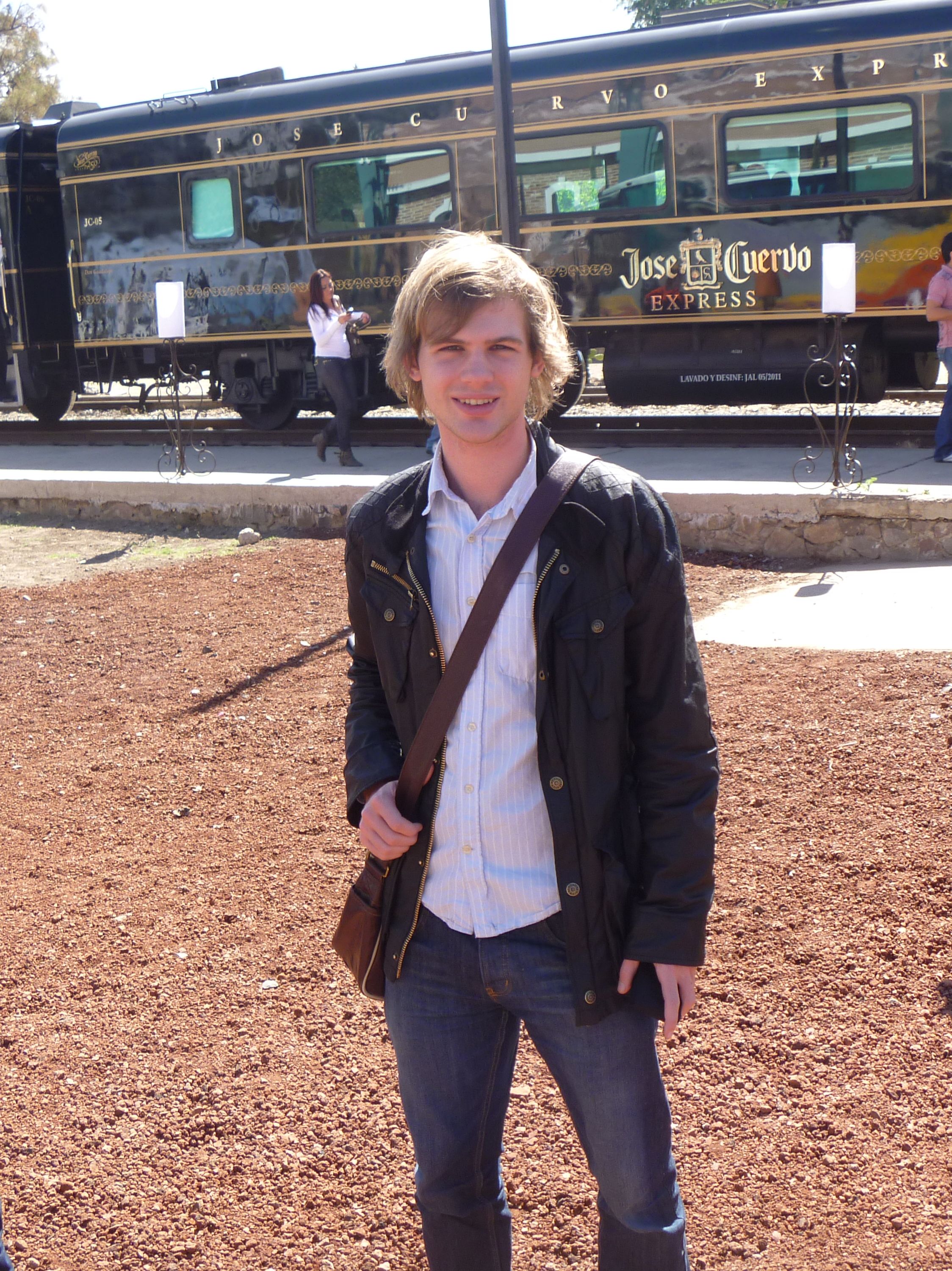 Billed as the only train that actually takes passengers to Tequila, one of Mexico’s fabled pueblo magicos, the Jose Cuervo ride opened only last month. It is a rival to the Tequila Express, which for 14 years has been transporting visitors to the Herradura distillery in nearby Amatitan.
Part of its ongoing efforts to boost tourism in Tequila, Casa Cuervo purchased a locomotive and carriages from the now-defunct Maya Express, which used to circulate the ancient ruins of south-east Mexico. It is only the third passenger train now running in the country, after Herradura’s Tequila Express and the “El Chepe”train that navigates Chihuahua’s majestic Copper Canyon.
The leisurely 60-kilometer journey from Guadalajara to Tequila lasts exactly two hours and the seven-carriage train set off with unnerving punctuality, almost prompting an existentialist crisis: “This is still Mexico isn’t it?”
The train holds up to 395 passengers, but the absence of any gringo tourists was surely a consequence of this being Super Bowl Sunday.
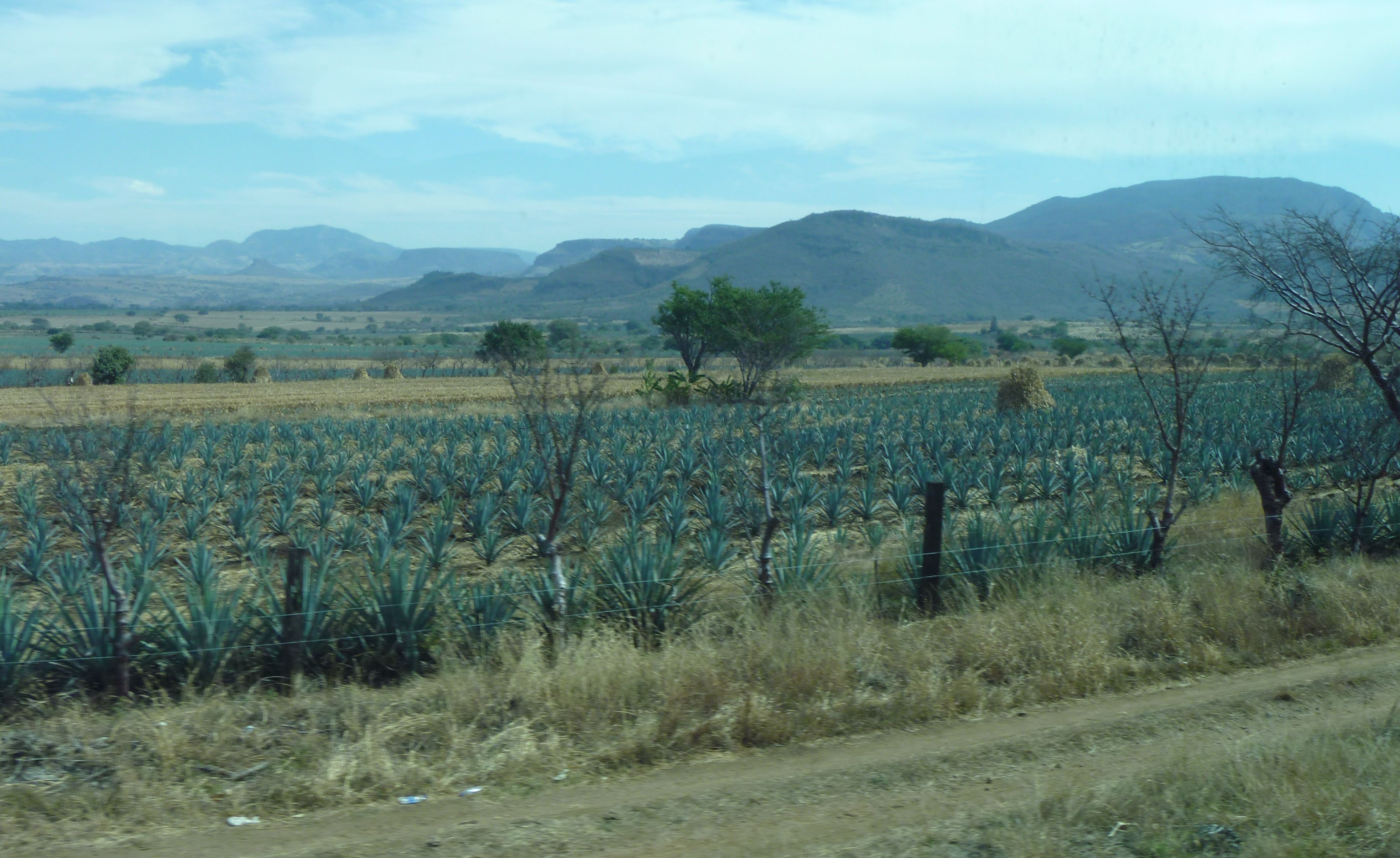
It rumbled along at a gentle pace, passing the immigrants who live beside the railroad tracks and winding through the city outskirts into the rugged Jalisco countryside. Glancing out the windows of the finely furnished cabins revealed the Tequila Volcano and row upon row of the spiky blue agave plants that are so emblematic of the state.
In few places is it considered socially acceptable to start downing spirits at 11 a.m. Thankfully, Mexico is not a country inhibited by such puritan concerns. Having attended a wedding the previous night, I had little option but to continue drinking so as to ward off any impending hangover.
Purely in the name of research, I deemed it prudent to put the waiters through their paces and find out if they were up to the task. They did not disappoint.
As much agave-based booze as one could handle (margaritas, shots, palomas, vampiros) was readily available throughout the entire journey and back. The complimentary cocktails slipped down all too easily, but my ambitious initial rate of one drink every 15 minutes proved unsustainable beyond the first hour and a quarter.
Drinking on an empty stomach is never a good idea, so it was a welcome relief to see the ever-attentive staff on hand with delicious nibbles, including empanadas, chicken tostadas, mini tacos and tortas ahogadas.
Upon arrival in Tequila, we were herded into a bus which transferred us to the Jose Cuervo factory. Home of the world’s most famous raven, La Rojeña is the oldest distillery in Latin America, having been founded in 1795.
The distillation process and the history of Casa Cuervo was explained at length on the factory tour, while free samples of the various tequilas sustained the blood alcohol levels nicely. The most potent spirit on offer was a 55-percent tequila blanco, which is so strong it has to be watered down before it can be sold legally.
The longer a tequila is aged in wooden barrels, the richer its flavor and the darker amber its color. The finest sample we were offered was the Reserva de la Familiar, a limited edition añejo made from hand-selected mature agaves.
A bottle will set you back over 3,000 pesos, but the tequila’s smooth taste with hints of honey and vanilla left many thinking it would be worth every centavo.
Following the factory tour, a round of strawberry margaritas accompanied a brief live show in the gardens of the Cuervo estate. Tribal music blasted out and smoke wafted across a small stone amphitheater where men and women danced in Aztec-style costumes to symbolize the ancient roots of Mexico’s fiery national drink.
Tequila is believed to be a Nahuatl word for “The place of harvesting plants” and agave cultivation dates back hundreds of years to when pre-Columbian civilizations would brew pulque. Tequila as we now know it was born later when the Spanish introduced more advanced distilling techniques.
After this colorful history lesson we were treated to mariachi music and a buffet of traditional Mexican cuisine. Another tasting session followed. This time we were taught to appreciate the different smells and subtle flavors of tequila blanco, reposado and añejo.
The recommended way to consume tequila is to hold it in the mouth for five to ten seconds instead of downing it with a smearing of salt and lime like an over-excited Spring Breaker. After all, the brewers want tequila to enjoy the reputation it deserves as a fine drink comparable to Cognac or Scotch.
A final flurry of mariachi and traditional folkloric dancing marked the end of a long day and we were duly ushered back to the train.
At 1,290-1,700 pesos, the Jose Cuervo Express is a little more expensive than the Tequila Express, which costs 1,200 pesos. However, it promises a more upmarket experience and is the only rail option for passengers who want to see the town of Tequila.
The train leaves from Guadalajara’s Estacion Ferrocarril on Avenida Washington, next to Parque Agua Azul. Friday evening tours (1,700 pesos) leave the station at 7.30 p.m., returning early on Saturday at 2.30 a.m. On Saturdays and Sundays (1,290-1,590 pesos) the Express leaves at 11 a.m. and returns at 8 p.m. Children and senior citizens travel at discounted prices.
For reservations or more information visit http://www.josecuervoexpress.com or call free on 01-800-681-0442. Tickets can also be purchased at the Tienda Jose Cuervo on Avenida Vallarta 5005 (corner with Niño Obrero) or in the Hotel Camino Real on Mariano Otero and Avenida Las Rosas.

Guzman wins nomination in shambolic PAN primary

With results in from 120 of the 125 municipalities, Guzman won 39.35 percent of the vote, Hernan Cortes claimed 31.99 percent and former Guadalajara mayor Alfonso Petersen received just 28.35 percent. However, Petersen has refused to recognize the outcome and has raised a legal challenge over the organizational problems he says dissuaded people from voting.
It was supposed to be the most democratic primary the PAN has conducted in Jalisco, with the party holding an unprecedented election open to the general public and not just party members (they voted for the party’s presidential candidate at the same time). Party president Miguel Ibarra hailed it as a sample “of the democracy that we cherish in the PAN, because we do not simulate elections like other political parties do.”
If this really was representative of panista democracy, it did not reflect well on the party. The election was a badly managed mess, in which turnout was low, voters experienced long lines, presidential candidates were missing from certain ballot papers, and even the organizers seemed unaware of who was allowed to vote.
From the outset the PAN experienced major problems across the state, with delays caused by the non-arrival of many polling officials. Both Guzman and Petersen complained about the delay in opening booths and slow voting, while Cortes even spoke of the alleged buying of votes in exchange for appliances in the municipality of Casimiro Castillo.
Guzman described the process in Santa Ana Tepetitlan, where he went to cast his vote, as “a disaster,” and vowed to complain to the Electoral Commission. After abandoning a long queue of stationary voters, he later returned but was unable to vote for a PAN presidential candidate, because their names did not appear on the ballot papers.
Elsewhere, two mayoral candidates in Puerto Vallarta condemned the disorganization of the process, while in Tlajomulco the poll station opened late, with voters waiting up to three hours to cast their ballots.
In Lagos de Moreno, PAN officials dispensed with the Federal Electoral Institute (IFE) roll and allowed anyone to vote without being registered. At the other extreme, after waiting in line for two hours, voters in Guadalajara’s Hermosa Provincia neighborhood found themselves in a shouting match with officials who were unaware that non-party members could vote.
In the entire state there were just 267 ballot boxes at 144 different polling stations manned by 1,300 officials. The number of ballot boxes had been raised from 242 after complaints from the candidates, but they were still not satisfied by the meager increase of 25.
Only around 30 percent of the 400,500 available ballot papers were used, with under 120,000 people voting across Jalisco’s 125 municipalities. As the initial results came in on Sunday evening, jubilant Guzman supporters gathered at Guadalajara’s Minerva glorieta to celebrate his victory.
Guzman, 55, served twice as deputy in the local congress and once as a federal legislator. He worked as state secretary general in the current PAN administration prior to running for governor. A devout Catholic with 11 children, he is a close friend of Cardinal Juan Sandoval Iñiguez, the controversial former archbishop of Guadalajara.
Late Sunday night, Cortes, the 35-year-old former mayor of Tlaquepaque, congratulated Guzman for his triumph and thanked supporters for helping him reach second place.
Having held a commanding lead in the opinion polls, Peterson, 51, refused to recognize Guzman’s victory and is contesting the result of the poorly organized and ill-attended elections. Peterson presented a legal challenge to the State Electoral Commission “in defense of democracy,” but having received no response he is now waiting for the courts to resolve the matter.
A former state Health Secretary and the mayor of Guadalajara from 2007 to 2009, Peterson argued that “a large quantity of Jalisco residents” decided against voting upon realizing they might have to wait in line for hours. However, while the election was inarguably shambolic, it was settled by a wide margin and there is no reason why low voter turnout would have specifically hurt Peterson more than the other candidates.
Left eyes Jalisco’s top political prize

Alfaro outperformed his main rival, Raul Vargas Lopez, in two public surveys to determine who should represent a coalition of the leftist Party of the Democratic Revolution (PRD), the Labor Party (PT) and the Citizen’s Movement (formerly known as Convergencia).
Full results of the surveys conducted in late January will remain secret out of respect for the loser, Vargas, a state congressman and well-known doctor. The two companies behind the polls were the same used last year to determine the presidential candidate for the leftist alliance. Each survey consisted of five questions, with Alfaro scoring better in all of them.
“Today begins the process of building a new political history in our state,” declared Alfaro, upon winning the nomination last week. He also vowed to bring the state “out of mediocrity” should he become governor.
“Enrique Alfaro is a great candidate,” said Dolores Padierna, secretary general of the PRD. “This is the first time in the political history of the party that it has the conditions for success in Jalisco.”
The PRD generally struggles to pick up more than eight percent of the vote in Jalisco. In recent years the state has been considered a National Action Party (PAN) stronghold, but now the resurgent Institutional Revolutionary Party (PRI) is favorite to win the governorship under the candidacy of former Guadalajara Mayor, Jorge Aristoteles Sandoval Diaz.
Recent opinion polls survey by Spanish-language daily Mural show Sandoval is recognized by 64 percent of those old enough to vote in Jalisco and that 50 percent have a positive impression of him. Alfaro is the second most popular candidate; recognized by 52 percent of eligible voters, and liked by 43 percent.
“We are above the PAN, we are doing well and this is further proof that we will fight hard,” Alfaro said, in reference to the survey.
“I welcome you to a race that for my part will be an opportunity to compare ideas and proposals, political civility and high-mindedness,” said Sandoval, after Alfaro’s nomination. The priista called for a “fair fight,” not a “dirty war,” while PAN candidate Fernando Guzman Perez Pelaez simply said “welcome to the fray.”
The alliance in Jalisco was confirmed after hours of negotiations on February 1, with “90 percent” agreement among the three leftist parties, according to Manuel Camacho Solis, coordinator of the coalition. It mirrors the national alliance led by presidential candidate Andres Manuel Lopez Obrador and the coalition agreement must now be formally signed in Mexico City before February 14.
The agreement will restore a sense of unity to the Jalisco left, which was fractured last year when Alfaro resigned from the PRD, along with three other Jalisco mayors, to join the Citizen’s Alliance, an independent leftist group (not an official political party) headed by Lopez Obrador. They quit the PRD in protest at the in-fighting and lack of transparency in Mexico’s major political parties.
Since being elected mayor of Tlajomulco, Guadalajara’s fastest growing suburb, in 2009, Alfaro has waged a non-stop war of words with Raul Padilla, the former rector of the Universidad de Guadalajara and a highly influential figure within the Jalisco PRD.
While national accords insist that state parties must elect their leaders through consultation with members, Alfaro argued this process has always been carried out behind closed doors, with Padilla acting as kingmaker. He left the party after the PRD’s national committee failed to act on repeated calls to bring the Jalisco leadership in line.
Alfaro’s nomination will have come as an unpleasant surprise to Padilla, but as the only leftist mayor of a metro-area municipality in Jalisco, he has become a popular figure with strong name recognition. He also gained credibility by taking on the operators of the Guadalajara Airport over their refusal to pay municipal taxes to Tlajomulco, as well as starting programs to provide across-the-board financial assistance to help students to purchase supplies and ensure they enter school.

