US accused of collusion with Mexican cartels
Blurring the lines between infiltrating and aiding organized crime, U.S. drug-enforcement agents have been supplying Mexican cartels with arms and helping them launder millions of dollars of drug money. In recent months the U.S. government has even been accused of protecting and turning a blind eye to the dealings of the world’s most wanted drug lord by a senior member of his organization.
A prominent member of the powerful Sinaloa Cartel awaiting trial in Chicago alleges that the U.S. government has been providing his organization with weapons and allowing them to smuggle drugs across the border in return for information on rival criminal gangs.
Vicente Jesus Zambada Niebla, 36, was arrested in Mexico in March 2009 and extradited to the United States eleven months later. He is the son of Ismael “El Mayo” Zambada, who runs the Sinaloa Cartel alongside Joaquin “El Chapo” Guzman, the notorious kingpin who last year succeeded Osama Bin Laden as the world’s most wanted man.
Vicente Zambada stands accused of smuggling tons of cocaine and heroin into the United States. His federal trial is expected to begin later this year.
It is rare for high-ranked drug lords from Mexico or Colombia to go on public trial in the United States; most tend to make behind-closed door agreements with prosecutors to divulge information in return for a reduced sentence. But Zambada is not going quietly, raising eyebrows on both sides of the border with a series of stunning allegations.
Zamabada does not deny drug trafficking, but claims he did so with the permission of senior U.S. officials. In pre-trial proceedings he claimed immunity under a deal allegedly struck between the U.S. government and the Sinaloa Cartel in exchange for information on rival organizations.
The defendant says the agreement protects him from federal prosecution, as the cartel’s leadership was granted “carte blanche to continue to smuggle tons of illicit drugs into Chicago and the rest of the United States” between 2004 and 2009. Zambada also claims the Sinaloa Cartel received weapons through operation “Fast and Furious” as part of the ongoing arrangement.
Under this operation, which began in September 2009, the Bureau of Alcohol, Tobacco, Firearms and Explosives (ATF) allowed 2,000 firearms to be sold illegally to gangs in Mexico, with the aim of tracing the weapons and prosecuting the criminals. Similar ATF “gunwalking” operations had been running since 2006.
The botched Fast and Furious operation came under congressional scrutiny after it was linked to the murder of U.S. Border Patrol agent Brian Terry in December 2010. An investigative report found that federal agents lost track of nearly 1,400 weapons, most of which were supplied to the Sinaloa Cartel.
Zambada wants the U.S. government to release files relating to the operation, arguing that it would benefit his defense. His lawyers say the documents will prove federal agents were supplying his organization with arms under an agreement reached between the two parties; and that the U.S. government “has a policy and pattern of providing benefits, including immunity, to cartel leaders, including the Sinaloa Cartel and their members, who are willing to provide information against rival drug cartels.”
Despite this denial, the U.S. government filed a motion under the Classified Information Procedures Act (CIPA) last September, to prevent any potentially sensitive information being made public during court proceedings. Zambada’s lawyers say the prosecution has withheld critical evidence that the government has now suppressed under the false pretext of national security.
While the defense and prosecution disagree over any deal struck with Zambada, both acknowledge that one of the Sinaloa Cartel’s top officials has been a U.S. informant for years.
Mexican lawyer Humberto Loya Castro, whose location is unknown, has long been a top confidant of Guzman and Ismael Zambada. According to the prosecution, Loya agreed on behalf of the cartel leadership to cooperate with U.S. law enforcement officials, providing them with information on rival gangs. He worked as an informant since around 2004.
This was confirmed by Zambada’s lawyers, who say “U.S. government agents aided the leaders of the Sinaloa Cartel” and provided them with immunity in exchange for the information passed on by Loya. Furthermore, Zambada claims that in return, the U.S. government “agreed it would not share any of the information that it had about the Sinaloa Cartel and/or the leadership of the Sinaloa Cartel with the Mexican government in order to ensure that the Cartel’s operations would not be disrupted and its leaders would not be apprehended.”
Coming hot on the heels of the Fast and Furious scandal, Zambada’s allegations have increased doubts over the United States’ role in the war on drugs, implying that Mexico’s northern neighbor has put self-interest above attempts to prevent trafficking or detain the biggest fish in the narco shark tank.
This is not the only evidence of U.S. involvement with major drug-trafficking organizations. Recent reports by the New York Times and Mexican online magazine Emeequis reveal that agents of the U.S. Drug Enforcement Administration (DEA) helped smuggle narcotics and launder millions of dollars for Mexico’s now-defunct Beltran Leyva cartel. Yet the benefits in this case were more tangible than they would be from any alleged collusion with the Sinaloa Cartel.
Part of an effort to infiltrate and dismantle large drug-trafficking organizations, the role of the DEA agents was disclosed in documents released by the Mexican Foreign Ministry earlier this month. The files were made public after the United States requested the extradition of Harold Mauricio Poveda Ortega, a Colombian drug lord arrested in Mexico in November 2010.
Poveda, also known as “The Rabbit,” is accused of trafficking 150 tons of cocaine from Colombia to Mexico (much of it destined for the United States) between 2000 and 2010. The extradition papers reveal that in 2007 a DEA informant began laundering money for Poveda, who was the main supplier for the Mexican cartel headed by Arturo Beltran Leyva and his three brothers.
From July to September 2007, the informant and a group of DEA agents laundered around 2.5 million dollars, at least one million of which went through a Bank of America branch in Dallas, before being smuggled – in cash – into Panama.
Then, in October 2007, the DEA helped the Beltran Leyva cartel smuggle a 330-kilogram cocaine shipment from Ecuador through Dallas and on to Madrid. Upon arrival the drugs were seized by Spanish authorities, who had been tipped off by the DEA.
Infiltration of this kind has become more common as the DEA’s role in fighting organized crime has expanded during President Felipe Calderon’s war on drugs. According to Chief of Operations Thomas Harrigan, the DEA “has the largest U.S. law enforcement presence in Mexico, with offices in Mexico City, Tijuana, Hermosillo, Nogales, Ciudad Juarez, Mazatlan, Guadalajara, Monterrey, Matamoros, Nuevo Laredo, and Merida, with 60 Special Agent positions.”
The U.S. government claims sting operations are essential for tracking criminal activity and bringing about the arrests of cartel leaders. But Morris Panner, a former assistant U.S. attorney and an adviser on drug policy at Harvard University, told the New York Times that “the same rules required domestically do not apply when agencies are operating overseas. So the agencies can be forced to make up the rules as they go along.” She warned, “it’s a slippery slope. If it’s not careful, the United States could end up helping the bad guys more than hurting them.”
In response to this month’s reports, the DEA released a statement defending its activities, asserting that it had aided the Mexican authorities in capturing or killing dozens of mid- or high-level traffickers.
It often takes time for such operations to yield results. Poveda escaped a raid on his mansion outside Mexico City in 2008, but the authorities finally captured him in the capital in November 2010. Beltran Leyva was also tracked down – apparently with the aid of information from the United States – and killed by Mexican Navy Special Forces in a shootout in Morelos in December 2009.
Ultimately, whether the end justifies the means depends largely on whether sting operations are deemed a success. The ATF’s murky Fast and Furious operation was demonstrably a failure, but the DEA can claim vindication in its actions against Poveda and Beltran Leyva.
If there is truth in Zambada’s claims that the U.S. government aided or offered immunity to Guzman (who is ranked by Forbes Magazine as the 55th most powerful man on earth, higher than President Calderon) then this would be considerably harder to justify. Such a revelation would leave the United States open to accusations of employing counter-productive methods in its war on drugs and indulging in hypocrisy of the highest level.
Mexican arrested over Mazatlan assault
I made my radio debut reporting this story on CBC (Canada’s equivalent to the BBC). I recorded two minute-long reports that were aired sometime on Thursday morning. Haven’t managed to find the broadcast on any listen again feature but I did speak to another Canadian journalist who heard it so at least someone was listening! Here’s the latest on the case so far:
Jose Ramon Acosta Quintero, 28, was arrested on Friday as prime suspect in the beating that left Sheila Nabb, 37, with almost every bone in her face broken.
Acosta was charged with attempted murder at a court hearing on Monday. He faces up to 14 years in prison if convicted.
Nabb was on vacation with husband Andrew at the five-star Hotel Riu in Mazatlan’s Punta Cerritos when the attack happened last weekend. She was discovered in the early hours of January 20, lying naked in a pool of blood in a hotel elevator.
Nabb’s husband was questioned and then released by police immediately after the incident. Security camera footage from the elevator showed the aggressor was a man in his twenties, later identified as Acosta. He was arrested after being identified through a blood sample.
Presented before the press on Saturday, Acosta admitted to the attack. He said he was drunk and high on cocaine when he encountered Nabb, naked, in the hotel elevator.
He had spent the day drinking heavily with a Canadian friend. After running out of beer, they went to the hotel’s 24-hour bar that provides free drinks to guests. The hotel maintains that access was limited to guests and staff, but Acosta said he simply entered via the beachside entrance where security was lax.
He said he “was very, very drunk,” having consumed 19 alcoholic beverages and a line of cocaine when Nabb entered the elevator he was in. Acosta said they chatted normally but then argued when he tried to stop her leaving the elevator.
The suspect said he put his hand on the door because “I wanted to keep talking to her. She got afraid when I wouldn’t let her out. She started yelling, ‘He won’t let me out.’”
Acosta panicked. “I got afraid also because she’s an American, or she’s a North American and I’m a Mexican and I wasn’t supposed to be in the hotel,” he said. “And she was naked, so I covered her mouth and said ‘Please don’t yell. I’m going to go home.’”
To silence Nabb, Acosta admitted, “I hit her four or five times in the face with my fist, and then I left.” Acosta addressed the media in Spanish and then repeated his story in English.
“I’m so sorry, I apologize and I’m sorry and I hope she recovers because I’ve seen the papers and her face was bad,” he added.
According to the state attorney general, Acosta was investigated in 2008 for rape. There is no evidence that Nabb was sexually assaulted. It is unclear why she entered the elevator naked.
Nabb awoke from a medically induced coma last Tuesday. Doctors initially said she would have to remain in Mexico for three or four weeks but on Friday she was transferred via air ambulance to the Foothills Medical Centre in her home town of Calgary.
The authorities are still trying to track down Acosta’s Canadian friend and his mother. State police say both have fled Mazatlan.
Plus some contextual stuff on safety in Mazatlan from my original article on the case:
The story made headlines worldwide, but online newspaper the Mazatlan Messenger was flooded with comments from local expats concerned that Mazatlan was being unfairly painted as an unsafe destination.
“It really upsets me that the media is trying to blame the mexican people for this incident. I have been to this hotel two times and to Mazatlan several times and have never had any problems,” wrote one person.
“To the media and to all Canadians wanting to travel to Mexico or anywhere else – it’s safe here in Mazatlan. The Mexican people are suffering from all the bad media about the crime. Check out your backyard first before you judge, it really is no different back in Canada,” read another comment.
“People who live here feel it is very different from how it is portrayed in the press. We know the crime rate is lower than in many of our cities,” said Melissa Burridge, editor of the Pacific Pearl newspaper. “I walk the streets at night and I feel safer here than in my home town of Salt Lake City, Utah.”
Burridge believes the American and Canadian press are to blame for “flamboyant headlines” which have “blown the story so far out of proportion.” As a result, “tourism is definitely the lowest its been in three years.”
With visitors discouraged by negative press, the local economy has been hit by severe job losses. Restaurants and taxi drivers are losing customers, while most significantly, major cruise liners have stopped docking in the city’s port.
Citing “recent incidents of violence in the Mazatlan area,” Princess Cruises joined Holland America in pulling Mazatlan from its Pacific Coast itinerary this week. The Disney Cruise Line had already cancelled stop-offs in Mazatlan indefinitely.
These decisions were made in the wake of a series of violent crimes in the area. The Mazatlan Messenger reported on Monday that in January alone, “31 people have been killed in violent incidents, three of which occurred last Thursday.” Yet incidents such as this, in which foreign citizens are killed, tend to blow concern over crime out of proportion.
In response, the Mazatlan Tourism Trust issued a statement describing the city as “one of the safest destinations in Mexico, legendary for its history, culture and the warm hospitality of its people … the areas of concern are not the beach resorts or historical sites that visitors come here to see, but rather the northern border towns far from the city. Reports of visitors being accosted or injured in the destination are extremely rare.”
On Monday, U.S. and Canadian expats describing themselves as “Concerned Foreign Residents of Mazatlan” published an open letter to the Cruise Line Association with the aim of “dispelling certain myths regarding the safety of foreigners in Mazatlan.
“Our concern is that distorted claims that Mazatlan is unsafe, serve to undermine demand, not only among cruise patrons, but tourists overall. The perception, not only affects the businesses that serve these visitors, but denies foreign residents, like us, the pleasure of drop-in visits from many of our friends cruising the Pacific.
“Is there violence in Mazatlan? Of course there is, but no more than the major cities cruise guests hail from or most of the ports of call your members currently serve. In fact, the peace and serenity of Mazatlan are among the many reasons close to eight thousands [sic] North Americans choose to spend a good part of their year here.
“Is the violence in Mazatlan targeted toward tourists? Absolutely not. The U.S. State Department website notes that violence is primarily between criminal organizations and occurs outside of tourist areas.”
Jalisco must recognize gay marriages, adoptions
By seven votes to four, the Supreme Court dismissed a legal challenge filed by the states of Jalisco and Baja California, who argue that because gay marriage and adoption is only legal in the capital it need not be respected elsewhere.
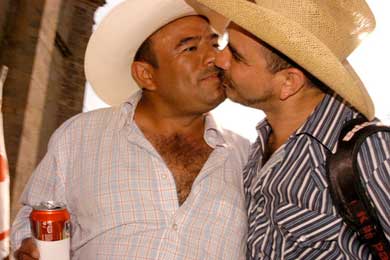 Their argument was based on Article 121 of the Constitution, which states: “the laws of a state shall have effect only in its own territory and therefore are not binding outside of it.”
But Article 121 also obliges states to respect civil ceremonies registered elsewhere. This was the basis for a previous Supreme Court ruling in August 2011 that all states must recognize same-sex marriages registered in the Federal District.
The Supreme Court decision guarantees that gay couples who have married or adopted in Mexico City but since moved to another state will still enjoy the same rights and legal status as any other family.
Despite legal challenges and vocal criticism from the Catholic Church and the conservative National Action Party (PAN), gay marriage was legalized by 31 votes to 24 by Mexico City’s legislative assembly in December 2009. The right for gay couples to adopt children in the capital was also upheld by the Supreme Court in August 2010.

