Slaying of PAN mayor in Michoacan throws elections into turmoil
The president immediately ordered extra security for his sibling, who leads the polls going into the election.
La Piedad Mayor Ricardo Guzman Romero was shot while driving home around 7 p.m. Wednesday. An ambulance rushed him to La Piedad Regional Hospital to undergo emergency surgery but he died from a gunshot wound to the lung.
Guzman, 32, was due to complete his term in office at the end of this year. The attack occurred after he attended a rally to support Luisa Calderon in her bid to win the Michoacan governorship.
“It was his day off and he was campaigning with young people,” said Calderon. The tragedy has thrown her campaign into turmoil, although it remains unclear whether the killing was politically motivated.
State prosecutor Jesus Montejano said three or four armed men in a black Jeep were responsible for the attack. He quickly maintained that the murder had nothing to do with political issues.
President Calderon instructed his security cabinet to use all the tools at its disposal to assist the murder investigation. The president’s office condemned the crime, stressing they will work to clarify the facts, identify and locate those responsible and bring them to justice.
The president described Guzman as “a man who always displayed a deep commitment to building a better Michoacan.”
With less than two weeks to go before the Michoacan elections, Luisa Calderon has built up a sizeable lead in the race for governor. Polls give the PAN candidate a lead of between six and 11 points ahead of the November 13 election.
Based on daily press stories, voter behavior patterns and telephone surveys of 1,500 Michoacan residents, the Office of Strategic Communications (GCE) found Calderon to be preferred by 40.6 percent of voters, followed by Fausto Vallejo of the Institutional Revolutionary Party (PRI) with 29.6 percent, and Silvano Aureoles of the leftist Party of the Democractic Revolution (PRD) with just 17.2 percent.
Meanwhile the Strategic Decisions Investigation (Indes) poll of 1,026 Michoacan citizens attributes Calderon with 35 percent, Vallejo with 26 percent and Aureoles with 12 percent.
Felipe Calderon was born and raised in Michoacan and it seems his sister has benefitted from this association, despite the president’s waning popularity and the spectacular rise in drug-related homicides throughout his term in office.
The murder of Guzman may well benefit Calderon by generating greater sympathy for her and convincing voters that a tough response to crime is what Mexico needs to combat insecurity.
If Calderon were to win in Michoacan it would put a dent in the narrative that the PAN is a spent force in national politics ahead of next year’s presidential elections. This would cause some concern among the PRI, which as national frontrunner has the most to lose before the July elections.
The current dismal ratings of Aureoles will have come as a huge blow to Mexico’s third-biggest party, as Michoacan has historically been regarded a PRD stronghold.
El Dia de los Muertos
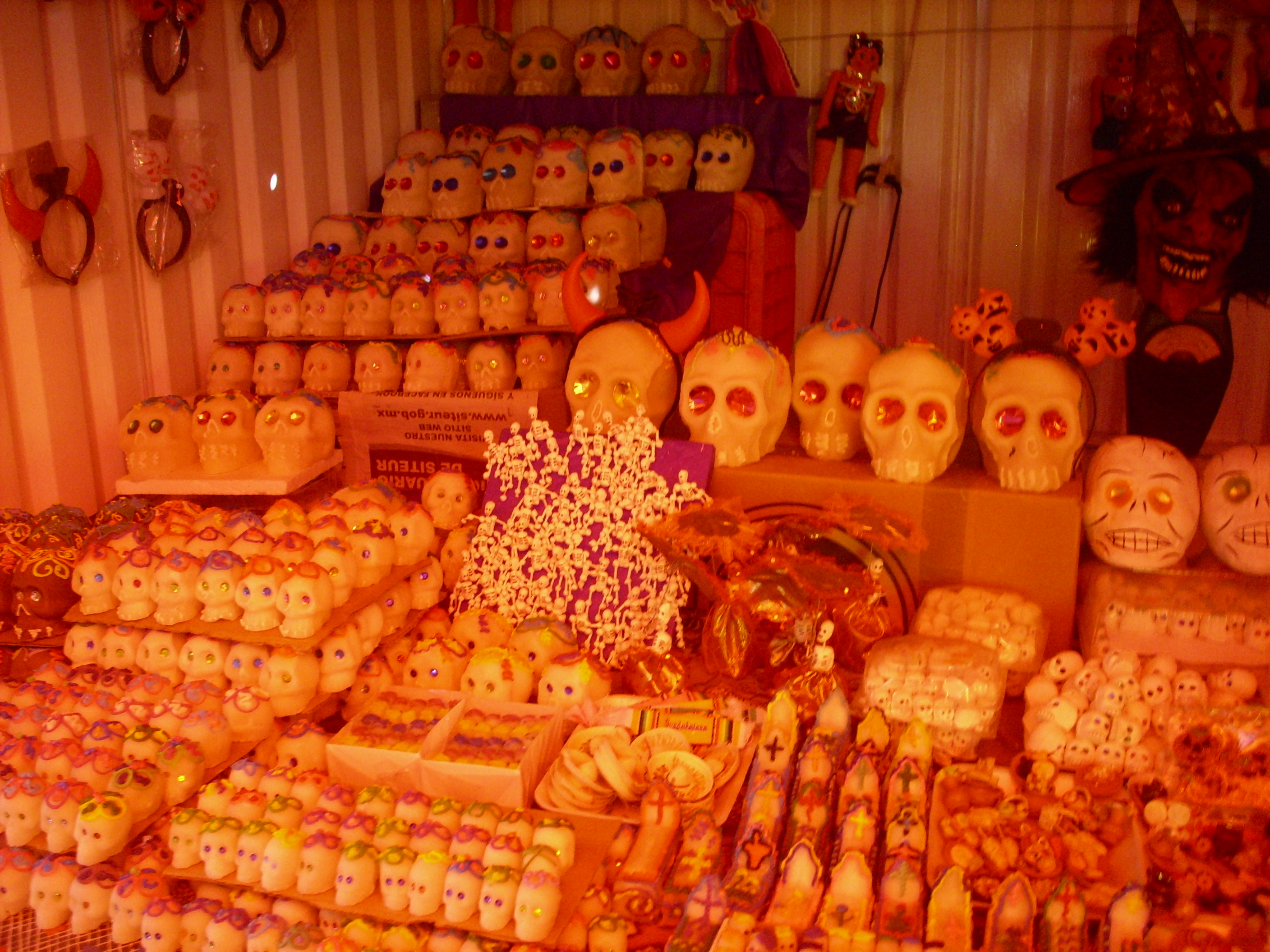
Guadalajara celebrates the Day of the Dead, Mexico’s most idiosyncratic and surreal festival
Preparations in Guadalajara were well underway this week for Mexico’s most surreal festival – “El Dia de los Muertos.”
The Day of the Dead, as it is known in English, is based on pre-Columbian religious rituals, with the earliest celebrations traced back as far as 2,500-3000 years ago. The tradition is thought to have originated from an Aztec ceremony dedicated to the goddess Mictecacihuatl.
The Aztecs, for whom human sacrifice was common practise, considered death just another stage of life. With the spilling of blood deemed essential for maintaining the balance of life and ensuring that the sun continued to rise each day, it was only natural for them to celebrate death.
Following the conquest of Mexico, the Spanish conquistadores sought to merge the festival with All Souls Day as part of their attempts to evangelize the indigenous population. They were never entirely successful and every year on November 2 many Mexicans still give offerings to honor and remember deceased friends and family (Children are remembered on November 1 – All Saints Day).
Guadalajara’s graveyards will be packed on the day, while in other parts of the country the cemetery gates are opened the night before, such as in Jalisco’s neighboring state of Michoacan, where the country’s biggest and most colorful Day of the Dead ritual takes place on the island of Janitzio in Lake Patzcuaro.
As they pile into the graveyards, relatives traditionally leave offerings, including photos of the deceased, their favorite dishes, and even packets of cigarettes and bottles of tequila or mezcal.
It is also common practise to lay orange marigold flowers known as “cempazuchitl” by their graves. The sweet, enticing scent is supposed to draw out the spirits of the dead.
The place to go in Guadalajara to prepare for the festivities is the traditional Dia de los Muertos market (known as the Feria de Carton) in Parque Morelos, a few blocks north of the massive San Juan de Dios market in the historic city center.
“We are here every year from October 15 to November 2,” says one of the vendors. “It’s the only place in all of Guadalajara where you can buy everything, there’s nowhere else.”
After the Day of the Dead many of the stalls will remain as part of the Parque Morelos Christmas market. The items currently on sale include “Pan de los Muertos” (Bread of the Dead), all manner of candies, altars, brightly coloured “picado” decorative tissue paper, scented candles and, of course, “skulls of all sizes, for all prices.”
The vendors say the most popular items are the iconic candy skulls and figures of Catrina, “The Lady of the Dead,” who commonly features atop of the altars. With skulls placed in the centerpiece, these altars also often feature the Christian cross and the image of the Virgin Mary, demonstrating the bizarre synthesis of Catholicism and ancient indigenous ritualism that this festival has become.
Today the market also features an increasing number of Halloween masks and costumes on display alongside the more traditional fare.
“We used to just celebrate the Day of the Dead here, but in recent years it has become combined with Halloween too,” says another vendor. “This is due to the influence of the United States, because they don’t celebrate the Day of the Dead there.”
Yet there is little danger of this most Mexican of festivals being overwhelmed or forgotten.
“We will always follow the traditions of the Day of the Dead,” says Maria de La Luz Orendain, who has been selling at the Parque Morelos market for over 30 years.
To illustrate her point, Orendain points to the dolls on her stall. “Grandmothers and mothers pass these dolls down to their daughters and granddaughters. This is a very old tradition from their youth that has yet to be extinguished,” she says proudly.
For those involved in making and selling the produce on offer, the Day of the Dead is not just a cultural legacy but also a vital source of income. Orendain explains that some of the produce is made locally in Tonala, while other items come from as far away as Mexico City.
Most of her customers are local school children who come to decorate altars for their schools, she says. Aside from gorging on the skulls made of sugar or chocolate, many also buy their friends and family little figures of skeletons dressed as doctors, teachers or priests, some collapsed comically beside empty tequila bottles.
That none of this is as morbid as it sounds is thanks largely to a healthy dose of Mexican humor. “It’s a very typical kind of Mexican joke,” remarks a passerby, on the tradition of buying toy corpses for loved ones.
Traditions such as this help Mexicans enjoy a healthier attitude towards the deceased than that prevalent in Anglo-American society, where it is considered awkward or taboo to even speak of the dead.
Now celebrated in other parts of Latin America and among elements of the Hispanic population in the United States, perhaps it is time the Day of the Dead caught on more widely across the world.

Boxing hero ‘Canelo’ turns street-fighter
The 108-pound IBF champion Archie Solis claims the 154-pound WBC junior middleweight champion attacked him at a training facility in Guadalajara on Tuesday, leaving him with a broken jaw and a cracked tooth.
Solis said he was training when Alvarez confronted him and accused him of involvement with his girlfriend, before attacking him with multiple punches.
“I ran into Alvarez after training and I moved to the side to let him pass,” Solis told El Universal newspaper. “But he ran into me. He asked me, ‘Why are you messing around with my woman?’ I told him that I don’t even know her and all of a sudden he hit me with a left and right hook that fractured my jaw. I fell back and he hit me with two more punches, to the temple and the chest.”
Solis was taken to hospital Tuesday night to undergo surgery and will now miss his scheduled title defense in December. Alvarez has denied the allegations and claimed it was his brother who attacked the other boxer.
Ahead of his fight with Puerto Rico’s Kermit Cintron scheduled for November 26 in Mexico City, Alvarez appeared at a press conference in the capital on Wednesday alongside Jose Sulaiman, the president of the World Boxing Council.
Alvarez reiterated his innocence, declaring, “if I had anything to fear I would not be here and I would have canceled everything, but I have not.”
Sulaiman also backed the Tapatio boxer, saying “Saul is a good boy, he’s never been in any trouble. My champion says he is innocent and I believe him.”
Solis’ promoter, Fernando Beltran of Zanfer Promotions, was not so easily convinced and said criminal charges will be pursued against Alvarez, as well as a civil lawsuit seeking damages.
“It’s sad because Canelo is denying everything,” Beltran said. “Finally he fought a good fighter, except it took place in the street.”
Beltran continued, “(Solis) is going to proceed with a lawsuit because it’s not fair. He had a fight scheduled for December and now his year is over. Maybe it’s the end of his career? Who knows if he can fight again? It’s sad that a champion at 154 pounds would do this to another champion at 108.”

