The keen eye of a documentary photographer
Few Mexicans ever find themselves invited to ride along with the U.S. border patrol, rounding up desperate migrants as the American Dream collapses before their eyes.
But Jose Hernandez Claire is no ordinary Mexican. A renowned photojournalist from Guadalajara, he has documented the weary plight of migrant workers throughout his career of almost 30 years.
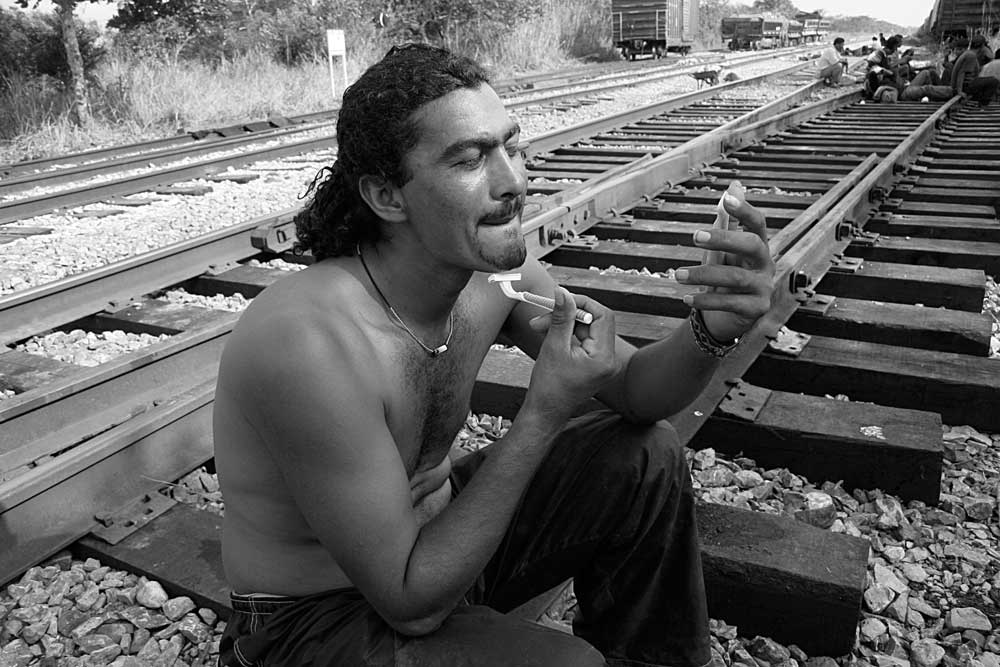
When the authorities caught migrants, Hernandez says he “felt sorry” for his paisanos. “Many of these people don’t have any money. They borrow maybe 3,000 dollars or sell their homes or cattle or whatever they have to pay the ‘coyotes’ to take them over the border.”
The situation for migrants today has worsened considerably from when Hernandez first started out as a photographer in 1982. Every time he visits the border he says “it’s like a new era. I hear different stories from people of dramatic new situations, of fatalities, kidnappings, extortion.”
Now, he says, the migrants have greater problems than ever: “They get kidnapped by bands of narcos, so they don’t make it to the United States. These guys call the victim’s contact number or family members in the United States and ask for a ransom.”
A former architect, Hernandez attended the Universidad de Guadalajara (UdeG) before moving to New York in 1978. Studying photography alongside a masters in urban design at the Pratt Institute, he fell in love with the art of taking photos.
The vibrant metropolitan setting played no small part in his decision to follow a career in photojournalism instead of architecture.
“I lived for five years in New York as a designer,” says Hernandez. “I was often assigned to Spanish Harlem, so I had a chance to take photos all over the city. I walked the streets of New York with my camera and that’s why I got very interested in photographing people. Although I had a background in architecture I surprised myself in that I was not really as interested in photographing buildings. The energy of the city was in the people.”
 Hernandez says he was primarily influenced by his teachers in New York and also took inspiration from photographers Manuel Alvarez Bravo of Mexico, Henri Cartier Bresson of France and Hungarian Andrea Kertesz.
Returning to Mexico, Hernandez began taking photos of blind people, street children and rural life. “The fact that I had been out of Guadalajara and out of Mexico gave me another perspective of the situation of my country and the needs of my city,” he says. “It was a new way not only to see the people of my city but also myself, it was a mirror of myself.”
Hernandez gives great credit to the National Fund for Culture and the Arts (FONCA), a Mexican institution that supports artists and has helped him throughout his career.
He has also received some high-profile awards. In 1988, Hernandez won a prize and grant from the World Health Organization to mark its 40th anniversary at a ceremony in Geneva, Switzerland.
Then in 1992, King Juan Carlos of Spain presented Hernandez with the Royal Prize for International Journalism, in recognition of the photographs he took that year documenting perhaps the darkest day in Guadalajara’s history.
On April 22, a series of gasoline explosions in the city’s sewer system left 252 dead, nearly 500 injured and 15,000 homeless. From that moment onwards, “the city and the society changed,” says Hernandez, who was working at the time as photo editor for “Siglo 21,” a new newspaper in Guadalajara.
With a strong emphasis on investigative journalism, the paper made its name through its coverage of the story. “The great work that the whole team did in that situation was very important,” says Hernandez. The paper had a “different approach and a new way of looking at reporting that probably made the difference.”
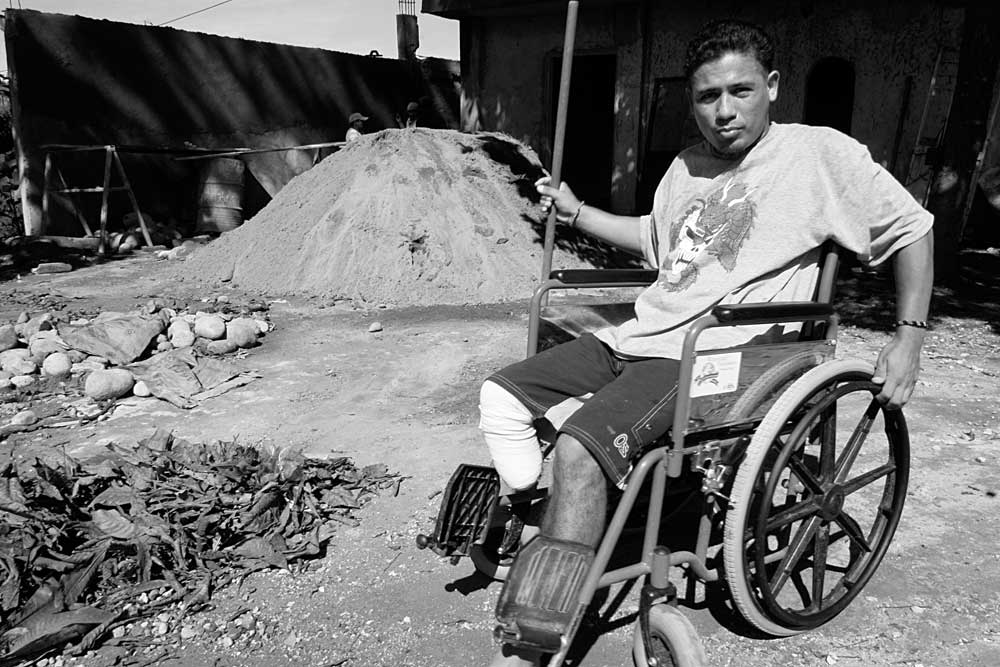 No small part of this was “the way photography was displayed in the newspaper.” Before Siglo 21 appeared, local newspapers gave little thought for “the space for the pictures and the respect for the full-frame photo or the credit for the photographer,” Hernandez recalls.
Having established himself as a respected photojournalist, in 1997 Hernandez released a book entitled “De Sol a Sol,” published by the UdeG with the aid of FONCA and Leica, the German camera manufacturer.
Four years later he won a Guggenheim grant, which helped fund his long-term project of photographing migrants on their voyage through Mexico. “I have traveled all the way from Guatemala to the U.S. border documenting the journey of the migrants,” says Hernandez. His goal is to one day publish a complete work of his many trips dedicated to this topic.
Among other publications, Hernandez’s photographs have been published in the Los Angeles Times Magazine, Spain’s El Pais, France’s Le Monde and Mexico’s La Jornada, as well as Siglo 21, Publico, Milenio, El Occidental and El Informador in Guadalajara.
His works have been displayed in individual and collective exhibitions as far afield as Europe, India, China, South America, Cuba and the United States. Most recently, he has held exhibitions of his migrant photos in Spain, French Guyana and Austin, Texas.
Asked if he has a favorite photo from his collection, Hernandez replies with a smile, “the way I always feel about photography is that my favorite picture will be the next one. I feel attached to my subjects. I’m always taking photos, all the time on the street. I never go outside without a camera.”
Although he almost always works alone, Hernandez credits his family for helping with his work. “I have great support from my wife and two children. My wife is my main editor, she has been a great help in my work. She used to be an audiovisual editor in the UdeG so she has a good eye for looking at photos. I always like to hear her feedback before a photo goes out.”
When it comes to editing, Hernandez favors a more traditional approach. “I love looking at prints on a table or on the wall and choosing a sequence. Computers don’t show the true quality of a picture and I hate that. I must admit that I’m not a big fan of new technology for photo editing.”
To find out more about Hernandez and his work, visit his website http://www.josehernandezclaire.com.
The PRI’s young contender steps into the presidential ring
Surprising no one, the early frontrunner in next year’s presidential election officially announced his candidacy live on television last week.
“To be clear, frank and open,” Enrique Peña Nieto told Televisa’s El Noticiero program, “yes I want to be president, yes I want to be the candidate of my party.”
With a commanding lead in the polls, the photogenic 45-year-old former governor of the State of Mexico is firm favorite not only to clinch the nomination of the resurgent Institutional Revolutionary Party (PRI), but also to win the presidential election outright. Made four days after leaving the governor’s office, his announcement confirmed the news many in Mexico had long been awaiting.
The heir apparent of the PRI must now persuade voters that his party is different from that which ruled Mexico with an iron fist for seven decades until 2000. Many commentators are sceptical as to whether the party, which was notorious for both buying and stealing votes, has really changed.
Nobel literature laureate Mario Vargas Llosa once famously labelled the PRI as the “perfect dictatorship.” Peña Nieto’s main campaign strategy will be to present himself as the leader of a new generation of priístas, distinct from those of old.
His political rivals have already seized upon the PRI’s shady past as their primary line of attack.
“We are operating in the face of old school political machinery, but with a lot of money and a lot of technology,” said Manuel Camacho Solis, a leading member of the leftist Party of the Democratic Revolution (PRD). “What we are seeing is the return of the worst of the PRI.”
While such criticisms may be valid, they do not necessarily echo opinion within the electorate. Time has softened the image of the PRI and today nearly a third of Mexican voters are aged under 30, meaning the party has not been in power since they have been eligible to vote. Many now see the PRI as a necessary change from the National Action Party (PAN) that has held power for almost 12 years.
The policies of panista presidents Vicente Fox and Felipe Calderon have left voters disillusioned, while the latter’s national security strategy has provoked an almighty surge in drug-related violence. For many Mexicans, the most pressing task facing their next president will be bringing an end to this violence that has claimed over 40,000 lives during Calderon’s term in office.
The PRI, which largely avoided such chaos by turning more of a blind eye to the activities of drug cartels, is seen by many as the party to re-establish order and stability in Mexico. Peña Nieto has said he wants to prove “that we can renew hope among Mexicans, that we can build a better nation, that we can live in a country of quiet and peace.”
Under Mexican law, presidential candidates must leave other political posts ahead of the campaign, which does not commence officially until February of the election year, when all parties have chosen their candidates.
In early September Peña Nieto delivered his sixth and final annual state address in Toluca, the capital of Mexico State where he served as governor since 2005.
“Let there be no confusion,” he told the crowd. “Mexico has a clear project, which is contained in its political Constitution. What is missing is an efficient state that can make it a reality, that will put it into practice in the daily lives of all Mexicans.”
Although not yet officially underway, Peña Nieto’s campaign already seems to have accrued strong support from the Mexican media. Not only did he choose to announce his candidacy on Televisa, Mexico’s most powerful television network, he is also married to popular soap (telenovela) actress Angelica Rivera, one of the channel’s biggest money makers.
Referencing the media giant’s widely perceived backing of Peña Nieto, Andres Manuel Lopez Obrador, the PRD candidate who was narrowly beaten by Felipe Calderon amidst allegations of voting fraud in the 2006 presidential election, described Peña Nieto as “a meringue made by the Televisa chefs, he’s got no substance.”
This is another criticism that has been leveled at the candidate: that he is more style than substance. Peña Nieto is famed for his movie star looks and will be hoping the electorate can be seduced by a pretty face. Young, handsome and charismatic, he contrasts strongly with the older and less inspiring Francisco Labastida and Roberto Madrazo, the party’s defeated candidates in the 2000 and 2006 presidential elections, respectively.
Senate leader Manlio Fabio Beltrones, 59, is also expected to challenge for the PRI candidacy, but the younger Peña Nieto remains widely tipped to win both the party nomination and the election.
Come election time, the question on many Mexicans’ lips might not be whether this slick candidate will be president or not. The greater mystery is, once in office, if Peña Nieto will really make a break from the PRI of old, or if in fact he represents a step backwards for Mexico – a country that in many ways is still just a fragile, fledgling democracy.

