The clash of the leftist Titans
The leftist Party of the Democratic Revolution (PRD) agreed last week to select its nominee for next year’s presidential election through a poll open to all Mexican citizens.
A date for the vote has yet to be announced, but both of the party’s leading contenders are already shifting into campaign mode. Andres Manuel Lopez Obrador, who recently unveiled a new civil campaigning association, clashed with his main rival Marcelo Ebrard over campaign strategy this week.
Lopez Obrador firmly rejected any idea of a coalition with the right-wing National Action Party (PAN), while Ebrard believes an alliance of some form may be necessary to prevent a return to power of the Institutional Revolutionary Party (PRI) that ruled Mexico for 70 years until 2000.
It remains unclear which candidate will get their way, or indeed which will lead the PRD into the 2012 elections. The narrowly defeated candidate in the 2006 election and self-proclaimed “legitimate president,” Lopez Obrador, 57, faces a strong challenge from Ebrard, 51, his former protégé and the current mayor of Mexico City.
Ebrard declared on Tuesday that Mexico requires constitutional reform enabling a coalition government in order to change the direction of the country: “There are two ideas for our country: the priista idea to reinstall the old regime, which would be a disaster for the country, and the other idea is to go forward, but making sure we have a majority coalition in Congress to ensure it is actually possible to do what needs doing.”
Lopez Obrador was not in agreement. “We must not allow or be deceived by coalitions or costumes,” he responded the same day. “We cannot form an alliance with the PRI or the PAN. We need an entirely new way. It is clear that those who rule in Mexico do not want any change.”
Ironically, both candidates were members of the PRI before they joined the PRD. Moreover, Lopez Obrador has been severely criticized in the past by left-wing politicians for including in his close staff many former members of the PRI – Ebrard among them – who actively fought against the PRD in the 1980s and 1990s.
In response to criticism of a coalition strategy, Ebrard pointed out that his acclaimed local government began as a coalition of the PRD and the Mexican Labor Party (PT). Indeed an alliance of the PRD, PT and Convergence party is one possible outcome, as the three parties previously joined together in the “Coalition for the Good of All” led by Lopez Obrador in the 2006 election.
For its part, the PT leadership recently announced it would support Ebrard in 2018, but backed Lopez Obrador in the upcoming election because he “represents without doubt the best option for the country.”
Despite the temptation for a united opposition against the PRI, any form of PAN/PRD alliance remains unlikely at a national level due to the strong ideological differences between the two parties and the difficulty of agreeing on a single candidate acceptable to both.
Yet Ebrard has refused to rule out the possibility. “We would have to see who would participate,” he said coyly, “but what is important is making it constitutionally possible to (form a coalition).”
This statement represents an about-turn from last week’s visit to Guadalajara, when Ebrard admitted it would be “very complicated to build a solid project in the short time we have left to think of an alliance.”
Ebrard also proposed last week that whoever loses the candidacy of the Mexican left should support the winner, as the “political future of each party depends on this decision.”
Even if he loses the PRD candidacy, Lopez Obrador has strengthened his position somewhat through the recent unveiling of a civil association as the new basis for his political efforts. An evolution of his “legitimate government,” Lopez Obrador has described the new Movement for National Regeneration (Morena) as a “political association, not a political party.”
Ricardo Monreal, whom Lopez Obrador named as Morena representative in talks with the three leftist parties, explained recently: “Morena is a partnership that seeks to organize citizens who are not party members and usually do not participate in politics, millions who remain aloof or indifferent to public affairs.”
If, as claimed, they have 4.1 million supporters nationwide, Morena could afford Lopez Obrador a new support base free from the internal divisions of the PRD, suggesting a potential drift from conventional party politics.
Although they differ over how to best challenge the PRI, Lopez Obrador and Ebrard share very similar political backgrounds: both being former priistas who later governed Mexico’s Federal District under the PRD banner.
Lopez Obrador was mayor of Mexico City from 2000 until July 2005, when he resigned to concentrate on his 2006 presidential bid. According to leading pollster Consulta Mitofsky, he left the position with an 84 percent approval rating; with Reforma newspaper reporting that he had kept 80 percent of the promises he made as a candidate.
Yet this was not quite enough to win him the presidency. Having lost the 2006 election by just 0.56 percent of the vote, Lopez Obrador accused his opponent Felipe Calderon of voting fraud. Having once looked a shoo-in for the presidency, his continued insistence that he won the election has led to a decline in popularity over the past five years.
Meanwhile, in July 2006, Ebrard took over in Mexico City, having won 47 percent of the vote. In 2010 the World Mayor Project named him the “world’s best mayor” in recognition of his environmental and civil-rights initiatives within the capital.
Ebrard will soon have to step down soon from his current position, if, as widely expected, he is to run for president.
AppCircus unearths latest smartphone gem in Guadalajara
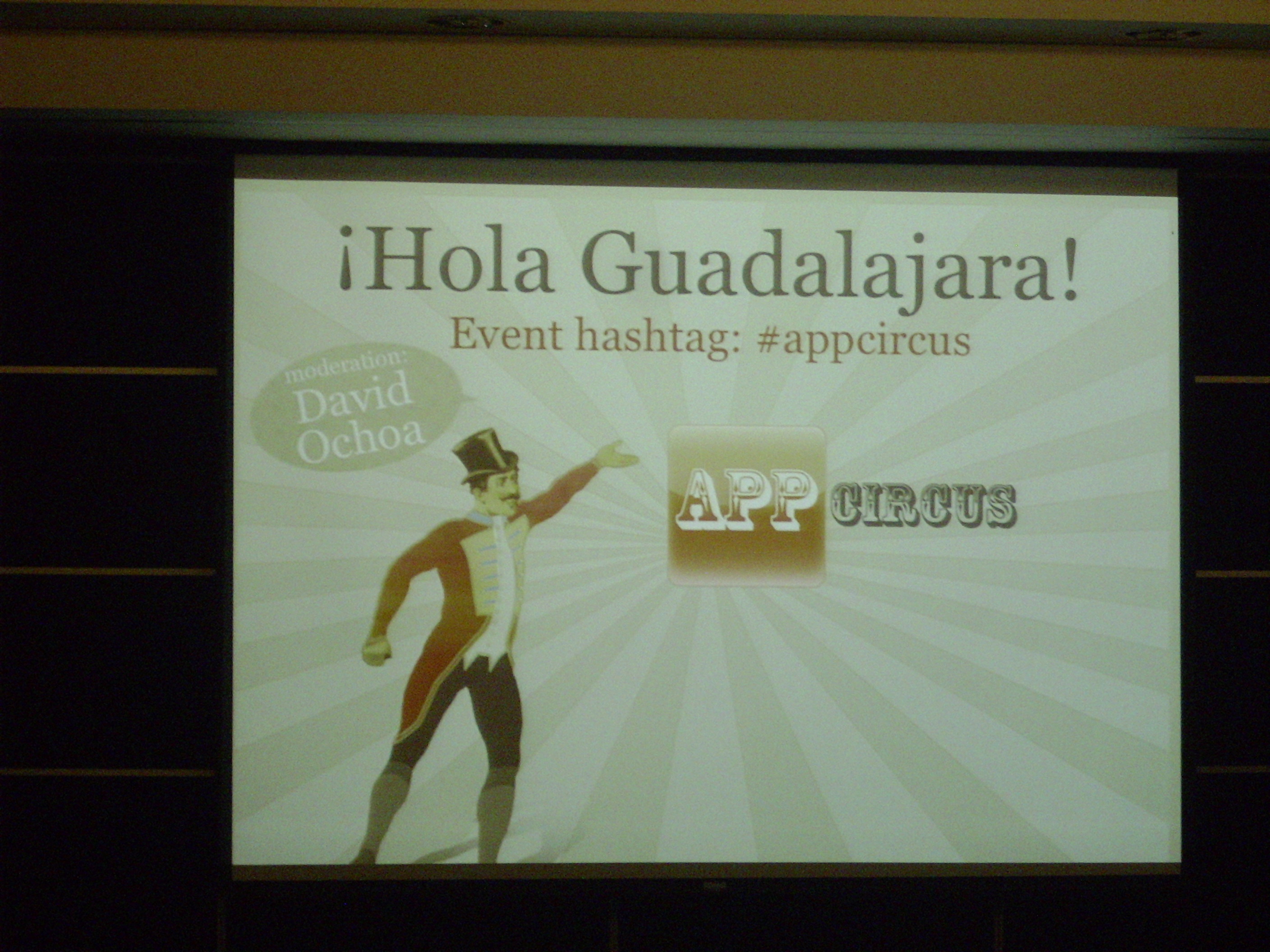
With his triumphant ‘Money Menttor’ app, which enables users to safely input personal information, such as their age, civil status, income and budget, with the data secure under the data protection law, Angel Sahagun Fernandez booked his place in next year’s Mobile World Congress final in Barcelona, having previously come runner-up in the Mexico City AppCircus.
A “global traveling showcase of innovative apps” for smartphones, AppCircus has taken in dozens of major cities around the world, including Mexico’s Federal District, Monterrey, Queretaro and Tabasco. The Guadalajara congress was sponsored by Telcel, the cell phone network owned by Carlos Slim, a Mexican native and the world’s wealthiest man.
Aside from the exposure it will afford the winner, the event also offered local students an insight into the world of software…
Click here to read this story in full at Global Delivery Report.
Two dead as hurricane downgraded to tropical storm
Hurricane Jova, which has now been downgraded from a category three hurricane to a category one tropical storm, claimed its first victims in Jalisco on Wednesday.
Two people died after being caught in a landslide in the municipality of Cihuatlan, one of the areas worst affected by the storm.
Secretary General Fernando Guzman Perez Pelaez confirmed the victims were five-year old Yolanda Marisol Rebolledo, and her 21-year old mother, Norma Irene Rebolledo.
Three others were injured in La Huerta on Tuesday night, while two children were hurt in the small coastal town of Tomatlan when the roof of their home collapsed.
There have been no reports of injuries in the popular resort of Puerto Vallarta, which was badly flooded when Hurricane Kenna hit the area in 2002.
The state government confirmed Wednesday morning that at least 500 people have been evacuated from their homes and around 160 are now in temporary shelters.
Elements of the army are coordinating with state and municipal authorities to gain access to villages where thousands of people are currently isolated.
Virtually cut off due to floods and constant landslides, the municipalities of Cihuatlan and Melaque are without water or electricity, which is expected to be restored in two to three days.
The hurricane also caused flooding in the municipalities of La Huerta, Villa Purification and Autlan, while in Nayarit classes have been suspended in the municipalities of Bahia de Banderas, San Blas and Santiago Tecuala Ixcuintla.
Workers rushed to fill and stack sandbags to protect the Beach Volleyball Stadium in Puerto Vallarta on Tuesday, an official venue for the Pan American Games.
Guadalajara was also hit by heavy rain from early Wednesday morning and the rain is continuing across the south coast of Jalisco and especially now in the highlands.
Jova will gradually weaken as it passes through western Jalisco, according to the National Weather Service (SMN) forecast. Although there is some concern about the possibility of more rain affecting the early days of the Pan American Games, the worst seems to be over.
At the time of publication the State Civil Protection Agency remains on red alert in Jalisco.

