Race for PAN candidacy heats up
Another contender has officially entered the race to be presidential candidate for the National Action Party (PAN) in next year’s general election.
Ernesto Cordero stepped into the fray this week as he stood down as Finance Secretary to concentrate solely on a presidential campaign. Immediately going on the attack, Cordero denounced the Institutional Revolutionary Party (PRI) as “authoritarian, irresponsible and immoral.”
This appears to be the PAN’s main plan of attack: to paint the PRI, which ruled Mexico for 70 years until 2000, as an unchanged party of the past that would represent a step back for the country.
Cordero joins Josefina Vazquez Mota and Santiago Creel as official PAN candidates. Still waiting in the wings is Jalisco Governor Emilio Gonzalez, who outlined his presidential ambitions last week and talked up his chances of winning next year’s general election.
“It is not easy to defeat the PRI,” Gonzalez said, implying that he should be the PAN’s candidate because he is the only one to have already beaten their main rivals – in the previous Jalisco state elections. Yet a nationwide victory over the PRI would prove a far tougher task than in Jalisco, which is a PAN stronghold that the party has won for the last four successive elections.
With two years remaining as state governor, Gonzalez will ask permission from the State Congress to take a leave of absence from his post in November and aims to begin his campaign in December. He is reluctant to do so before October’s Pan American Games, which will offer ample opportunities for self-promotion and political showboating.
The Jalisco Governor would do well to overtake Vazquez, who has built up a commanding 19.1 percent lead over her rivals, according to a poll of 1,500 Mexican citizens by the Strategic Communication Cabinet (GCE).
Vasquez leads with 46.5 percent, followed by Creel with 27.4 percent. Cordero has 12.9 percent – which may well rise now that he has officially entered the race – while Gonzalez trails with just 8.6 percent.
“For me the unity of the party is fundamental; the interests of the PAN must be the priority above all else,” said Creel this week, calling for a debate with Vazquez and Cordero so that PAN supporters know each candidate’s political platforms and plans for the nation, without dividing the party.
It remains unclear which candidate will receive the backing of President Felipe Calderon, who is not permitted to seek a second term in office, but having been chosen as a cabinet member, Cordero seems the most likely choice. However, given Calderon’s low popularity ratings, an endorsement could do more harm that good to a candidate’s prospects.
Fear or freedom? 9/11’s murky legacy
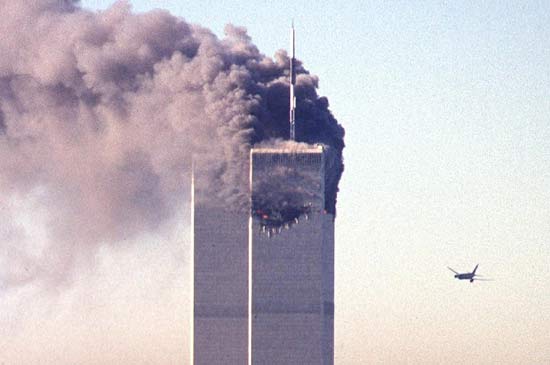
Wiretapping, racial profiling, extraordinary rendition, detainment without trial, torture – one of the most striking legacies of the terrorist attacks of September 11, 2001 has been the willingness of the United States to forgo some of its civil liberties in the name of national security.
As the world reflects on the tenth anniversary of 9/11, many in the international community believe it to be more pertinent to consider the consequences of that tragic day than to continuously revisit the horrific and painful atrocities themselves.
For example, the manner in which Mexico is responding to the threat from violent drug cartels is becoming increasingly similar to the way the United States tackled terrorism in the wake of 9/11: through militarization and a clampdown on civil liberties.
The “War on Terror” declared by President George W. Bush in response to 9/11 resulted in two wars and – in the eyes of many U.S. citizens – violations of their constitutional rights.
In Mexico, President Felipe Calderon has responded similarly to the recent attack on a Monterrey casino, the latest and most bloody episode in an increasingly frustrating “War on Drugs” that has claimed over 40,000 lives in less than five years.
Calderon classified the attack as an “abhorrent act of terror” committed by “true terrorists” – the first time he has used such language to describe drug-related violence in Mexico. But the mislabeling of Mexico’s cartels as terrorists raises the risk of unsuitable or counter-productive tactics being employed in an attempt to combat them.
In moments of national crisis, governments commonly face a dilemma over national security policy: how to seek a balance between heightening security and preserving individual freedoms. Such a balance can be difficult to achieve.
Eager to dismiss talk of a “failed state” overrun by powerful criminal gangs, the Mexican government is on the verge of passing a National Security Law that would strengthen the government’s and the military’s hand, but could seriously undermine civil liberties in Mexico.
Sound familiar? Enjoying huge popularity in the wake of the 9/11 attacks, President Bush passed the USA Patriot Act in October 2001 and created the Department of Homeland Security in November 2002, in an effort to protect the United States from further terrorist attacks. The vast majority of Americans supported these measures, viewing them as necessary in order to ensure the long-term survival of political freedoms. These policies, however, were inherently unconstitutional.
The rights to free speech, to assemble peacefully, to prompt and public trial, the prohibition of unreasonable search and seizure and the ban on cruel and unusual punishment were all dramatically undermined as a result of how the U.S. government chose to respond to 9/11.
Under Bush the United States became a security state operating with very little accountability. In September 2001, the Justice Department freed the FBI from the requirement of reasonable suspicion before launching an enquiry, a clear violation of the Fourth Amendment.
Agents were now free to search for indicators of illegal activity in open-source information such as the internet, while wiretapping was also authorized. Critics feared this gave the authorities unchecked power to invade the privacy of U.S. citizens.
Other post-9/11 legislation extended the detention powers of the immigration authorities, with racial profiling resulting in a disproportionate number of Arab and Muslim men detained as terror suspects.
In Guantanamo Bay, Abu Ghraib and other secret prisons, both American citizens and foreign prisoners were detained indefinitely without charge or trial, subjected to water-boarding, and physically and verbally abused. Many were later deemed to have been innocent and were belatedly released.
The charge was widespread: amidst this climate of fear and repression, the U.S. government had evidently forgotten the virtues of freedom and tolerance upon which the country was founded.
Although Bush has left office and Osama Bin Laden is dead, the post-9/11 clampdown on civil liberties endures, even retaining bipartisan support. President Barack Obama has yet to fulfill his promise to close Guantanamo and in July he signed a four-year extension of the Patriot Act, extending powers to search business records, conduct roving wiretaps and spy on non-American “lone wolf” suspects without confirmed ties to terrorist groups.
Unlike most of the Patriot Act and other post-9/11 legislation, those provisions must be renewed periodically because of concerns they could be used to violate privacy rights.
Republican Senator Rand Paul of Kentucky, a number of liberal Democrats and various civil liberties groups opposed the move, arguing the law gives the government authority to spy on innocent citizens.
Meanwhile in Mexico, the government is close to enacting a modified National Security Law first put forward in 2009. Both houses of Congress have approved the reforms “in general,” but the specifics of the act still have to be debated.
Prominent poet-turned-activist Javier Sicilia led a rally in the capital last month, demanding that Congress reject the new law that would provide legal underpinnings for continuing the “War on Drugs” strategy launched by Calderon in December 2006.
Just as the Patriot Act threw the balance of powers out of kilter in the United States by relinquishing congressional power to the president, the National Security Law hands far greater authority to Mexico’s chief executive and the military.
The reforms also share obvious similarities with the Patriot Act. If approved, the new law would legally sanction warrantless searches, the detention of suspects without charges, the collection of intelligence “using any method,” and electronic surveillance of citizens.
Federal security officials would have the power to declare martial law under certain conditions and the armed forces would take on a greater role in public safety and national security, while military personnel could only be tried in civil courts when the military deems it appropriate.
Clearly there is a danger that such reforms could worsen the prevalent problems of impunity, corruption, human rights abuses and the militarization of the state. While some would welcome the presence of soldiers on their streets for protection, many have criticized Calderon’s militarization of the country, citing the rising death toll and the numerous allegations of abuses committed by Mexican soldiers.
Last year there were 826 complaints about illicit searches by the police and armed forces, compared to 234 when Calderon began his offensive against organized crime in 2006.
“Illegal searches have become a common practice in many parts of the country, and they reveal a systematic pattern,” the National Human Rights Commission said last month. Security forces routinely “burst into a home looking for illicit objects, they threaten, injure and detain the occupants, they take valuables or money and they alter evidence.”
Many people south of the border are concerned that the fear caused by ongoing drug violence will lead to policies which exacerbate the country’s problems, just as the fear generated on that fateful day ten years ago overwhelmed the United States’ belief in basic freedoms.
But this choice between liberty and security is a false one: the two need not be mutually exclusive. The U.S. and Mexican governments might learn from how Norwegian Prime Minister Jens Stoltenberg responded to the horrific terrorist attacks in which 76 people were murdered in July.
“It’s absolutely possible to have an open, democratic, inclusive society, and at the same time have security measures and not be naïve,” Stoltenberg assured his citizens, before vowing that “we must – and will – meet terror with more democracy, not less. We must not lock up our society. That would be piling tragedy upon tragedy.”
President Calderon cools rhetoric in low-key State of Nation address
A sober and reflective President Felipe Calderon vowed to continue the fight against organized crime in his fifth State of the Nation address at the National Museum of Anthropology.
During his 90-minute televised address, the president boasted that “thanks to the efforts of all Mexicans, we have healthy public finances, a solid financial system and a competitive economy.”
Formerly a public holiday, the annual Informe served as an elaborate propaganda opportunity in which the president would crow about his achievements, especially during the 70-year unbroken rule of the Institutional Revolutionary Party (PRI).
This year, in an apparent mark of respect for the victims of the recent casino attack in Monterrey, the president decided against delivering the address in the National Auditoriom, where it was due to take place, and opted instead for a more low-key setting.
Speaking only before invited guests and party members also enabled Calderon to avoid the embarrassing protests and heckling that have dogged presidents giving their annual national report in recent years.
Eager to stress any positives, Calderon claimed Mexico will achieve universal health coverage in 2011 through the Seguro Popular program, which helps those who receive no health care benefits by providing them with subsidies for medicine and medical care.
Yet the veracity of such a statement is in doubt, given that as of January, eight percent of the country’s municipalities still lacked any kind of health facility.
Unable to escape the topic of mounting drug violence, the president pledged to continue the fight against organized crime and endemic official corruption during his final year in office.
“Like all Mexicans, I’m outraged at the level of opacity and corruption that the Monterrey tragedy has brought to light,” Calderon said, warning that if the gangs aren’t checked, organized crime and the government will become “practically the same thing.”
However, the president cooled his rhetoric somewhat, declining to reassert that the casino firebombing was an act of “terrorism.”
Calderon also announced the creation of an Office for Victims Assistance, an acknowledgment that many of the 40,000 people killed in the drug war were not criminals but innocent victims.
This acknowledgment appeared to be a reversal of earlier statements in which Calderon claimed most of the dead were criminals killed by criminals. In light of recent events it would have been difficult to maintain this argument, given that all but ten of the 52 victims in Monterrey were women.
Calderon’s change of tack was no doubt a response to the widespread public outrage at the casino fire and the growing influence of the poet-activist Javier Sicilia, who has led mass protests demanding recognition for the thousands of innocent victims in Mexico, following the murder of his son earlier this year.

