President’s sister aiming to restore security to Michoacan
During the 2008 Independence Day celebrations, two grenades were thrown into a crowd that had gathered in the main plaza of Morelia, Michoacan. Eight people were killed and over 100 injured. This was the moment that Luisa Maria Calderon Hinojosa, older sister of President Felipe Calderon, decided to return to politics.
“It’s time to go back, holidays are over,” the former congresswoman said. “I saw that Michoacan was suffering a lot and that we had to do something. I had experience in politics, so I reported to my party and said ‘here I am, how can I help?’”
Now, as her brother’s term in office draws to a conclusion, Luisa Calderon is hoping to relaunch her political career in a bid to aid the troubled western state. Having won the National Action Party (PAN) primary last week with around 60 percent of the vote, she will be the party’s gubernatorial candidate in the Michoacan state elections on November 13.
Calderon has said the only thing that motivates her is the possibility of improving Michoacan and ending the stigma of it being one of Mexico’s most violent states. But she will face tough opposition in a traditional stronghold of the leftist Party of the Democratic Revolution (PRD).
The Calderons were born and raised in Michoacan and although the president’s sister will have the advantage of name recognition, she will also have to temper the unrest caused by a massive increase in drug related violence throughout his presidency.
Touring the state earlier this month, the president made it clear that he would not seek to influence November’s election, affirming that the visit would be “the last or one of the last times I come to Michoacan, so as to avoid interfering in the electoral process.”
Calderon made the comments in response to Michoacan’s Governor Leonel Godoy, who has warned that there must not be a “dirty war,” nor use of federal or state funds in favor of any candidate.
“We must ensure security, peace and tranquility for the people of Michoacan to go to the polls on November 13, without confrontations,” said the PRD politician.
Godoy added that local authorities had moved “heaven and earth” to recover the nine pollsters who were released recently after being held captive for several days by kidnappers. No details have been given as to who was behind the abduction of the workers, who had been surveying residents in Apatzingan ahead of the elections.
Michoacan’s state prosecutor Jesus Montejano said their disappearance had been “unusual,” with no ransom having been paid for their release, and revealed only that their kidnapping “could be linked to one of the criminal groups that operate in the area.”
Whoever wins the November election will need to convince tourists that Michoacan is a safe destination once again. Jalisco’s neighboring state, Michoacan is home to idyllic pueblos, forests, lakes, dreamy beaches, a famous monarch butterfly sanctuary and stately colonial cities.
Yet tourism has waned following the rise in violence and insecurity. To the chagrin of many tourism operators, in April the U.S. State Department added Michoacan to the list of places that American citizens should avoid unless absolutely necessary
It was in Michoacan that President Calderon first declared war on Mexico’s cartels in December 2006. Federal authorities have since been largely successful in dismantling the state’s powerful drug gang, La Familia. Its leader Jose de Jesus Mendez Vargas, also known as “The Monkey,” was arrested in June, while Nazario Moreno Gonzalez, nicknamed “The Craziest One,” was shot dead by federal police last December.
Yet the decline of La Familia has merely created a violent power vacuum from which another offshoot cartel, known as the Knights Templar, has emerged.
Although Luisa Calderon’s main concern is to diminish the insecurity that plagues Michoacan, her relation to the chief prosecutor of the war on drugs may well hinder her chances. A test of what faith remains in the Calderons’ security strategy, the November elections could provide an indication of how next year’s presidential election will pan out.
Mango Orchard
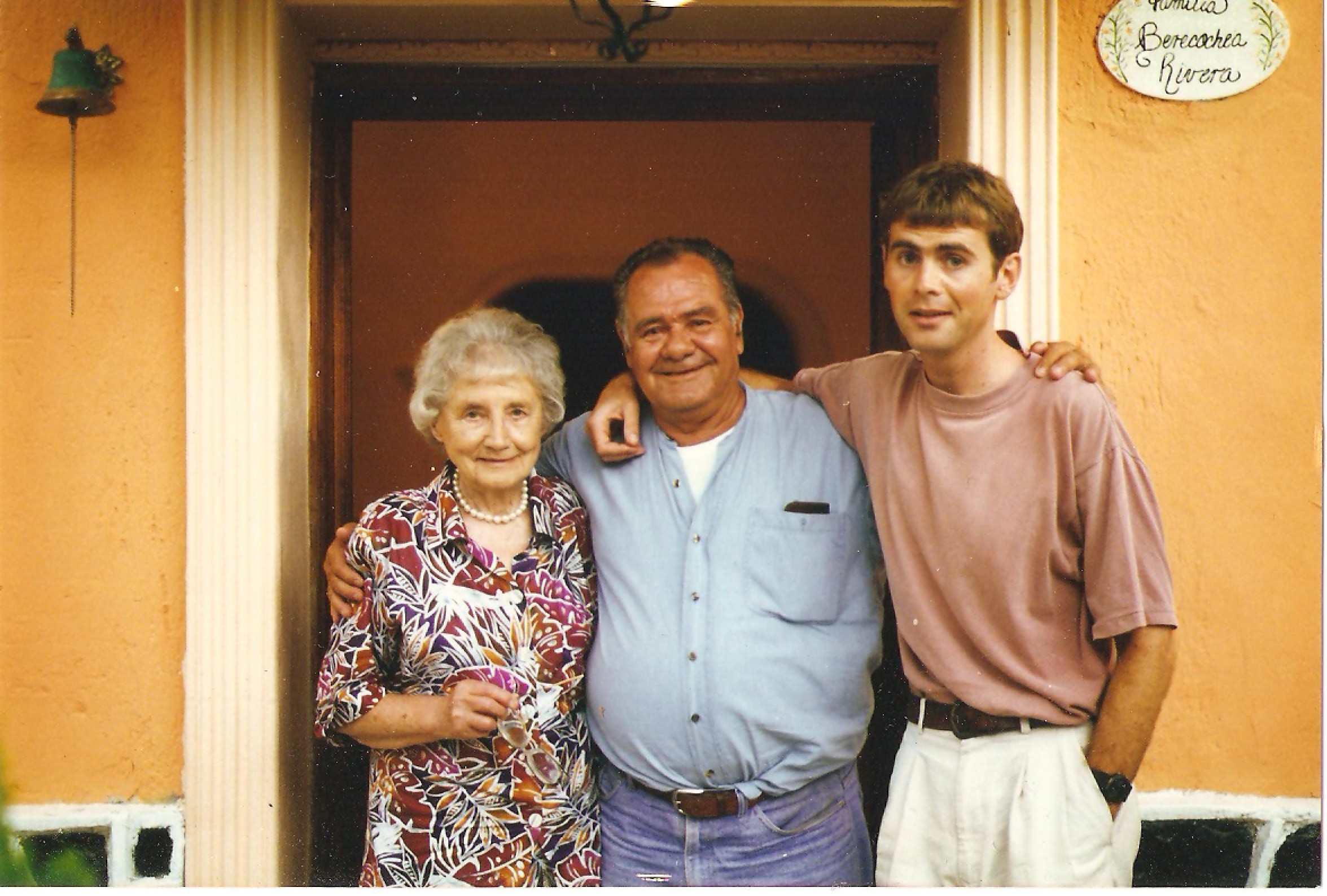 I first met Robin back in April at an event held by the Mexican embassy in London to celebrate the paperback launch of “The Mango Orchard”. It was in the Soho branch of Wahaca, a newish restaurant chain which offers a more authentic experience of Mexican cuisine than the Tex-Mex stuff you usually find at home. Sadly my enjoyment of the free margaritas was tinged by watching Spurs crash out of the Champions League later that night. Anyway, I caught up with Robin again over skype last week and he told me all about the fascinating story behind his new book:
A family affair: One man’s tale of discovery in Mexico
When a young Englishman set out to retrace his great grandfather’s steps in Mexico he had little idea of what was in store for him. The quest he undertook to uncover his family history was by no means easy. Indeed his only lead was to look for “a cloth factory in a small village near a small town near Guadalajara.”
Having sold his apartment in London and abandoned a successful media career, Robin Bayley embarked on a great adventure that took him to New York, Guatemala, Colombia, Venezuela and finally to Mexico. He eventually returned home with a lot more than he had bargained for: a long-lost family.
Bayley’s unique and personal story is the subject of his first book, “The Mango Orchard,” due out in the United States next spring. Much of it is set in and around the state of Jalisco.
“Guadalajara has always been very central to the story,” says Bayley. “I didn’t actually know where my great grandfather had gone, I just knew Guadalajara was the last place that he went through on his way to wherever he was going. So this was the only town I really had a link to.”
Bayley’s great grandfather Arthur (or Arturo as he became known) Greenhalgh first left England in 1899 to travel through the Americas. As Bayley grew up he was always enchanted by his grandmother Ruth Jones’ tales of her father’s exotic Mexican escapades. In 1995 he decided it was time to relive them himself.
He began by learning Spanish in Guatemala, where he soon fell in love with a local girl. Forcing himself to press on, Bayley went to Colombia, where he bumped into the head of a regional paramilitary group who was responsible for the deaths of thousands. Bayley recalls what his friend Pedro told him at the time: “He wanted to know what you were doing here or if you were CIA. You don’t want to know what they do to CIA people.”
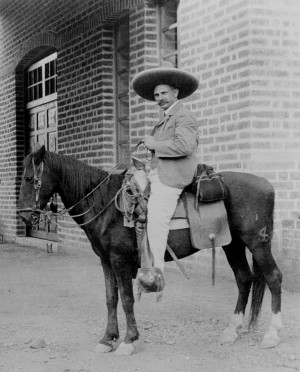 Bayley made one last detour in Venezuela before finally arriving in Mexico. After a long process of delving through archives and hunting down leads, he managed to track down his great grandfather’s former workplace: a cotton processing factory in the small town of Bellavista, just outside of Tepic, Nayarit.
“The state of Nayarit didn’t actually exist when Arthur was there, it all used to be a part of Jalisco,” Bayley explains. Aside from this, he says, it hasn’t changed much since his great grandfather’s era.
“It was never really commercialized. There’s not a lot of bars or restaurants there. But anyone who’s getting married within a 100-kilometer radius has their photograph taken in front of the factory. It’s very iconic.”
Bayley’s story even inspired one reader called Nina to travel over 800 kilometers from her home in Mexico City to have her photo taken holding a copy of the book in front of the Bellavista factory.
When he eventually reached Bellavista, Bayley was shocked to learn that “the whole village” shared his old family surname of Greenhalgh. His great grandfather had left behind a Mexican lover and an illegitimate daughter, whose offspring had multiplied over the course of a century to form a 300-strong clan.
Bayley’s newfound family welcomed him with open arms and implored him to bring his 90-year-old grandmother to visit them. In a role-reversal, upon returning to England, Bayley was now the one captivating her with stories of Mexican life. These tales of long-lost relatives were enough to convince Ruth to join him on a second voyage in 1996.
“When I first came back with my grandmother we stayed in Guadalajara and we traveled all around Jalisco,” says Bayley. The local area made a great impression on them both.
“Guadalajara is a very romantic city and it still conjures up the colonial period of my great grandfather’s day, with the mariachis, the plazas, the architecture and those horse and carts in the historic centre. It’s a very evocative, beautiful city. My grandmother really loved it. She always referred to the trip as ‘the highlight of her life’ and she lived until 103.”
From Guadalajara the pair traveled to Tepic and then on to Bellavista to meet their estranged cousins. “Travel had changed” from his great grandfather’s day, remarks Bayley. “I think he went from Mexico City to Guadalajara on the train and from there he traveled by horse and cart. The journey to Tepic now takes about two hours, back then it took five days.”
In Bellavista they were greeted by mariachi fanfare and swaths of Mexican relatives in an emotional family reunion. It was here that Bayley, after rooting around for his great grandfather’s historical records, learned of Arthur’s role in the onset of the Mexican Revolution.
“There was industrial action at the factory in March 1905. Although it failed this was one of the first strikes in the country and my great grandfather was in charge at the time,” explains the author.
This was followed in May 1906 by another strike at the Cananea copper mine in Sonora, led by Esteban Baca Calderon, and widely “acknowledged to be one of the first sparks of the revolution.”
“I found a letter from the Cananea strikers, written before the strikes took place. It was addressed to Señor Greenhalgh,” Bayley reveals. “Calderon learned from the Bellavista strike and ensured they didn’t make the same mistakes.”
 Arthur Greenhalgh had to leave the country when the revolution began hotting up in 1912. “He came back to England and never returned to Mexico,” says Bayley. “One of the reasons for this was that all the letters he was sending to his lover were stolen (for the money they contained). So he didn’t know what happened to her, and they never knew what happened to him, until I showed up.”
In 2004, nine years after first coming to Mexico, Bayley started writing the book, having made four more visits in the interim.
“The reason for the delay was because I wasn’t ready to write it at the time,” he says. “Part of what ‘The Mango Orchard’ is about is my own self-discovery. I was quite young and I was looking for my great grandfather, but I was also trying to work out what I wanted from life.”
Bayley had previously worked in television and advertising and had never written a book before. He suffers from dyslexia and it took him five years to complete the writing process.
It was worth the wait. Bayley says the reaction to the book has been “fantastic” and he has yet to read a bad review.
“One of the most gratifying reactions to the book came at the paperback launch,” he says. “The staff from the Mexican embassy in London said it was very heartening and refreshing to read a book that gives another side of Mexico and talks about the importance of family and the warmth with which people welcomed me.
“My experience in Mexico was almost entirely positive and I’m sure most of your readers would also concur that the experience you have when you go to Mexico is not the same one you read about in sensationalist newspapers,” says Bayley.
“The Mango Orchard” has been translated into French, Portuguese and Romanian and Bayley is hoping to release a Spanish-language edition in the near future so that everyone in Mexico can enjoy his story too.
“It was important for me that my family liked the book, as well as Mexicans in general, because it’s not just my story, it’s also a family story, and the story of one person discovering a country,” says Bayley.
“Before it was published the manuscript was available online, so some of my family read the whole thing through dodgy translation websites. But some of the younger generation can speak English well and at least two of them have read the actual book. They loved it and obviously relayed what it was all about to the rest of the family.
“I went back in June 2010 to give a copy to each group of family. It was very sweet, they took the books with massive pride as if I were showing them my first born. They looked through all the photos and made me translate every part in which they’re me ntioned.”
Above all else, Bayley wrote the book for his grandmother. Despite having to cope with the news of her father’s infidelities, Bayley says she embraced her new Mexican heritage. “I bought my grandmother silver the first time I was there and she never ever took it off,” he recalls.
Ruth Jones lived to read her grandson’s completed manuscript twice over. She died at peace shortly after learning that he had been offered a publishing deal and would dedicate the book to her.
Discussions for a Hollywood film adaptation of “The Mango Orchard” are ongoing and offers have even been made for an Anglo-Mexican opera based on the book. Meanwhile Bayley says he plans to begin writing a second book about a family he met in Colombia.
“The Mango Orchard” is due to be published in the United States in March 2012 and is available now from www.amazon.com. For more information visit www.themangoorchard.com.
Poverty and wealth inequality on the rise in Mexico
Rising poverty levels expose wealth inequality in Mexico
With Mexico’s economy making steady progress, one might expect poverty levels to be waning. Yet it seems the only gains being made are by a wealthy minority, while increasing numbers of less fortunate Mexicans are struggling to make ends meet.
Despite recent economic growth almost half of Mexico’s population is living in poverty, with a study published last Friday revealing a 3.2-million rise in the number of poor people from 2008 to 2010.
This increase means there are now 52 million people living in poverty, 46.2 percent of Mexico’s total population. Of these, 11.7 million people (10.4 percent of the population) live in extreme poverty, a figure that remains unchanged from 2008.
“Behind these figures are people with stories of injustice, dispossession, discrimination and insecurity,” Alberto Herrera, director of Amnesty International in Mexico, said in a statement. “Millions of people who live in poverty cannot continue to wait (for government action).”
Mexico’s most comprehensive study of poverty to date, the report was produced by the National Council for the Evaluation of Social Development Policy (Coneval by its Spanish acronym), an autonomous but federally funded agency.
Coneval measures poverty based not only on income but also on access to food, education, health care, housing and basic services. It considers a person who earns 2,114 pesos (181 dollars) per month to be poor, while those whose monthly salary is less than 978 pesos (84 dollars) in urban areas and 684 pesos (58 dollars) in rural areas are classified as extremely poor.
Paradoxically, this rise in poverty coincides with a period of sustained economic growth in Mexico, Latin America’s second biggest economy. Despite suffering in the 2009 economic crisis, Mexico experienced growth of 5.5 percent in 2010, its strongest showing since 2000. Economists expect further growth of around 4.5 percent this year, while in May economic activity rose by almost double what was predicted.
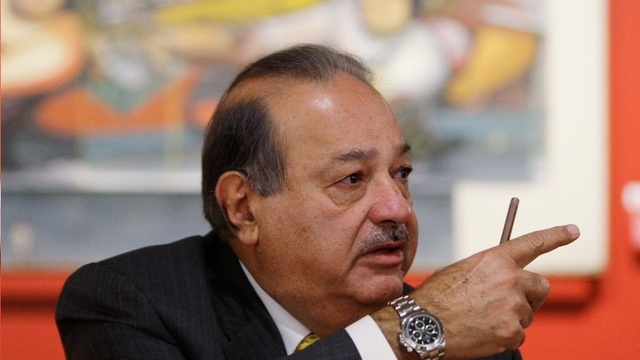
In this context rising poverty levels merely emphasize the widespread inequality of wealth in Mexico, which is home to the world’s richest man, Carlos Slim. According to Coneval the poorest states are those in the rural south: Chiapas, Guerrero, Oaxaca and Puebla. Mexico’s agricultural industry is one of the poorest sectors, with less than half of workers earning above the minimum wage.
Facing criticism from social development and human rights groups for failing to prioritize poverty reduction, the government has attributed the rise to the global recession and a worldwide increase in food prices.
“This government like no other has sought to give opportunity to the poor,” President Felipe Calderon said in response to the report. Yet the latest figures do little to support his statement. Using a different, income-based methodology, Mexican newspaper La Jornada reports an additional 13 million people fell into poverty during the first four years of the Calderon administration.
Although Mexico may be considered poor compared to the United States, it is the third wealthiest country in Latin America, according to another report published last month. Fundacion Ethos, a nonprofit think tank based in Mexico City, has produced a multidimensional poverty index ranking the countries of Latin America in terms of “household poverty” (income, health, access to clean water) and “environmental poverty” (security, democracy, gender equality). Mexico comes third behind Chile and Brazil as the least poor countries in the region.
In the Ethos Poverty Index, Mexico scores better in terms of household poverty than in environmental poverty. With regard to the latter, Liliana Alvarado Baena, director of Ethos Fundacion’s international poverty observatory, said “strengthening democracy and institutions, as well as overcoming the problems associated with violence and insecurity, would help reduce poverty more effectively.”
The Ethos report also urges Mexico “to promote adult education and school attendance of children aged between 7 and 15. Improving education is not only an imperative of welfare itself but also a mechanism to raise the income levels of the population.”
While Alvarado agreed that the financial crisis and rising food prices contributed to the increase in poverty, she maintained that “it is essential to have a profound reflection on the efficiency of policies to fight poverty because it is unacceptable that the growing number of poor depend, almost entirely on external factors or macroeconomics.” The government, she said, “should integrate new mechanisms that reduce the vulnerability of the poor from these shocks, such as policies to generate income and savings.”
Others have argued that the cause of increased poverty in Mexico is the country’s antiquated labor laws, which are said to discourage greater investment in the country. Senator Manlio Fabio Beltrones of the Institutional Revolutionary Party (PRI) said the labor reforms currently being debated in Congress are indispensable to achieving sustained growth rates and combating the widespread poverty and inequality in Mexico.
While different parties and organizations favor different solutions, there is at least some agreement across the political spectrum that a country with such wealth and economic potential should not be abandoning half of its citizens to suffer in poverty.
And a week later I wrote this follow-up piece on the local situation:
Poverty creeps up in Jalisco, despite denials
Proud Jaliscienses and the state tourist board like to boast that “Jalisco is Mexico.” The home of tequila, mariachi music and traditional charro horseriders, this state is said to be the perfect encapsulation of the nation’s cultural heritage. But there’s also another long-standing tradition to be found here that the state’s leaders are less keen to brag about: poverty.
Currently enduring record levels of unemployment, Jalisco is home to 43,000 people living in extreme poverty. Only in Veracruz and the Estado de Mexico are there more people living in such conditions, although as these are the country’s three most populous states the figures are broadly in line with national averages.
A recent study by Coneval, the National Council for the Evaluation of Social Development Policy, reveals the number of poor people in Jalisco rose by 71,000 from 2008 to 2010. The report says there are now 2.7 million people living in either extreme or moderate poverty in Jalisco, equivalent to 36.5 percent of the state’s population.
Senior government officials moved quickly to dismiss the importance of the Coneval report. “A constant effort over the last 15 years has enabled a reduction in extreme marginalization,” said Government Secretary General Fernando Guzman Perez Pelaez, who also claimed that “other studies” confirm Jalisco to be one of the states with the most employment. Yet in June unemployment in Jalisco rose to a record high of 5.8 percent, with 784,000 citizens left without full-time work.
However, Felipe Vicencio Alvarez of the Ministry of Social Development in Jalisco admitted that poverty levels have risen but said progress has been made in improving education, health services and basic housing requirements..
The worst afflicted areas in Jalisco are the northern town of Mezquitic in Bolaños and the southern coastal municipalities of Cuautitlan and Villa Purificacion. In Guadalajara, the poorest neighborhoods are Lomas de Tabachines, Balcones de la Cantera and Arroyo Hondo, all in the northern municipality of Zapopan.
Senator Ramiro Hernandez Garcia of the Institutional Revolutionary Party (PRI), one of the front runners to be the next state governor, has called for a new form of governing that considers the needs of the poor and not just the well-being of a small minority. He argues that government policy should prioritize job creation and better wages, and work toward the creation of a social security network for the unemployed.