
El Chololo is probably the most popular and best known birrieria in Jalisco.
The western Mexican state of Jalisco lost one of its most beloved culinary figures this month when Javier Torres Ruiz, better known as “El Chololo,” died of a heart attack at the age of 74.
Torres, who dedicated his life to making birria, a goat or mutton stew considered one of Jalisco’s most emblematic dishes, ran two restaurants, both called El Chololo, that are often recognised as the best birrierias in the state.
His death on February 16 provoked an outpouring of public grief, with both restaurants shutting down for three days of mourning. “All our clients were really sad. Many expressed their condolences and there were some who cried. People really cared for him,” Torres’ niece, María Josefina Caminos Torres, told me days later.

Hugo Caminos with his late uncle Javier Torres Ruiz, better known as “El Chololo”.
Having served many Mexican officials over the years, Torres was also mourned in political circles. A host of politicians, including the Jalisco governor and the mayor of Guadalajara, the state capital, all tweeted their condolences to his family.
“He used to help a lot of people. If one of his regular clients lost a close family member, he would often help pay for the funeral,” noted his nephew, Hugo Israel Caminos Torres. “He also helped a lot of local merchants through a local labor union and he served two or three times as a municipal councilor.”
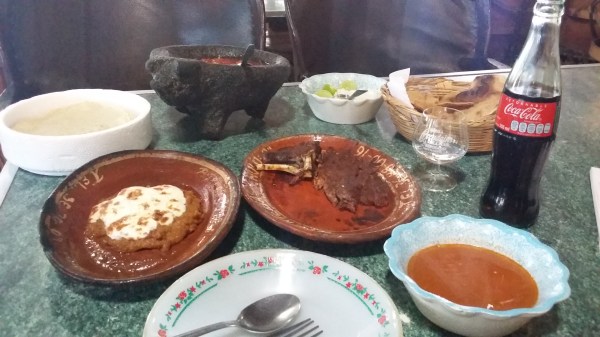
Birria is served with consommé, frijoles topped with cheese and fresh, handmade corn tortillas.
Discussing his uncle’s legacy at the older El Chololo branch in Guadalajara’s working-class Tlaquepaque district, Caminos told me the closely guarded family recipe dates back approximately 100 years…
Meet the up-and-coming narcos who could be worse than El Chapo

The shrine to Malverde, the patron saint of outlaws and drug traffickers, draws visitors who leave donations in the hope that their prayers for protection be answered.
There was a time, the story goes, when if a local collided with a drug trafficker’s car on the streets of Culiacán — a bastion of the infamous Sinaloa cartel — the narco was likely to hop out to check that everything was ok.
“They’d say: ‘If you have any problems call this doctor and I’ll pay,'” says journalist Javier Valdez, who specializes in delving into the entrails of drug trafficking culture in Sinaloa. “Not anymore. Now they’ll get out of the car with a pistol. Not only will they not pay you; they’ll beat you, threaten you, or kill you.”
Such tales of shifting mafia etiquette are part of the legend of the underworld in Sinaloa but, close observers like Valdez say, there is also truth to the idea that the newer generations rising up within the Sinaloa drug trafficking scene are more violent and impulsive. And none more so than the one emerging to take control right now.

Some of Sinaloa’s most notorious kingpins are buried at the Jardines de Humaya cemetery in lavish, air-conditioned mausoleums bigger than many people’s houses.
Many in Sinaloa today fear that the recapture in January of Joaquín “El Chapo” Guzmán, the Sinaloa cartel’s highest profile leader and one of the last of its so-called elder statesmen, could accelerate this transition to rule by the so-called narcojuniors.
Few in Culiacán dispute Chapo’s status as a ruthless and bloodthirsty operator, but many credit his generation of Sinaloa traffickers with ensuring the cartel is still considered less wholeheartedly exploitative and sadistic than some other Mexican groups, such as the Knights Templar or the Zetas. While the point is often overstated, the Sinaloa cartel leadership has traditionally limited the expansion of side-rackets, such as extortion and kidnapping, at least on its home turf…
Meet the Mexican chef who’s been cooking for Pope Francis all week
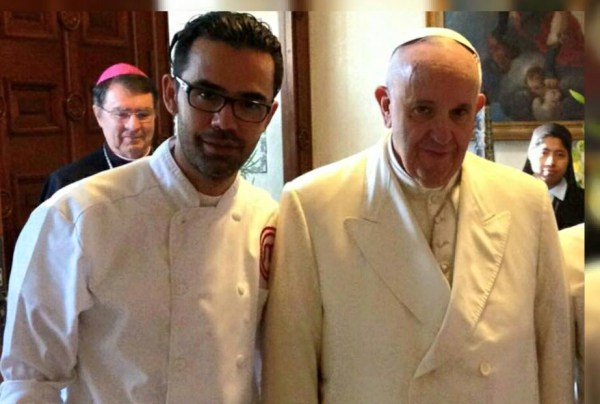
Joe Ibarra prepared Pope Francis’ meals throughout his time in Mexico.
It’s not every day that the Pope walks into your kitchen to congratulate you on your cooking, but that’s precisely what happened to Mexican chef Joe Ibarra this week.
Ibarra, who ordinarily runs Mexico City’s Brazilian steak restaurant Don Sazón, had been asked to prepare the pontiff’s meals at the Vatican’s diplomatic headquarters throughout his stay in Mexico.
“He thanked us this morning and told us that everything had been delicious and that he was very satisfied,” Ibarra told me over the phone on Pope Francis’ fifth and final day in Mexico.“He’s a very warm, humble person who’s very close to the people.”
Ibarra and his team of five chefs served up a mix of Mexican, Italian, and Argentine fare that drew a positive response from the Catholic Church’s first-ever Latin American leader.

Joe Ibarra posing with the Popemobil at the Vatican embassy in Mexico City.
“Last night for dessert, we served up Argentine alfajores and he went crazy for them. He absolutely loved them!” Ibarra said. “He even took home two or three loaves of a Mexican wholemeal artesanal bread that we baked for him.”
 The Tequila Files