¿Plomo o plata? Silver or lead? This is the dreaded question traditionally posed by drug cartels in a bid to coerce civilians and officials. The choice is simple: accept a payoff in return for bowing to the criminals’ demands; or refuse the offer and earn a bullet in the head.
This is the dilemma facing an increasing number of journalists in Mexico. Only now it appears the question is being posed not only by drug gangs, but also the Mexican government, which seems to have adopted a two-pronged strategy of bribery and intimidation.
The first 12 months of President Enrique Peña Nieto’s six-year term were the most violent for reporters since 2007, according to a new report by press-freedom watchdog Article 19. Moreover, public officials were allegedly responsible for 60 percent of the 330 documented acts of aggression against journalists and media outlets in Mexico in 2013.
The most dangerous area is the Gulf coast state of Veracruz, governed by Peña Nieto’s Institutional Revolutionary Party (PRI). Ten journalists have been murdered in Veracruz on the watch of Governor Javier Duarte since the start of 2011.
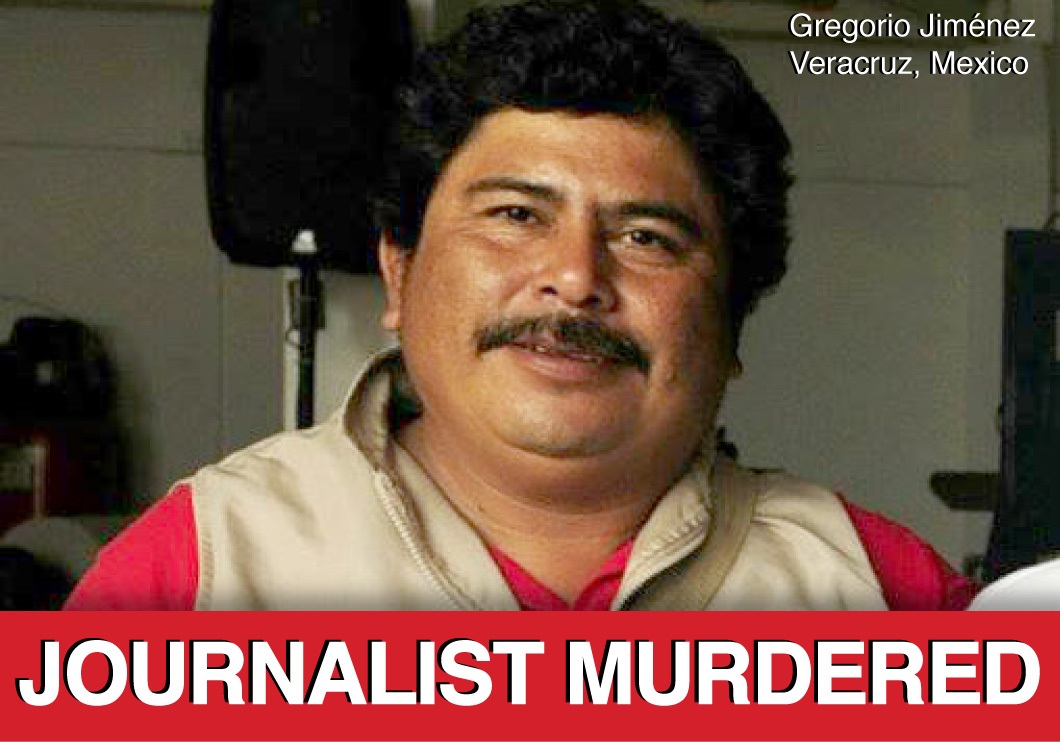
The latest case was that of Gregorio Jimenez, a crime reporter for the Notisur and El Liberal newspapers, who was kidnapped on February 5. His body was found six days later, buried in a clandestine grave beside the corpse of Ernesto Ruiz Guillen, a union leader who had also been kidnapped in January.
Days before his death, Jimenez had written several articles about the union leader’s disappearance and the fact that the authorities had done little to investigate. Yet the Veracruz Attorney General’s Office quickly concluded that Jimenez had been killed not because of his work, but because of a personal dispute with a local bar owner.
The Mexican government has several agencies ostensibly dedicated to protecting journalists and human rights advocates, such as the Special Prosecutor’s Office for Crimes Against Freedom of Expression. However, in eight years of existence, that office has failed to secure a single conviction, despite receiving an annual budget of over 30 million pesos (US$2.2 million), according to Dario Ramirez, Article 19’s director for Mexico and Central America.
Although 2013 was a particularly violent year for many Mexican journalists, it proved a very lucrative period for others. Records published by the federal government last month reveal that the PRI paid out tens of millions of pesos last year to dozens of reporters and TV and radio personalities – presumably in return for favorable coverage.
For example, the presenters of Televisa’s political and economic chat show Tercer Grado received a total of 9.12 million pesos (US$689,000), with prominent participants Carlos Loret de Mola and Joaquin Lopez-Doriga each receiving over 2,078,000 pesos (US$157,000).
The PRI used to strictly censor the press when it first ruled Mexico from 1939 until 2000, but this would be near impossible today given the greater plurality of media and the growth of social media. So instead it seems the government strategy is simply to buy good publicity.

Further evidence of this was unearthed shortly after Peña Nieto appeared on the front cover of TIME magazine in February, under the title “Saving Mexico.” The headline caused controversy in Mexico, where Peña Nieto has proven a divisive figure, and suspicions that he had paid for the publicity appeared to be confirmed by a government report which showed that the PRI paid Time Warner 576,000 pesos (US$43,000) in two instalments in October 2013. The report did not specify what the payments were for and TIME has not responded to the allegations, but how else could such payments be explained?
The coercion of Mexican journalists is deeply troubling as it undermines their ability to play a watchdog role and enhances the level of impunity presently enjoyed by corrupt officials and members of organized crime. While the government may not be posing the silver or lead question as explicitly or directly as the drug cartels do, it seems clear that reporters who tow the PRI line stand to profit, while dissenting voices can expect to be crushed.
Bus crash leaves 1 student dead, 21 injured

A reckless bus driver killed a local high school student and injured another 21 on Friday afternoon, thus reigniting the furor over public transport safety in Guadalajara.
The number 368 bus was speeding along the northern Periferico beltway – and reportedly racing a minibus – just before 3 p.m. when it slammed into a bus stop where students from the Preparatoria 10 high school were waiting. The driver, Leopoldo Martin Soberano Castro, 53, was sober at the time, assured Hernan Guizar Maldonado, the director of public safety in Zapopan.
“He says two students tried to cross the street in an untimely manner. When he saw them he turned the wheel and unfortunately that’s when he rammed the bus stop,” Guizar said.
But having failed to even brake, the driver then reversed – causing further injury to some of the victims – and tried to escape the scene of the crime. A mob of enraged students chased him 100 meters down the road and smashed one of the bus windows before Zapopan police arrived to arrest him and prevent a lynching.
Eighteen-year-old Maria Fernanda Vazquez Vazquez died at a local hospital that evening, while 21 others were injured, several of them gravely so. Soberano is now being held in Jalisco’s maximum security Puente Grande prison. He faces murder charges and a possible sentence of 25 to 50 years.
The parents of Vazquez Vazquez will be entitled to 336,450 pesos (US$25,000) in compensation while the State Council for the Victims of Public Transport will provide 12,500 pesos (US$945) to cover the funeral costs.
This tragic incident put the spotlight back on the appalling safety record of public transport in the Guadalajara metropolitan area. Fourteen people have now been killed in the city by public transport in 2014, an average of one victim every four days, while 60 have been injured. Another 49 people were killed by bus drivers in Guadalajara in 2013, while 1,144 have been killed in the city in the last 18 years, according to Pedro Mellado, a reporter for local newspaper Mural.
This appalling record has led to a rise in vigilantism against bus drivers in recent years. Eight bus drivers were murdered in two waves of violence in February and October 2012, in apparent revenge for the death of pedestrians hit by buses. Another bus driver, Marcos Gutierrez Muñoz, 40, was shot dead on Friday in Guadalajara’s General Real neighborhood, but this was an unrelated killing that occurred hours before the students were hit.
The public University of Guadalajara, which runs the Preparatoria 10, cancelled classes and organized a large-scale demonstration on Monday. Some 400 students, reportedly accompanied by anarchist groups, marched through Guadalajara to the municipal palace, where they clashed with police. Nine demonstrators were arrested, while three police officers were reportedly injured.
In response to the initial public outrage, the Jalisco government announced on Sunday that it had reversed a recent hike in bus fares, with the price dropping back from seven to six pesos, effective immediately. Yet this will come as scant consolation for those affected by dangerous driving, who have long demanded better, safer service from local public transport.
Business as usual for Mexico’s drug trade
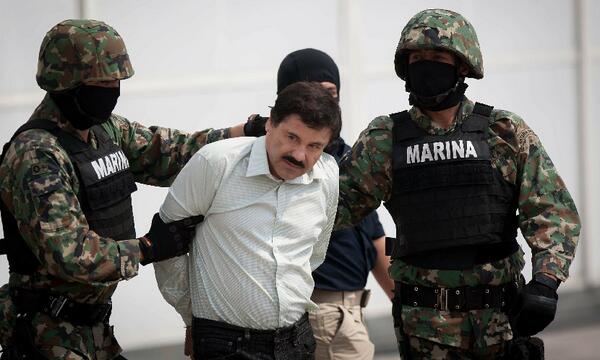
He had escaped prison, made billions of dollars and oversaw one of the bloodiest periods in Mexico’s history, but his reign finally came to an end on February 22 when masked marines frogmarched the short, scowling Guzman before the media and then whisked him off for interrogation. Now he is behind bars once again.
As the net tightened around him, Guzman fled into the sewers via an elaborate network of tunnels that linked seven safe houses in Culiacan, the capital of Sinaloa state. He then drove south to a seafront condominium in the Pacific Ocean resort town of Mazatlan, where he was caught napping in an early-morning raid.
Visit Al Jazeera to read this feature in full.
 The Tequila Files