Dead or alive? Mexico’s immortal drug lords
I’ve just had a piece published at a new media outlet called Vocativ on the rumors surrounding the deaths of several prominent Mexican drug kingpins.
These include Nazario Moreno Gonzalez of the Familia Michoacana, Ignacio “Nacho” Coronel of the Sinaloa Federation and Amado Carrillo Fuentes, also known as “The Lord of the Skies,” of the Juarez Cartel.
Such is the lack of transparency in Mexico it is almost impossible to verify such rumors, but the very fact that many people do believe in them just goes to show how little they trust the government here. Click here to read the feature.
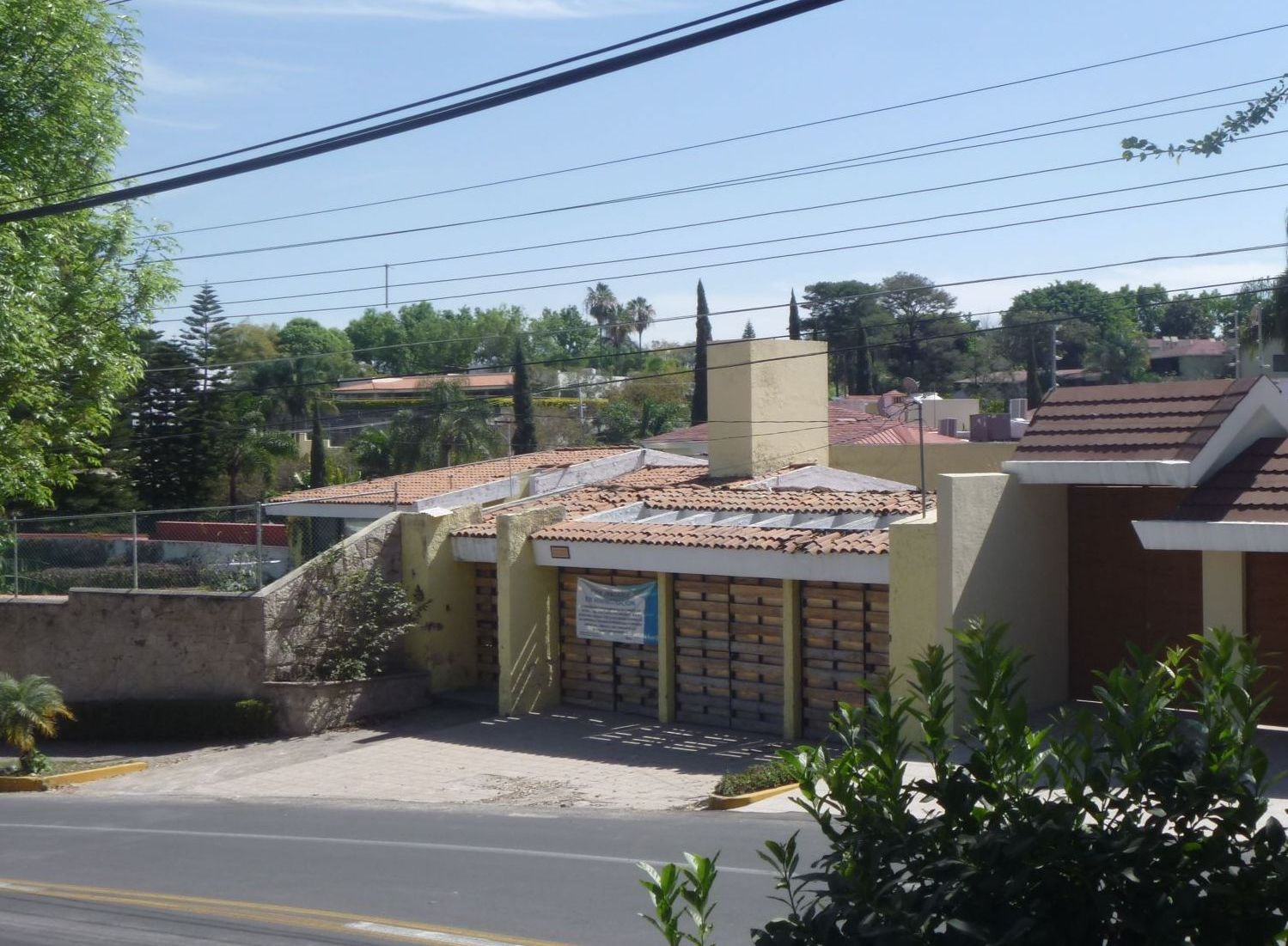
While I was researching this piece I went to check out the home where “Nacho” Coronel used to live – and where he is said to have died – in Zapopan’s upscale Colimas de San Javier neighborhood.

During the raid on his home the army reportedly discovered a laptop with the names, telephone numbers and addresses of all the police officers on Coronel’s payroll, including over 25 municipal police chiefs across the state of Jalisco, and, allegedly, Luis Carlos Najera, who now leads the fight against crime as the Jalisco Prosecutor General. If people do not trust the authorities in Mexico it is with good reason.
‘Over 500’ bodies unearthed in mass graves in Coahuila
Mexican authorities have reportedly uncovered the remains of at least 500 people buried in mass graves in the northern state of Coahuila in the last ten days.
The bodies were dumped in graves across 11 different municipalities, local newspaper El Siglo de Torreon reported on Saturday.
Most of the corpses are largely intact but some have been burned and others partially dissolved in barrels, presumably filled with acid, according to Juan Jose Yañez Arreola, the head of the Coahuila attorney general’s department dedicated to searching for missing persons. It will take up to four months for forensic experts to determine the total number of victims, Yañez reportedly said.
The bodies were found in the municipalities of Zaragoza, Allende, Acuña, Piedras Negras, Guerrero, Monclova, Morelos, Jimenez, Hidalgo, Villa Union and Nava. Over 250 state and federal agents equipped with dogs, helicopters and specialized radars have been scouring the state in search of bodies since late January.
At least 1,600 people are presently reported missing in Coahuila, according to the state attorney general’s office. If the figure of 500-plus bodies is confirmed, the mass graves would represent by far the largest uncovered during Mexico’s war on drugs, which has claimed around 100,000 victims over the past seven years.
The worst discovery until now was that of 193 bodies in San Fernando, Tamaulipas in 2011. More recently, at least 67 corpses were exhumed in La Barca, Jalisco late last year.
Alfredo Corchado on ‘Midnight in Mexico’
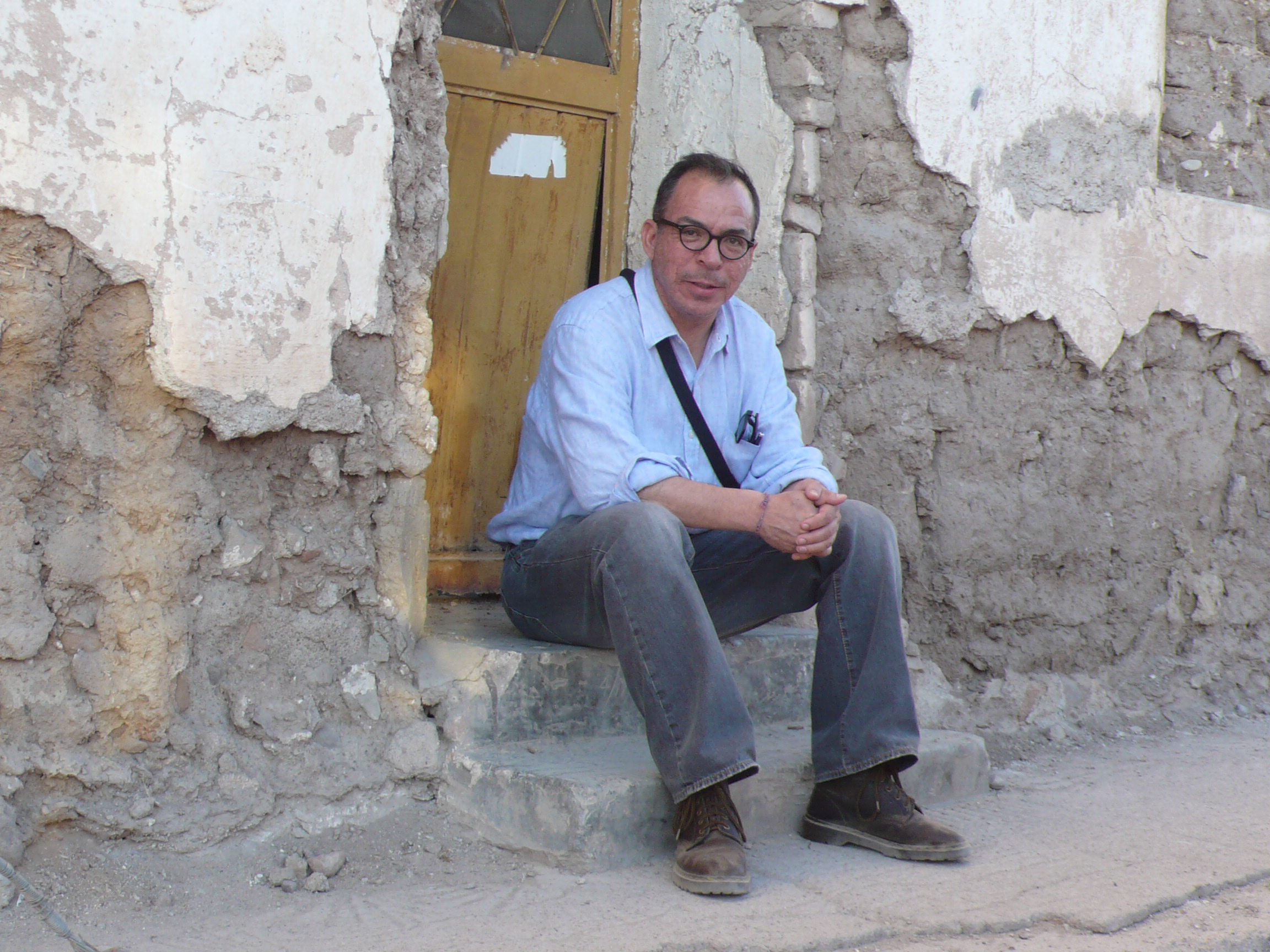
It does document the pain and suffering of the victims, the corruption in government and the dangers that journalists face when covering such issues, but it is primarily a very personal account of a Mexican-American reporter’s search for identity.
The eldest of nine children, Alfredo Corchado was born in the dusty town of San Luis de Cordero in Durango. After his father found work in the United States through the Bracero program, his family soon moved to California in search of a better life, and eventually settled in El Paso, Texas.
Corchado later returned to his homeland as a journalist, eventually becoming the Mexico bureau chief at the Dallas Morning News, and in 2000 he became the first reporter to interview President-elect Vicente Fox, the nation’s first leader in the democratic, post-Institutional Revolutionary Party (PRI) era.
But as the war began to rage between the state and the increasingly powerful drug cartels, Corchado was warned by a senior government official that Mexico was “no longer his country.” His book delves into existentialism as he ponders the meaning of Mexican-American identity and the plight of an enormous demographic often deemed too American to be Mexican and vice versa.
“Sometimes you feel like a man in two nations at one of the most tumultuous times and you’re trying to figure out where do you belong?” Corchado tells the Reporter. “I think there are so many people like me who struggle with that question … one of the conclusions I came up with was that you really don’t have to choose anymore. Our lives are so entwined that it’s difficult to say – especially for someone who was born in Mexico, lived in the U.S. and has gone back and forth.”
“Midnight in Mexico” takes off when a death threat is issued against Corchado and he desperately questions a wide range of contacts to find out who has put a price on his head. His own descent into darkness takes him from Mexico City back to his hometown in Durango, via the Riviera Nayarit and Ciudad Juarez, then Mexico’s murder capital.
Corchado’s ordeal climaxed last July, within weeks of the book’s release, with the arrest of Los Zetas kingpin Miguel Treviño Morales – the man responsible for the threats against him. Tipped off by a trusted source within the U.S. intelligence community, Corchado was the first reporter to break the story.
As he raced to confirm the news, Corchado realised there was more than just his journalistic reputation at stake. Powerful kingpins have been known to pay their way out of custody in Mexico and until he could get the story published there remained a chance that Treviño could still escape.
“If I hadn’t got that story out could he have been released? That was certainly one of the thoughts in my mind,” Corchado says. “I was calling other sources just to verify that information but I was always racing up against the clock, thinking the whole time ‘this guy might buy his way out.’ I actually wrote the first two or three paragraphs that went on the wire on my Blackberry on the way from Polanco to Condesa because there was a sense of urgency to get it out.
“After I pressed the button ‘send’ there was a momentary sense of relief, I would even say tears, I was so emotional. Then later when it hit me that ‘yes this guy could be in jail but he’s got a lot of allies, relatives and friends,’ there was also a sense of ‘what if your story was the reason why this guy went to jail?’ so there was also a sense of dread. But certainly there was a sense that that weight I’d been carrying for so many years had been lifted.”
Having brought Corchado’s story to a natural conclusion, that episode was included in the Spanish-language version on sale in Mexico and the U.S. and will also feature as the final chapter in the English paperback edition due out in May.
Full of tense moments and insightful commentary, “Midnight in Mexico” has all the makings of a gripping and thoughtful thriller. The rights to a film version were sold in December to Canana, the production company founded by producer Pablo Cruz alongside Mexico’s most famous movie stars, Diego Luna and Gael Garcia Bernal.
“They reached out about the book before it had even come out last May and I guess what impressed me about them is that they didn’t see it as a narco book, although that’s obviously the backdrop, they saw the heart and soul of the book as the whole identity question,” Corchado says. “Their goal is to try to make a movie from the United States that will become a universal story that you can sell anywhere, whether it’s Mexico, the United States or beyond.”
Asked which actor he would like to play himself, Corchado laughs, “I think the Mexican press at one point were saying ‘Diego Luna would be great’ and my response to that was ‘Diego Luna is way too young and way too good looking!’”
The overwhelmingly positive reaction to “Midnight in Mexico” on both sides of the border has come as a surprise, Corchado admits. Having seen the Dallas Morning News’ Mexico bureau shrink from the biggest of any American newspaper to a one-man operation, he had begun to wonder if Americans had lost interest in their southern neighbors.
“But I think the book has really opened my eyes, the reaction has been so incredible,” Corchado tells the Reporter. “Every event I’ve done – and it’s been over 100 talks in 60 cities last year – and every city has just taught me that there’s a lot of appetite, there’s a lot of hunger, people just want that much more knowledge about Mexico. And it’s not just retirees who want to move down to Guadalajara and Chapala, it’s people who are genuinely concerned about the situation because you have another Mexico growing in the United States as well.
“And in Mexico I’ve been presently surprised because, since I was born in Mexico and raised in the United States I was always concerned about the backlash – ‘Who are you? The traitor? Who are you to come back and write a story about us?’ – and it’s actually been very humbling because up until now it’s been a great reaction from my compatriots.”
Corchado’s promotional duties led him to Guadalajara’s vast International Book Fair (FIL) last December. “The FIL was incredible,” he marvels. “I’d been to other book festivals in the United States but nothing compared to Guadalajara.”
Having also held promotional events with expatriates in the Guanajuato and Mexico City areas, Corchado hopes to do the same in the Guadalajara and Chapala areas in the coming weeks or months.
In the meantime, he is happy settle back into his day job. “Believe it or not I really, really miss journalism,” Corchado says. “The movie’s going to take a while so in the meantime I’m trying to focus on journalism and trying to come up with an idea for book number two.”
Since the election of Enrique Peña Nieto in 2012, Corchado says he has noticed a slight but perhaps superficial reduction in the levels of drug-related violence in the north of Mexico.
“I’ve been covering Tamaulipas and Chihuahua over the last few years and it certainly feels like the level of violence has dropped in those areas. I think Juarez has had a dramatic turnaround, but even then you still feel like you’re walking on eggshells and that you suddenly feel like it’s quicksand, that whatever’s sustaining Mexico right now isn’t very firm, and that’s because of the conviction rate and the rule of law.”
The current situation in Michoacan, where vigilante groups are doing battle with the Knights Templar cartel, is a clear illustration that Mexico still faces significant problems, Corchado notes: “I think Michoacan is really a slap in the face to the Peña Nieto administration and to everyone who thinks this is Mexico’s moment. It’s a reminder that there’s a lot of things that are left to be done. I mean we do have entire communities who say ‘enough, we’re going to protect ourselves because the government can’t do it or won’t do it’ and that’s a real serious problem.”
 The Tequila Files