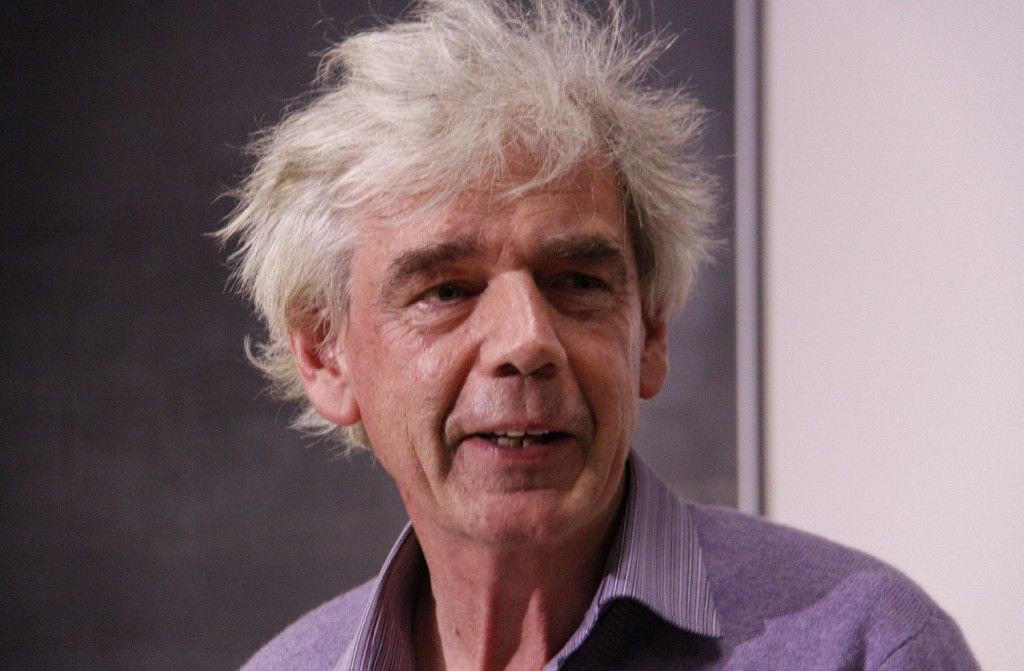
While researching my recent feature for Al Jazeera on the twentieth anniversary of the Zapatista uprising, I spoke to John Holloway, a sociology professor at the Autonomous University of Puebla.
The author of books such as Zapatista! Reinventing Revolution in Mexico and the highly acclaimed Change the World Without Taking Power, Holloway has studied the Zapatistas closely over the years. Due to the strict word limit I was only able to use a few short quotes from our interview in the feature, so I’ve decided to publish the entire manuscript here:
Twenty years on from the initial uprising, has the Zapatista movement transcended its immediate environment and become a global symbol that there is another way of doing things?
Oh absolutely. The impact of the uprising has been just amazing in global terms. Throughout the world in the last 20 years there’s been a complete rethinking of what radical left-wing organization and action means, and they’ve been at the center of that the whole time because they really articulate things so well, so much more clearly than any other movement.
Do you think they’ve been a strong influence on contemporary movements like Occupy?
Yes, on Occupy and on all of these movements – on Occupy throughout Europe and the United States, the Indignados in Spain, and the movement in Greece as well. The presence of pro-Zapatista groups has been very important in Greece for example.
What is it about them that people seem to identify with?
I think it’s partly the moment. What they do is catch a moment in left-wing thought throughout the world. It’s really become clear — especially after the fall of the Soviet Union, the turn in China and the collapse of so many revolutionary movements — that the old, twentieth-century model of revolution by building up the party and capturing control of the state just didn’t work. But obviously there’s still a huge amount of discontent throughout the world; a huge amount of thinking about the way society could be, about the possibility of creating a completely different society.
I think what they did was to work through all that and start in a way from the failure of the Central American movement. To think that through and articulate the idea of a movement that aims to change the world radically without passing through into power. And they’ve just been enormously successful in doing that, without building direct links with other movements they’ve become a source of inspiration.
Do you think the Zapatista system of participatory democracy could work as a more effective model than the supposedly representative democracies found in most of the western world?
Yes, I think people are pushing for this in all sorts of places around the world. That’s what the Occupy movement is about, developing some sort of direct democracy, because the system of representative democracy clearly doesn’t work at all. It doesn’t work as a way of articulating what people want and I think we’ve seen a growing disillusion with representative democracy, which has expressed itself in all of these movements that have evolved in the last few years. And there’s been an amazing turn away from political parties and the parties of the left.
But how would it work in the city? There are lots of things we don’t know. It’s really a case of experimenting and trying to work this out and I think that’s what groups have been doing. How do you get an assembly system to work in a big city? I think we don’t have the experiences – we do have experiences in particular moments I suppose, like those of the laborer assemblies in the cities of Argentina in 2001 to 2002, and the Bolivian assemblies from 2000 to 2005. These are the experiences to really build upon and that’s what people are trying to do.
Have you spent much time in the Zapatistas’ autonomous communities in Chiapas? Tell us about your experiences there.
I haven’t spent a lot of time there but two or three years ago I went with a group of people to Oventic where we had a week’s discussion with young Zapatistas who had grown up since the uprising and were aged between 16 and 21 years. They were so amazingly open and so willing to talk about all sorts of things. I was enormously impressed by their conviction and their sense of fun. It left me with the feeling that there is a depth of experience that just won’t disappear from those people. Even if the Mexican government was to send in the army tomorrow that depth of experience can’t be wiped out.
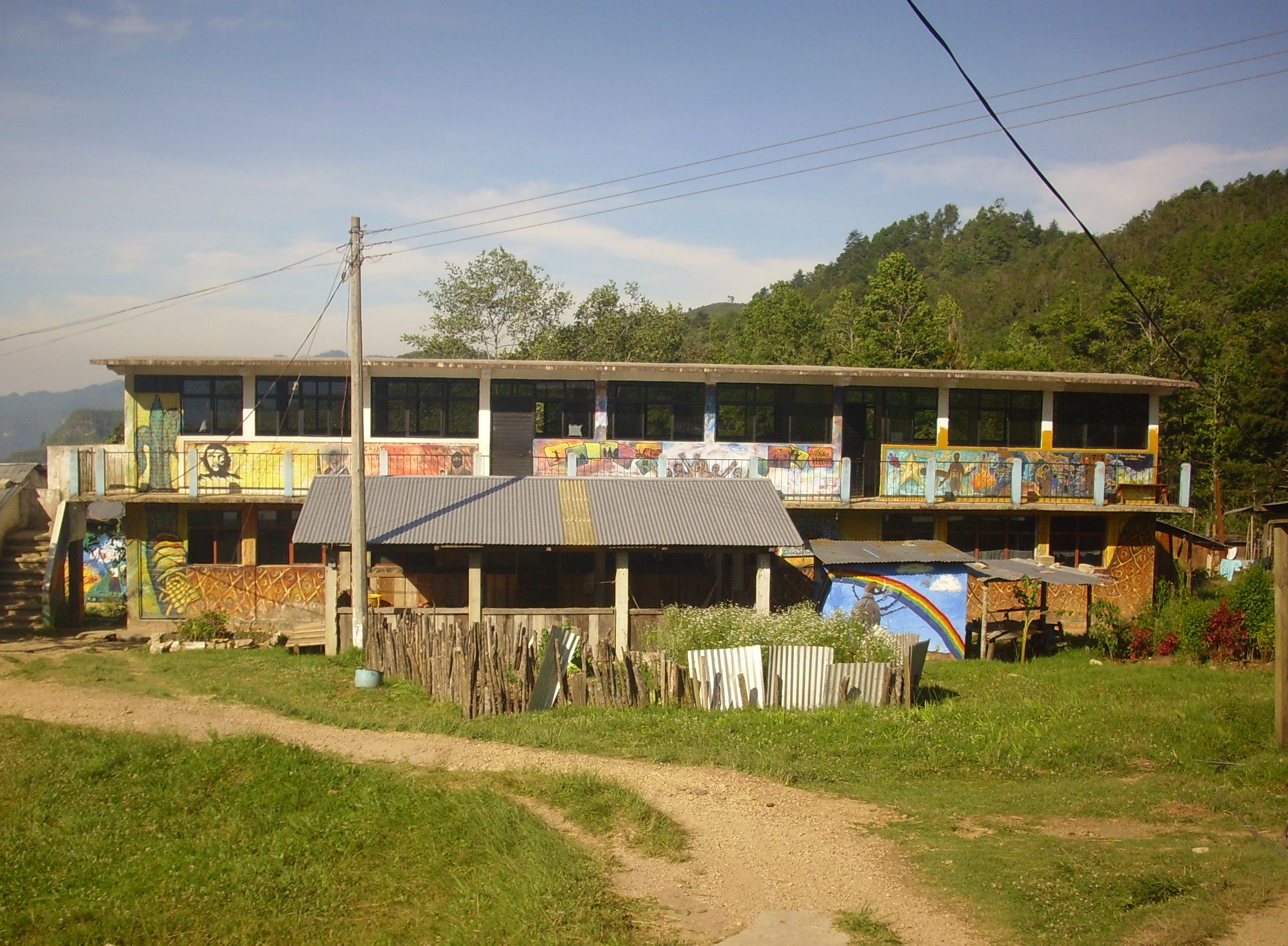
Did you attend la escuelita in the summer?
No, I wanted to but I wasn’t able to because of other commitments. I hope to go in January but I’m not quite sure yet. But a number of my friends went to the escuelita and they came back just enormously impressed. We organized a seminar just afterwards and 18 people came along, a lot of them on their way back from the escuelita, and then we did a series of four seminars to discuss the texts from the escuelita.
The amazing thing about the Zapatistas is that they keep on surprising us. They tend to flare up like a flame and then things die down and you begin to wonder “Well what have they been up to? Are they losing force?” and then there’s another flare-up in a completely different form. The escuelita just seems to be an absolutely amazing initiative, it’s really about opening up to discussions on the problems of how you build another world, what democracy looks like, and what their problems have been, and posing the whole question of the meaning revolutionary action and leftist radicalism in an amazingly fresh sort of way. And as far as I can see there was actually no mention at all of (Subcomandante) Marcos. This is really about the younger generation taking the initiative of the movement.
And all the people who went to the escuelita – which was about 1,500 – each one had their own guide and these guides were basically their teachers for the week that they were there. To have 1,500 peasant men and women prepared for that task of acting as guides for all sorts of people from all over the world, including very distinguished professors, it’s absolutely extraordinary.
You mentioned that they’ve kept a lower profile in recent years, but where do you think the Zapatistas will go from here? Or is it too difficult to even predict what’s going to happen next?
I think so! They’ll always come up with something you’d never have thought of. It’s fairly hard to know but they’re going to carry on with the escuelita of course, with the new generation asserting themselves within the movement.
What are the biggest challenges facing the movement?
I think the biggest challenge for the Zapatista movement in Chiapas is the constantly resisting military harassment, but also dealing with the economic crisis and the pressures that push peasants from all over Mexico into migrating to the cities. How do you deal with that? How do you maintain the movement? Those are the challenges that spring to mind.
Finally, why do the Zapatistas still matter?
We’re in a position of terrible crisis in the world. You just have to look at Mexico to see the growing horrors. I’ve been living here for 23 years and the changes that have taken place in that time – the level of violence, the rise of the narcos – it just makes it more and more obvious that we have to find some way out and develop a different kind of politics.
Are Mexico’s Zapatista rebels still relevant?
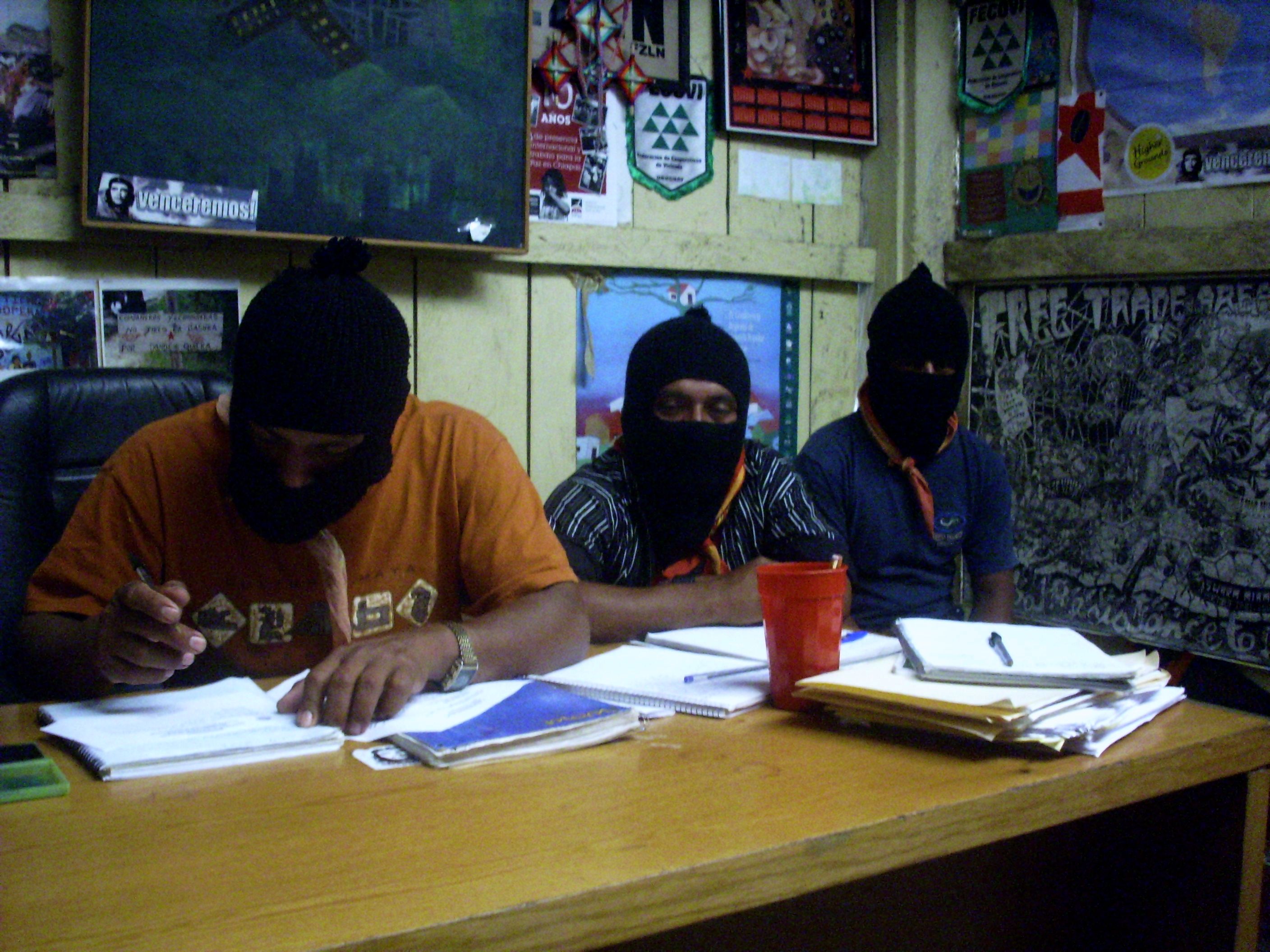
January 1, 2014 marks exactly 20 years since the Zapatista rebels rose up in arms and drew the world’s attention to the plight of Mexico’s impoverished indigenous population.
A rag-tag army of masked Mayan farmers named after Emiliano Zapata, a hero of the revolution of 1910, the Zapatistas briefly seized control of several cities in Chiapas, one of Mexico’s poorest and most ethnically indigenous states.
The rebellion was timed to coincide with the launch of the North American Free Trade Agreement (NAFTA), a treaty intended to strengthen Mexico’s economic ties with the U.S. and Canada by eliminating trade tariffs.
The enigmatic Zapatista spokesman known only as Subcomandante Marcos proclaimed NAFTA a “death certificate” for Mexico’s indigenous farmers, for it would force them to compete with a wave of cheap U.S. imports, while under the terms of the agreement the Mexican government had revoked their constitutional right to communal land.
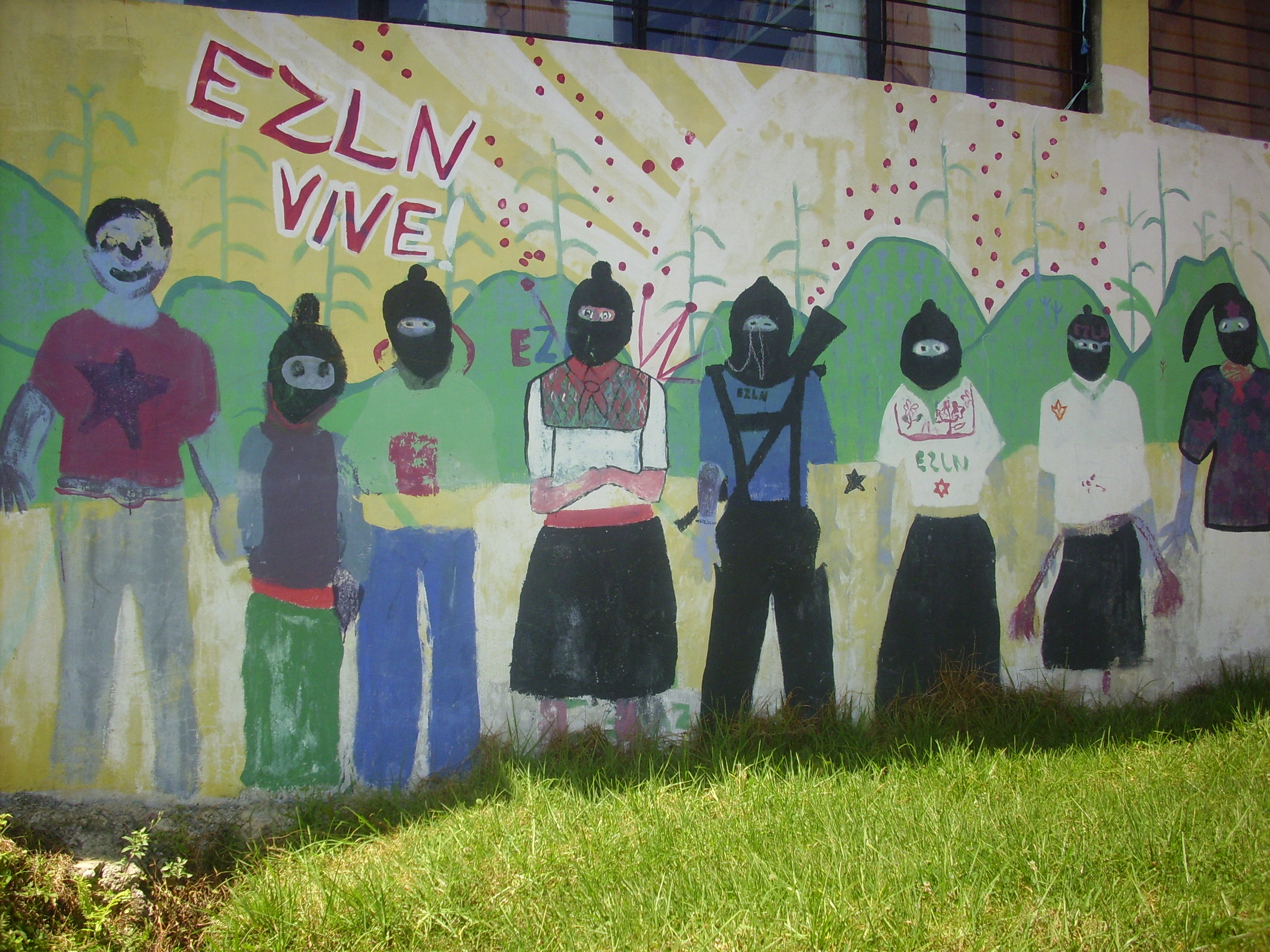
A charismatic figure forever hidden behind his trademark pipe and balaclava, Marcos helped galvanise sufficient support from civil society to fortify the movement, even as the Mexican army forced the Zapatistas back into the jungles and mountains of Chiapas. A peace agreement was signed in 1996, but the Zapatistas later broke off all dialogue with the government after it reneged on the treaty.
Click here to read the feature in full at Al Jazeera.
‘Nacho’ Coronel is still alive, Mexican reporter claims

On July 29, 2010 the Mexican army said that Coronel, a leading figure in the powerful Sinaloa Federation, was shot dead after resisting arrest during a raid on his home in an upmarket suburb of Zapopan.
But the fingerprints of the man killed did not match those of Coronel and doctors placed his biological age at 40 to 45, whereas Coronel would have been 56 at the time of his supposed death, Hernandez revealed in her 2013 book Narcoland, the updated, English-language version of 2010’s best-selling Los Señores del Narco.
The autopsy showed that the fingerprints of the man killed in the raid matched those of one Dagoberto Rodriguez, who was once arrested alongside Coronel in 1993, Hernandez revealed. Furthermore, those who saw the body said it closely resembled photos of Coronel as a young man that had recently been released by Proceso magazine, but “bore little or no resemblance to another photo, also published by Proceso, showing Coronel much older.”
No DNA test of the corpse was ever carried out, while Hernandez reported that “people close to the Coronel family say the drug baron is still alive.”
Known as “El Rey de Cristal,” Coronel was a close ally of Joaquin “El Chapo” Guzman and Ismael “El Mayo” Zambada, the two main leaders of the Sinaloa Federation. He ran the cartel’s operations in the Guadalajara area and was one of the most prominent players in Mexico’s crystal meth industry.
Faking his death would have enabled Coronel to either slip safely into retirement or continue to go about his illicit operations undisturbed. The supposed killing also came at a time when the Felipe Calderon administration had been under pressure to demonstrate that it was not protecting the Sinaloa Federation while attacking its rivals.
Throughout Narcoland, Hernandez makes a forceful case that the Mexican government was doing exactly that throughout the war on organized crime instigated by President Vicente Fox of the National Action Party (PAN) and escalated by his successor Calderon.
Coronel’s death was widely reported in the Mexican and international media, but rumors that he was not killed in the raid have circulated for some time. In 2011 the popular narcocorrido (drug ballad) singer Gerardo Ortiz released “Morir y Existir,” a song about Coronel which features the lyric, “If they announce I don’t exist, they’ve already done me a favor.”
If Coronel did indeed fake his death then he may have been inspired by his former mentor Amado Carrillo Fuentes, a Juarez Cartel kingpin known as “El Señor de Los Cielos” or the “Lord of the Skies,” because of the large fleet of aircraft he used to smuggle drugs into the United States. Carrillo Fuentes is said to have died in mysterious circumstances while undergoing plastic surgery in 1997 ,but many people, including senior officials in the Mexican government at the time, believe that he is still alive, Hernandez reported in Narcoland.
Hernandez also speculated that “El Chapo” Guzman might be the next big capo to follow suit: “Inside his clan some say he is already preparing for retirement, so no one should be surprised if he were to turn up “dead” in some “successful” operation, like his friend Nacho Coronel.”
 The Tequila Files