Juarez Cartel kingpin detained in Nayarit
Carrillo Fuentes, 47, stands accused of drug trafficking, murder and organized crime, and is believed to have succeeded his brothers Vicente and Amado as head of the Nuevo Cartel de Juarez earlier this year. The Juarez Cartel was founded by Amado Carrillo Fuentes, also known as “El Señor de Los Cielos” or “The Lord of the Skies,” because of the large fleet of aircraft he used to smuggle drugs into the United States.
Vicente Carillo Fuentes, alias “El Viceroy,” took control of the cartel in 1997, when Amado died in mysterious circumstances while undergoing plastic surgery. The former is wanted for charges of drug trafficking, murder and organized crime, but reportedly relinquished control of the cartel earlier this year, amid rumors of poor health.
The Nuevo Cartel de Juraez is based in the notorious border town of Ciudad Juarez, a major corridor for trafficking drugs into the United States. Until recently, the city was considered the most murderous on earth as it became the site of a bloody turf war between the Juarez Cartel, backed by Los Zetas, and the Sinaloa Federation headed by Joaquin “El Chapo” Guzman.
The level of violence has subsided in the last two years, although analysts believe this is most likely because the Sinaloa Federation has established hegemony in Juarez, rather than it being the result of the government’s efforts to restore order in the city.
The capture of Carrillo Fuentes is the third major scalp that the Enrique Peña Nieto administration has claimed in recent months, following the arrests of Zetas boss Miguel Angel Treviño in July and Gulf Cartel leader Mario Ramirez Treviño in August.
Upon taking up office last December, Peña Nieto suggested that his government would focus more on reducing levels of violence than bringing down capos. Yet there is little evidence that the present administration has abandoned its predecessor’s “kingpin strategy” and there has been no significant drop in the number of killings across Mexico in the last year.
White House blocked DEA plan to kill ‘El Chapo’

Yet the Drug Enforcement Administration (DEA) knew his whereabouts “on any given day” in recent years and even drew up a plan for his assassination which was eventually rejected by the Barack Obama administration, according to leaked reports from Stratfor, a U.S.-based global intelligence firm.
A series of Stratfor memos published by WikiLeaks in 2012 suggest that the White House refused to sanction the assassination of Guzman, Mexico’s most wanted criminal, under “moral” grounds. The leaked emails, dating from 2007 to 2011, were sent by Fred Burton, Stratfor’s vice president for intelligence and its leading expert on Mexico’s drug war.
Burton suggests that the DEA’s plan to kill Guzman was first formulated under the George Bush administration, which was apparently in favor of the operation.
“If the DEA can specifically locate the Sinaloa boss El Chapo, he will be assassinated,” Burton wrote in November 2007. “A decision memo has been authorized to take him out, as a national security threat.”
However, in February 2010, once Obama had taken up office, Burton wrote, “DEA had a window of opportunity to render El Chapo but the WH [White House] would not let them do it. God forbid we upset our lovely MX neighbors.”
In July 2010, Burton added, “DEA Special Ops submitted a finding to go into MX to whack El Chapo. Obviously, the decision came back as no… DEA’s first mistake was asking permission. Regardless, DEA’s coverage of El Chapo is spot on. On any given day, DEA knows his whereabouts.”
In April 2011, Burton explained the White House’s reluctance to countenance such an operation: “Obama won’t approve a finding for covert action inside MX based on ‘moral ground.’
“One of the scenarios discussed to kill El Chapo or other Zeta HVT’s [high-value targets] was a 1000 yard head shot by a U.S. shooter, to plant the seed of paranoia in the minds of the narcos as to who pulled the trigger,” Burton explained. “CIA ‘Ground Branch’ assets and/or DEA SO [Special Operations] have stated they have the ability and intelligence to pull it off without getting caught.”
Mexico has traditionally been sensitive of U.S. influence and any infringement of its national sovereignty, but as the drug war spiraled out of control and the murder rate rose to unprecedented levels, Burton claimed that, “[Then President] Calderon has told a few that violence has reached a point that he would turn a blind eye to unilateral CIA or DEA actions, if they wanted to go down that path, as long as he has ‘plausible deniability.’”
The notion that Obama blocked the assassination of Guzman for “moral” reasons seems unlikely, as his administration has used unmanned drones to kill thousands of people, including women, children and even U.S. citizens in the Middle East and Africa since 2009. Moreover, the Stratfor memos suggest the DEA or CIA could have killed Guzman with the Mexican government’s blessing and then not claimed responsibility for the operation, leading to suspicion that a rival cartel had been behind the hit.
It is perhaps more likely that the operation was blocked because killing Guzman would have created a power vacuum that would almost certainly have led to an increase in the levels of violence in Mexico, as different factions sought for control of the Sinaloa Federation and rival cartels attempted to move in on their territory.
The purported plan to assassinate Guzman suggests the DEA has long doubted the Mexican government’s commitment and ability to confront the most powerful players in the drug trade, and the DEA’s frustration was evident only last month when it condemned the decision to release Guadalajara Cartel founder Rafael Caro Quintero just 28 years into a 40-year sentence for his role in the abduction, torture and murder of DEA agent Enrique Camarena.
“DEA doesn’t believe Mexico gives a rat’s ass about the drugs flowing into CONUS [the continental U.S.]” Burton wrote in July 2010. “Meaning, what they are selling Obama is hot air. There is no internal desire at the highest levels to really do anything to counter the drug flows into the U.S.”
Despite the serious nature of the topic at hand, Burton also showed a sense of humor in the correspondence, joking, “I offerred (sic) my services to kill [Guzman] for the $25 million bounty,” and then warning the recipient of his emails not to disseminate the news to any Mexican source, “or I will have DEA take you away.”
US citizen spends 21 days living in Guadalajara airport
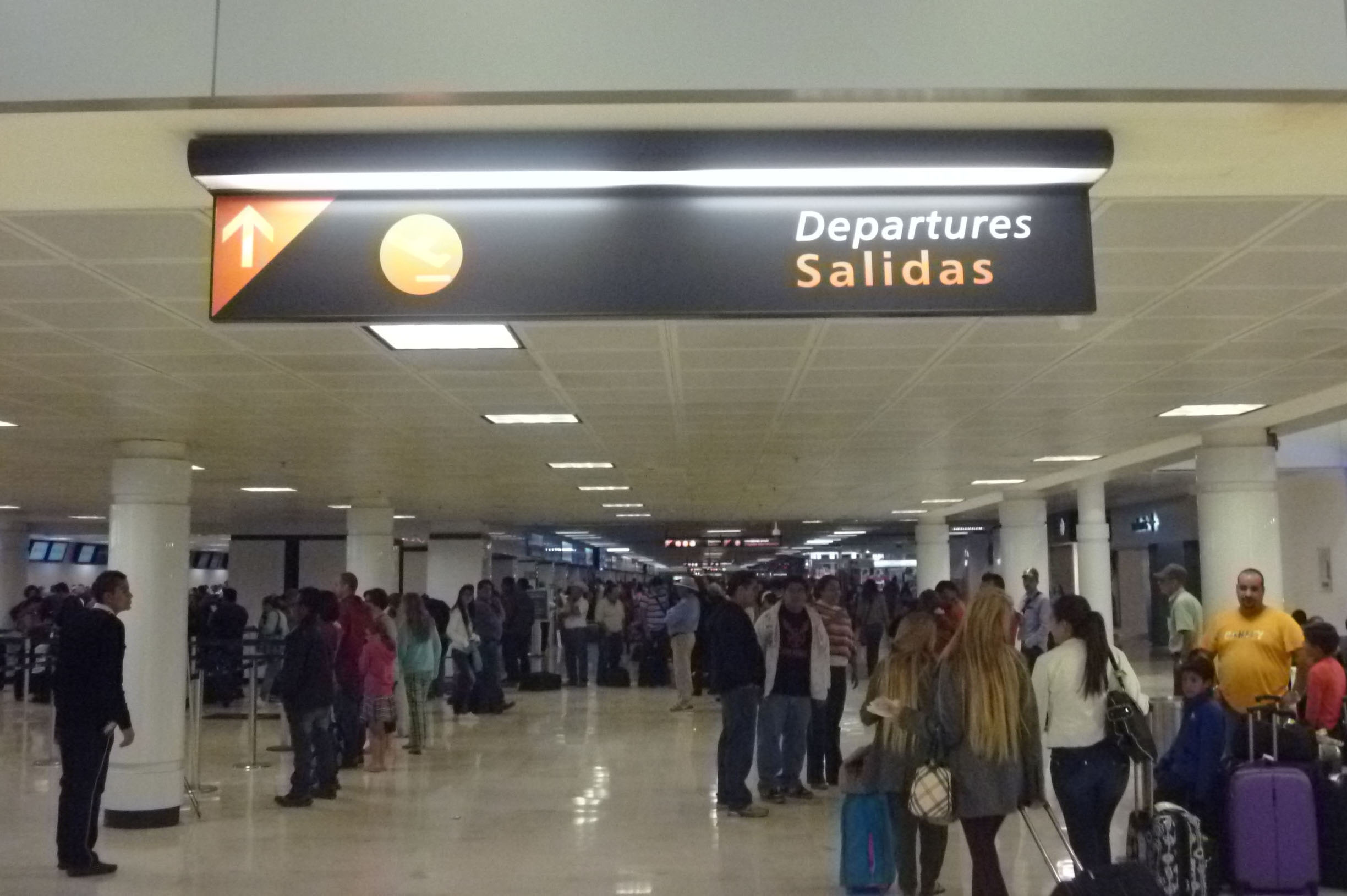
In a story reminiscent of Steven Spielberg’s movie “The Terminal,” U.S. citizen Brenda Janet Castro spent the last three weeks living in Guadalajara International Airport.
Castro, 34, arrived on August 5 to visit her grandparents, who apparently did not welcome the visit. She twice came close to flying home to Los Angeles, but decided to stay in the hope that her aunt would come to pick her up.
The airport staff allowed Castro to stay on the premises, as they had no reason to evict her, but eventually asked the U.S. Consulate to initiate the repatriation process after growing concerned for her health as she would rarely accept food.
Castro had arrived with three large suitcases and a sports bag, noted Spanish-language daily Mural, but was later seen with just one item of luggage. Mural speculated that she may have sold her other possessions in order to buy food.
After 21 days, this strange tale finally came to a conclusion on Monday night, when Castro’s aunt reportedly came to collect her and took her to her home in a nearby neighborhood.
 The Tequila Files